
45
Prep (min)
25
Cook (min)
20
Servings
Medium
Level
Introduction
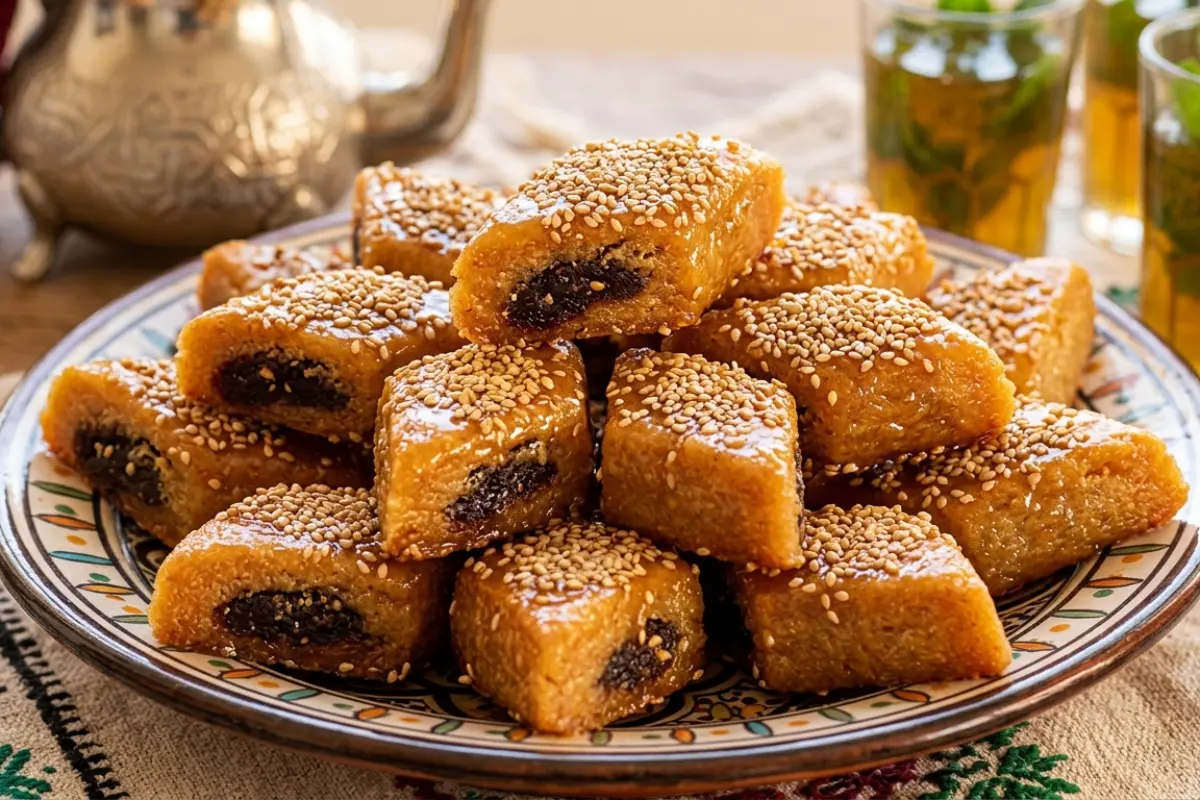
Makrout is one of Morocco's most cherished traditional pastries, originating from the ancient city of Kairouan and perfected in Moroccan kitchens over centuries. These diamond-shaped semolina treats represent the pinnacle of North African confectionery artistry, combining the earthy richness of semolina with the natural sweetness of dates and the nutty aroma of sesame seeds.
The beauty of makrout lies not only in its distinctive geometric shape but also in the perfect balance of textures and flavors. The outer semolina shell provides a tender yet structured bite, while the date filling offers concentrated sweetness and moisture. The addition of sesame seeds creates a delightful contrast in both taste and texture, elevating this humble pastry to extraordinary heights.
This particular variation with dates and sesame represents the most traditional form of makrout, often prepared during religious celebrations, family gatherings, and special occasions. The process of making makrout is considered an art form passed down through generations, with each family adding their own special touches to create their signature version of this beloved sweet.
About This Recipe
Makrout traces its origins to the ancient city of Kairouan in Tunisia, from where it spread throughout North Africa and became deeply embedded in Moroccan culinary tradition. The name 'makrout' derives from the Arabic word 'qat'a', meaning 'to cut', referring to the distinctive diamond-shaped cuts that give these pastries their characteristic appearance. Historically, makrout was prepared during Ramadan and other religious celebrations, as the combination of dates and semolina provided sustained energy during fasting periods. The addition of sesame seeds represents the influence of Middle Eastern trade routes, as sesame was a prized commodity that added both nutritional value and exotic flavor to traditional recipes. Over centuries, Moroccan bakers perfected the technique, creating the tender yet structured texture that distinguishes authentic makrout from similar pastries found throughout the Mediterranean region.
Nutrition / serving
Recipe Tags
Understanding the Ingredients
Fine semolina
The foundation of makrout, providing structure and the characteristic grainy texture that distinguishes it from other pastries.
Pitted dates
Medjool or Deglet Noor dates work best, providing natural sweetness and moisture for the filling.
Sesame seeds
Adds nutty flavor and textural contrast, traditionally toasted for enhanced aroma.
Orange blossom water
Essential for authentic Moroccan flavor, providing floral notes that complement the dates.
Butter
Creates tenderness in the semolina dough and helps bind the ingredients together.
Step-by-Step Cooking Guide
Prepare the Date Filling
20 minSoak the pitted dates in warm water for 15 minutes, then drain and process with cinnamon and orange blossom water until smooth.
Tip: Ensure dates are completely smooth to prevent tearing the semolina shell during assembly.
Make the Semolina Dough
15 minMix semolina with melted butter, salt, and orange blossom water. Gradually add warm water while kneading until a pliable dough forms.
Tip: The dough should hold together when pressed but not be sticky. Adjust water gradually.
Shape and Fill
25 minRoll dough into rectangles, spread date filling, fold and seal. Cut into diamond shapes using traditional diagonal cuts.
Tip: Keep dough covered with damp cloth to prevent drying while working.
Add Sesame and Bake
25 minPress sesame seeds gently on top, then bake at 350°F until golden brown, about 20-25 minutes.
Tip: Don't press sesame seeds too hard or they may fall off during baking.
Prepare Syrup and Finish
10 minMake syrup with honey, orange blossom water, and lemon juice. Brush warm makrout with syrup immediately after baking.
Tip: Apply syrup while makrout is still warm for better absorption.
Common Mistakes to Avoid
✗ Making the semolina dough too wet
Fix: Add water gradually and test consistency frequently - dough should be pliable but not sticky.
✗ Overfilling with date paste
Fix: Use a thin, even layer of filling to prevent bursting during baking.
✗ Cutting shapes when dough is too soft
Fix: Let the shaped makrout rest for 10 minutes before cutting for cleaner edges.
Ingredient Substitutions
Instead of: Orange blossom water
Use: Rose water or vanilla extract (use half the amount)
Instead of: Butter
Use: Vegetable oil or melted margarine for dairy-free version
Instead of: Dates
Use: Fig paste or prune paste for different flavor profiles
Serving Suggestions
Serve with traditional Moroccan mint tea for an authentic experience
Dust lightly with powdered sugar for elegant presentation
Accompany with fresh fruits like oranges or grapes
Present on decorative Moroccan serving platters for special occasions
Storage & Reheating
Storage
Store in airtight containers at room temperature for up to 1 week, or freeze for up to 3 months.
Reheating
Warm gently in 300°F oven for 5-8 minutes to restore crispness, or serve at room temperature.
Place parchment paper between layers when storing to prevent sticking and maintain shape.
Frequently Asked Questions
Recipe by

Abdrahman Idrissi
عبد الرحمن الإدريسي
Pastry & Bread Chef
View all recipes by Abdrahman →
You May Also Like
Our Ebooks

The Moroccan Vegan
$12.56
Tables of Fez: A Royal Palace Legacy
$22.99
The Soul of Morocco
$20.00
YouTube
Watch step-by-step cooking videos and learn traditional Moroccan techniques.
450+
Subscribers
150+
Videos