
90
Prep (min)
30
Cook (min)
6
Servings
Medium
Level
Introduction
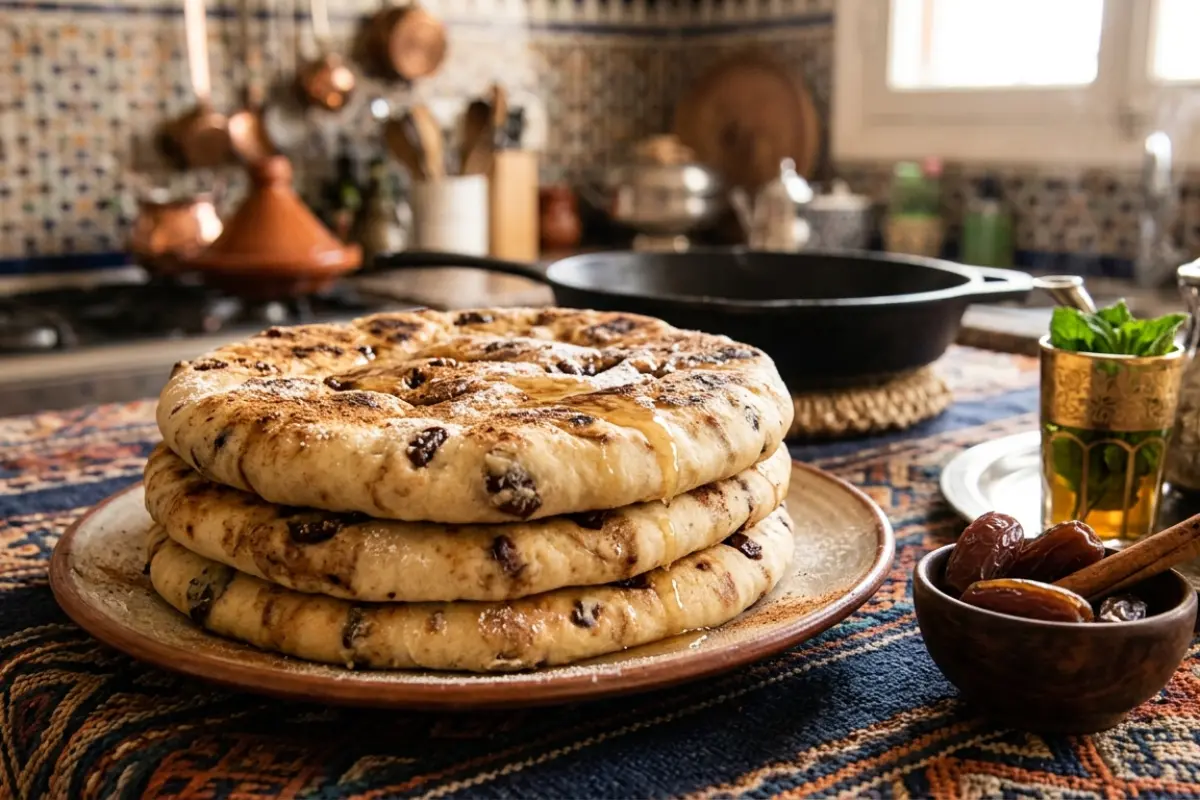
Matlouh, derived from the Arabic word meaning 'raised' or 'leavened,' is one of Morocco's most cherished traditional breads. It has been a staple of Moroccan households for centuries, enjoyed across all social classes and regions, from the bustling medinas of Fez and Marrakech to the rural Berber villages of the Atlas Mountains. Its humble origins trace back to communal ovens called 'ferran,' where families would bring their shaped dough to be baked, marking it with unique family stamps to identify their loaves among dozens of others.
The addition of dates and cinnamon to the classic matlouh dough represents the ingenuity of Moroccan home cooks, who have long been adept at transforming simple staple breads into festive, flavorful creations. Dates, known locally as 'tmar,' hold immense cultural and religious significance in Morocco, symbolizing hospitality and generosity. They are a beloved ingredient during Ramadan and special celebrations, while cinnamon, introduced through centuries of spice trade routes that passed through Moroccan imperial cities, lends a warming, aromatic depth that perfectly complements the natural sweetness of the dates.
Today, this sweet matlouh variation is particularly popular in the ancient city of Fez, where it is often prepared on weekends and served alongside a pot of freshly brewed Moroccan mint tea. The recipe has been passed down through generations of Moroccan mothers and grandmothers, with each family holding its own subtle variations and secrets. Making matlouh is considered a labor of love, a meditative process of kneading, waiting, and nurturing the dough that reflects the patience and care at the heart of Moroccan culinary philosophy.
About This Recipe
Matlouh is one of the oldest and most deeply ingrained breads in Moroccan culinary heritage, with roots stretching back through centuries of Amazigh (Berber) and Arab culinary traditions. Historically, Moroccan families did not have ovens in their homes; instead, they would prepare their dough at home each morning and carry it to the communal neighborhood oven, the 'ferran,' where the baker would cook all the loaves in sequence. Each family stamped their dough with a unique wooden seal to identify their bread among the dozens of others. Matlouh, meaning 'leavened' or 'risen,' was the everyday bread of the common people, distinguished from the more elaborate celebration breads by its simplicity and accessibility. The enriched version with dates and cinnamon likely evolved from the practice of making special sweeter breads for festive occasions such as Eid, Ramadan, and wedding celebrations. Dates and cinnamon, both deeply significant ingredients in Islamic tradition and culture — with dates explicitly praised in the Quran and cinnamon valued in ancient spice trade routes through Morocco's imperial cities of Fez, Marrakech, Meknes, and Rabat — were natural partners for this enriched variation. Today, this sweet matlouh remains a deeply nostalgic and beloved bread throughout Morocco, a tangible connection to the collective memory of markets, medina mornings, and the generosity of Moroccan hospitality.
Nutrition / serving
Recipe Tags
Understanding the Ingredients
All-purpose flour
The primary base of the dough, providing structure and a soft crumb. In Morocco, a blend of fine semolina and all-purpose flour is often used to achieve the characteristic slightly dense yet tender texture unique to matlouh.
Fine semolina
Mixed with all-purpose flour to give the matlouh its slightly grainy, rustic texture and golden color. It also helps the bread hold its shape during cooking and contributes a subtle nutty flavor.
Medjool dates
Pitted and chopped, these are the soul of this recipe. Medjool dates are prized for their large size, caramel-like sweetness, and soft, moist flesh. They integrate beautifully into the dough and create sweet pockets of flavor throughout the bread.
Ground cinnamon
A warming spice that pairs wonderfully with the sweetness of dates. Moroccan cinnamon is typically of the Ceylon variety, which is more delicate and sweet compared to the more intense Cassia variety. It perfumes the bread throughout and on top.
Instant dry yeast
The leavening agent responsible for the bread's soft, airy texture. It is dissolved in warm water with a pinch of sugar to activate it before being incorporated into the flour mixture, ensuring a reliable and even rise.
Olive oil
Extra virgin olive oil enriches the dough, adding a subtle fruity flavor, improving the texture, and extending the freshness of the bread. Morocco is one of the world's great olive oil producers, and it features prominently in both savory and sweet baking.
Honey
A small amount of honey sweetens the dough and feeds the yeast during proofing, contributing to a beautiful golden crust. Moroccan wild thyme or orange blossom honey is especially prized for its floral, complex flavor.
Salt
Fine table salt balances the sweetness of the dates and honey and strengthens the gluten network in the dough, resulting in a better rise and a more structured crumb.
Warm water
Used to hydrate the dough and activate the yeast. The water temperature is critical; it should be between 35–40°C (95–104°F). Too hot will kill the yeast, while too cold will prevent proper activation.
Step-by-Step Cooking Guide
Activate the Yeast
10 minIn a small bowl, combine the warm water with the instant dry yeast, honey, and a pinch of sugar. Stir gently and let the mixture sit for 8 to 10 minutes until it becomes frothy and bubbly on the surface. This confirms that the yeast is alive and active. If the mixture does not foam, discard it and start again with fresh yeast, as a failed activation will result in dense, flat bread.
Tip: The water should feel comfortably warm to the touch, like warm bathwater. Use a thermometer if you are unsure — aim for 38°C (100°F).
Prepare the Dates
5 minWhile the yeast activates, pit the Medjool dates if they are not already pitted, and chop them into small, rough pieces approximately half a centimeter in size. Toss the chopped dates with one teaspoon of ground cinnamon and a tiny drizzle of olive oil to prevent them from clumping together. Set aside. This coating helps the date pieces distribute more evenly throughout the dough without sticking to each other.
Tip: If your dates are very dry and firm, soak them in warm water for 5 minutes, then drain and pat dry before chopping.
Mix and Knead the Dough
15 minIn a large mixing bowl, combine the all-purpose flour, fine semolina, remaining ground cinnamon, and salt. Mix to combine. Make a well in the center and pour in the activated yeast mixture and olive oil. Begin mixing from the center outward, gradually incorporating the flour until a shaggy dough forms. Turn the dough out onto a lightly floured surface and knead vigorously for 10 to 12 minutes until the dough is smooth, elastic, and slightly tacky but not sticky. During the last 2 minutes of kneading, flatten the dough, scatter the cinnamon-coated date pieces over it, and fold and knead them in until evenly distributed throughout.
Tip: Resist the urge to add too much extra flour when kneading. A slightly tacky dough will yield a softer, more tender final bread.
First Rise
60 minShape the dough into a smooth ball and place it in a lightly oiled bowl. Cover the bowl with a clean damp kitchen towel or plastic wrap and place it in a warm, draft-free spot. Allow the dough to rise for 1 hour, or until it has doubled in size. In cooler weather, you can place the bowl in a slightly warm oven (turned off after being preheated to 30°C/86°F) to encourage the rise.
Tip: A consistent warm environment is key. Avoid placing the dough near cold drafts or air conditioning vents.
Shape the Matlouh
30 minGently punch down the risen dough to release the gas. Turn it out onto a lightly floured surface and divide it into 6 equal portions. Roll each portion into a smooth ball, then flatten each ball with your palms or a rolling pin into a round disc approximately 1.5 to 2 centimeters thick and 12 to 15 centimeters in diameter. Place the shaped rounds on a lightly floured baking sheet or board, dust the tops with a little semolina, cover loosely with a towel, and allow them to rest and puff for a further 20 to 25 minutes.
Tip: Uniform thickness is important for even cooking. Use a rolling pin and rotate the dough as you roll to keep the rounds as circular and even as possible.
Cook the Matlouh
15 minHeat a large cast iron skillet or heavy-bottomed griddle over medium-low heat. The pan should be dry — do not add any oil or butter. Once the pan is hot, carefully place one or two matlouh rounds into the pan. Cook for 5 to 7 minutes on the first side until the bottom is golden brown and the top surface begins to look dry and set. Flip with a wide spatula and cook for another 5 to 6 minutes on the second side. The bread is ready when both sides are evenly golden-brown and the edges are cooked through. Tap the surface — it should sound slightly hollow.
Tip: Medium-low heat is essential. Too high and the outside will burn before the inside is cooked through. Be patient and resist the urge to turn up the heat.
Common Mistakes to Avoid
✗ Using water that is too hot to activate the yeast
Fix: Always test the water temperature before adding yeast. Water above 45°C (113°F) will kill the yeast. Aim for 35–40°C (95–104°F) and always wait to see the frothy foam before proceeding.
✗ Adding dates to the dough at the start of kneading
Fix: Add the date pieces only in the final minutes of kneading. Adding them too early can tear the gluten strands you are working to develop, resulting in a dough that does not hold together well.
✗ Cooking the matlouh on too high a heat
Fix: Always use medium-low heat. The thick rounds of matlouh need gentle, sustained heat to cook all the way through without burning the exterior. If the crust darkens too quickly, lower the heat immediately.
✗ Skipping the second rest after shaping
Fix: The second 20–25 minute rest after shaping is crucial. It allows the gluten to relax and the dough to puff slightly, resulting in a lighter, airier texture. Skipping it leads to a dense, tough bread.
Ingredient Substitutions
Instead of: Medjool dates
Use: Dried figs or dried apricots can be used as a substitute. Chop them finely and coat with cinnamon in the same way. They will provide a different but equally delicious fruity sweetness.
Instead of: Fine semolina
Use: If fine semolina is unavailable, replace it entirely with all-purpose flour. The texture will be slightly softer and less rustic, but the matlouh will still be delicious.
Instead of: Honey
Use: Light brown sugar or maple syrup can replace honey in equal measure. The flavor profile will be slightly different, but the functional role of sweetening the dough and feeding the yeast remains the same.
Instead of: Olive oil
Use: Neutral vegetable oil or melted butter can be used in place of olive oil. Butter will add a richer flavor, while vegetable oil will produce a more neutral taste.
Serving Suggestions
Serve warm with generous amounts of butter and a drizzle of Moroccan argan oil and honey for a classic and luxurious breakfast combination.
Pair with a pot of hot Moroccan mint tea or spiced atter tea for a traditional mid-afternoon snack during Ramadan or after Friday prayers.
Slice open and fill with fresh goat cheese and a extra drizzle of honey for an elegant savory-sweet appetizer.
Serve alongside a bowl of creamy amlou (Moroccan almond and argan oil dip) for dipping, which is a beloved combination in the Souss region of Morocco.
Storage & Reheating
Storage
Allow the cooked matlouh rounds to cool completely on a wire rack before storing. Place them in an airtight bag or container at room temperature for up to 2 days. For longer storage, wrap each round individually in plastic wrap and then place in a zip-lock freezer bag and freeze for up to 2 months.
Reheating
To reheat, wrap the matlouh in a slightly damp paper towel and microwave on medium power for 30 to 45 seconds. Alternatively, reheat in a dry skillet over low heat for 2 to 3 minutes per side until warmed through. Frozen matlouh should be thawed at room temperature for about an hour before reheating.
For the best texture, avoid refrigerating matlouh as this tends to make the bread stale and dry faster than storing at room temperature. The freezer is always preferable to the fridge for bread storage.
Frequently Asked Questions
Recipe by

Abdrahman Idrissi
عبد الرحمن الإدريسي
Pastry & Bread Chef
View all recipes by Abdrahman →
You May Also Like
Our Ebooks

The Moroccan Vegan
$12.56

Tables of Fez: A Royal Palace Legacy
$22.99

The Soul of Morocco
$20.00
YouTube
Watch step-by-step cooking videos and learn traditional Moroccan techniques.
450+
Subscribers
150+
Videos