
20
Prep (min)
25
Cook (min)
6
Servings
Medium
Level
Introduction
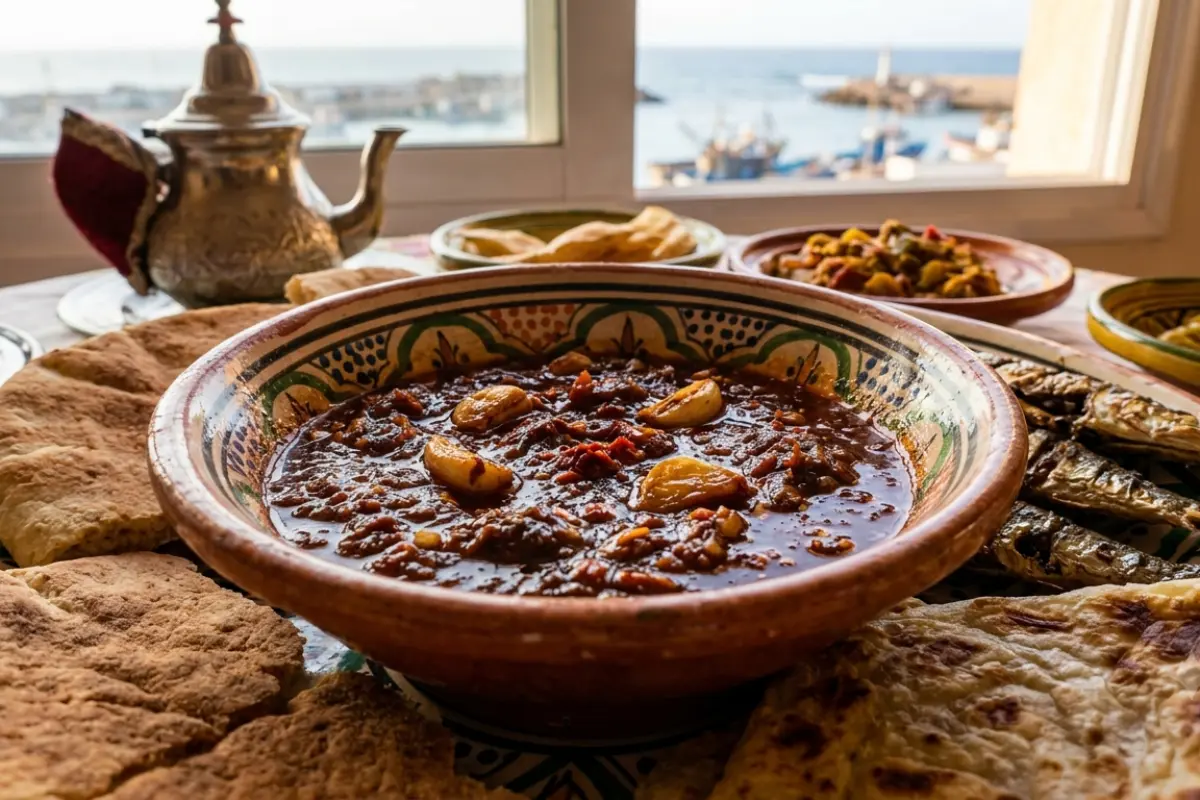
Mehyawa, also spelled mahyawa, is one of the most distinctive and storied condiments in Moroccan culinary heritage. Originally brought to Morocco through centuries of trade and migration along the Arabian Gulf routes, this fermented fish sauce became deeply embedded in the food culture of southern Moroccan cities like Agadir, Tiznit, and the Souss Valley region. Its preparation is a testament to the ancient art of preserving fish—typically anchovies or sardines—through salt fermentation, a technique that unlocks extraordinary depth of flavor over time.
The addition of garlic and harissa to traditional mehyawa is a regional adaptation that reflects Morocco's love of bold, layered flavors. Roasted garlic softens the sharpness of raw cloves while adding a mellow sweetness that balances the pungent fermented fish. Harissa, Morocco's celebrated chili paste made from dried red peppers, cumin, and coriander, introduces a smoky heat that transforms the condiment into something truly extraordinary. Together, these ingredients create a sauce that is simultaneously rustic and sophisticated.
In Moroccan households, mehyawa is traditionally served as part of a breakfast spread alongside warm msemen flatbread, argan oil, and honey—a combination that might seem unusual to outsiders but represents the full spectrum of Moroccan morning flavors. It is also used as a marinade for grilled fish, a dipping sauce for vegetables, and a secret ingredient in slow-cooked tagines. Understanding mehyawa is understanding the soul of Moroccan coastal cooking—honest, deeply flavorful, and rooted in a culture of resourcefulness and culinary ingenuity.
About This Recipe
Mehyawa's origins trace back to the ancient trade routes that connected the Arabian Peninsula with the Atlantic coast of North Africa. The condiment is believed to have been introduced to Morocco through the long-established maritime and overland trade connections between Moroccan merchants and communities in Bahrain, Oman, and the coastal Gulf states, where mahyawa—a spiced fermented fish sauce—has been a culinary staple for centuries. As Moroccan communities along the southern Atlantic coast, particularly in Agadir, Tiznit, and the broader Souss-Massa region, adopted and adapted the preparation, they incorporated local ingredients such as argan oil, indigenous dried peppers, and Moroccan spice blends including cumin and coriander. Over generations, mehyawa became deeply embedded in the breakfast culture of southern Morocco, appearing on morning tables alongside msemen flatbread, fresh butter, honey, and olive oil. The version with garlic and harissa reflects a later regional evolution that celebrates Morocco's distinctive love of layered heat and bold aromatics, merging the ancient fermented fish tradition with the country's vibrant pepper-paste heritage to create a condiment that is unmistakably Moroccan in character while honoring its multicultural origins.
Nutrition / serving
Recipe Tags
Understanding the Ingredients
Salted fermented anchovies or sardine paste
The foundation of mehyawa, these small oily fish are salt-cured and fermented to develop an intensely savory, umami-rich character. You can find jarred anchovy fillets in brine or specialty Moroccan fish paste at Middle Eastern or North African grocery stores. The quality of the fish directly determines the depth of the final sauce, so use the best you can source.
Garlic cloves
Garlic provides a pungent, aromatic backbone to the sauce. For this recipe, the cloves are gently roasted or sautéed in olive oil until golden and softened, which transforms their sharp bite into a sweet, caramelized flavor that integrates beautifully with the fermented fish without overpowering it.
Harissa paste
Harissa is Morocco's quintessential chili condiment, made from rehydrated dried red peppers blended with olive oil, cumin, coriander, and garlic. It contributes smokiness, heat, and a vibrant red color to the mehyawa. Use a traditional Moroccan or Tunisian harissa for the most authentic result; the level of heat can be adjusted to personal preference.
Extra virgin olive oil
Olive oil serves as both a cooking medium and a finishing element, adding richness and a fruity depth that ties all the flavors together. Moroccan extra virgin olive oil from the Souss region, known for its grassy and slightly peppery notes, is ideal and reflects the dish's regional origins.
Ground cumin
Cumin is a cornerstone spice in Moroccan cuisine, and in mehyawa it adds a warm, earthy dimension that complements the saltiness of the fish and the heat of the harissa. Freshly ground cumin seeds offer a more vibrant flavor than pre-ground powder and are strongly recommended.
Ground coriander
Ground coriander adds a bright, citrusy warmth that lightens the richness of the fermented fish and olive oil. It works in harmony with cumin to create the classic Moroccan spice pairing known as kamoun wa soudania, which appears in countless traditional recipes across the country.
Fresh lemon juice
A splash of fresh lemon juice at the end of cooking brightens the entire sauce and adds acidity that cuts through the richness and salt. It also helps preserve the condiment and enhances the flavors of the spices, making the overall profile more vibrant and refreshing on the palate.
Sweet paprika
Sweet paprika adds color, mild pepper flavor, and a subtle sweetness that rounds out the fieriness of the harissa. It is used extensively in Moroccan cooking and is often paired with cumin to create a balanced spice base for sauces, marinades, and stews.
Step-by-Step Cooking Guide
Prepare the Fermented Fish
8 minIf using whole salted anchovies, rinse them thoroughly under cold water to remove excess salt, then pat dry with paper towels and remove any visible bones. If using jarred anchovy fillets in oil, simply drain and roughly chop them. If using a ready-made sardine or anchovy paste, measure out the required amount and set aside. The fish should be finely chopped or mashed into a rough paste before cooking.
Tip: Taste the anchovies before using—if they are extremely salty, soak them in cold water for 10 minutes then rinse again to prevent the final sauce from being overpoweringly salty.
Roast the Garlic
10 minPlace the peeled garlic cloves in a small heavy-bottomed pan with 2 tablespoons of olive oil over low heat. Cook gently, stirring frequently, for 8 to 10 minutes until the cloves are golden, soft, and fragrant but not burnt. Remove from heat and allow to cool slightly, then crush the roasted garlic with the back of a fork or a mortar and pestle into a smooth paste. Roasting mellows the garlic's sharpness and introduces a subtle caramelized sweetness.
Tip: Keep the heat low and watch carefully—garlic can go from golden to bitter in seconds. If the garlic starts to brown too quickly, remove the pan from heat momentarily and reduce the flame.
Bloom the Spices
2 minIn the same pan used for the garlic, add the remaining tablespoon of olive oil over medium-low heat. Add the ground cumin, ground coriander, and sweet paprika. Stir constantly for 30 to 45 seconds until the spices are fragrant and have darkened slightly. This process, known as blooming, activates the essential oils in the spices and dramatically deepens their flavor. Be careful not to let them burn.
Tip: Have all your spices pre-measured and ready before you start blooming—this step moves quickly and burnt spices will make the entire sauce bitter and unusable.
Combine Fish, Garlic, and Harissa
5 minAdd the prepared anchovy paste or chopped anchovies to the pan with the bloomed spices. Stir well to combine and cook over low heat for 3 to 4 minutes, mashing the fish pieces with the back of a wooden spoon until a smooth, cohesive paste begins to form. Add the crushed roasted garlic and harissa paste, stirring vigorously to fully incorporate all the ingredients. The mixture should be fragrant, deeply colored, and beginning to come together as a thick sauce.
Tip: Use a silicone spatula or wooden spoon to continuously stir and prevent sticking. If the mixture seems too thick, add a small splash of warm water or olive oil to loosen it slightly.
Simmer and Develop Flavors
12 minReduce the heat to the lowest setting and allow the mehyawa to simmer gently for 10 to 12 minutes, stirring occasionally. This slow cooking stage is essential—it allows the individual components to meld together and the flavors to deepen and harmonize. The sauce will thicken slightly, become glossy, and take on a rich, complex aroma that fills the kitchen. Adjust the consistency if needed by adding a drizzle of olive oil.
Tip: Resist the urge to rush this step by increasing the heat. A long, slow simmer on low heat is what transforms the individual ingredients into a unified, deeply flavorful condiment with authentic character.
Finish and Season
3 minRemove the pan from heat and stir in the fresh lemon juice. Taste the mehyawa carefully and adjust seasoning—it should be intensely savory, moderately spicy, and balanced with a hint of brightness from the lemon. Add more harissa if you prefer greater heat, or a pinch of salt if needed (though the anchovies usually provide sufficient saltiness). Transfer the finished mehyawa to a clean glass jar or serving bowl and allow it to cool to room temperature before serving.
Tip: The flavors of mehyawa improve significantly after resting for at least one hour, as the ingredients continue to meld. For best results, prepare it a day ahead and refrigerate overnight before serving.
Common Mistakes to Avoid
✗ Using too much salt or not rinsing the anchovies
Fix: Always taste the fermented fish before adding it to the pan. If it is very salty, rinse under cold water and soak briefly. Remember that the anchovies will concentrate during cooking, so it is better to under-salt initially and adjust at the end.
✗ Cooking the garlic on high heat and burning it
Fix: Always roast garlic on low heat with plenty of olive oil, stirring frequently. Burnt garlic will make the entire mehyawa bitter and cannot be corrected. If it burns, discard and start the garlic step again with fresh cloves.
✗ Skipping the slow simmering step
Fix: Cutting the simmering time short results in a sauce that tastes raw and disjointed, with the components failing to integrate properly. Always allow at least 10 minutes of gentle simmering for the flavors to fully develop and harmonize.
✗ Adding lemon juice during cooking rather than at the end
Fix: Lemon juice loses its brightness and fresh acidity when cooked for too long. Always add it off the heat as a finishing touch to preserve its role as a flavor brightener and balancing agent in the final sauce.
Ingredient Substitutions
Instead of: Fermented anchovies
Use: High-quality sardine fillets in olive oil can be used, though they produce a milder, less pungent flavor. Increase the quantity slightly and add a small pinch of fish sauce to compensate for the reduced fermented depth.
Instead of: Harissa paste
Use: A combination of roasted red pepper paste and a pinch of cayenne pepper can approximate the heat and color of harissa, though the smoky complexity will be reduced. Alternatively, sambal oelek mixed with a pinch of cumin can work in a pinch.
Instead of: Fresh lemon juice
Use: A small amount of white wine vinegar or lime juice can provide the necessary acidity if lemons are unavailable, though fresh lemon juice is strongly preferred for its more compatible flavor profile with Moroccan spices.
Instead of: Extra virgin olive oil
Use: Argan oil, which is traditional in the Souss-Massa region of Morocco, can be used as a finishing oil to add a distinctly Moroccan nutty flavor. However, avoid using it for cooking as it has a lower smoke point than olive oil.
Serving Suggestions
Serve mehyawa at room temperature as a dipping sauce alongside warm msemen or meloui flatbread, fresh butter, and a drizzle of honey for a traditional Moroccan breakfast spread.
Use mehyawa as a bold spread on crusty bread or toasted baguette slices as part of a mezze platter alongside olives, preserved lemon, and fresh vegetables.
Spoon mehyawa over grilled or roasted fish fillets as a finishing sauce, or use it as a marinade for shrimp and prawns before grilling over charcoal.
Stir a tablespoon of mehyawa into scrambled eggs or a shakshouka-style egg dish to add a deeply savory, spicy depth that elevates a simple breakfast to something extraordinary.
Storage & Reheating
Storage
Transfer the cooled mehyawa to a clean, sterilized glass jar with a tight-fitting lid. Pour a thin layer of olive oil over the surface to create a protective seal, then refrigerate. Properly stored mehyawa will keep for up to 3 weeks in the refrigerator. The flavor actually improves over the first 2 to 3 days as the ingredients continue to meld.
Reheating
Mehyawa is traditionally served at room temperature and does not typically require reheating. Simply remove the jar from the refrigerator 20 to 30 minutes before serving and allow it to come to room temperature. If you wish to warm it, place the desired amount in a small pan over the lowest possible heat and stir gently for 2 to 3 minutes.
Always use a clean, dry spoon when serving from the jar to prevent contamination and extend shelf life. If the olive oil seal on top solidifies in the refrigerator, this is normal—simply allow the jar to sit at room temperature before using and the oil will return to a liquid state.
Frequently Asked Questions
Recipe by

Samira Tazi
سميرة تازي
Salad & Meze Specialist
View all recipes by Samira →
You May Also Like
Our Ebooks

The Moroccan Vegan
$12.56

Tables of Fez: A Royal Palace Legacy
$22.99

The Soul of Morocco
$20.00
YouTube
Watch step-by-step cooking videos and learn traditional Moroccan techniques.
450+
Subscribers
150+
Videos