5
Prep (min)
10
Cook (min)
4
Servings
Easy
Level
Introduction
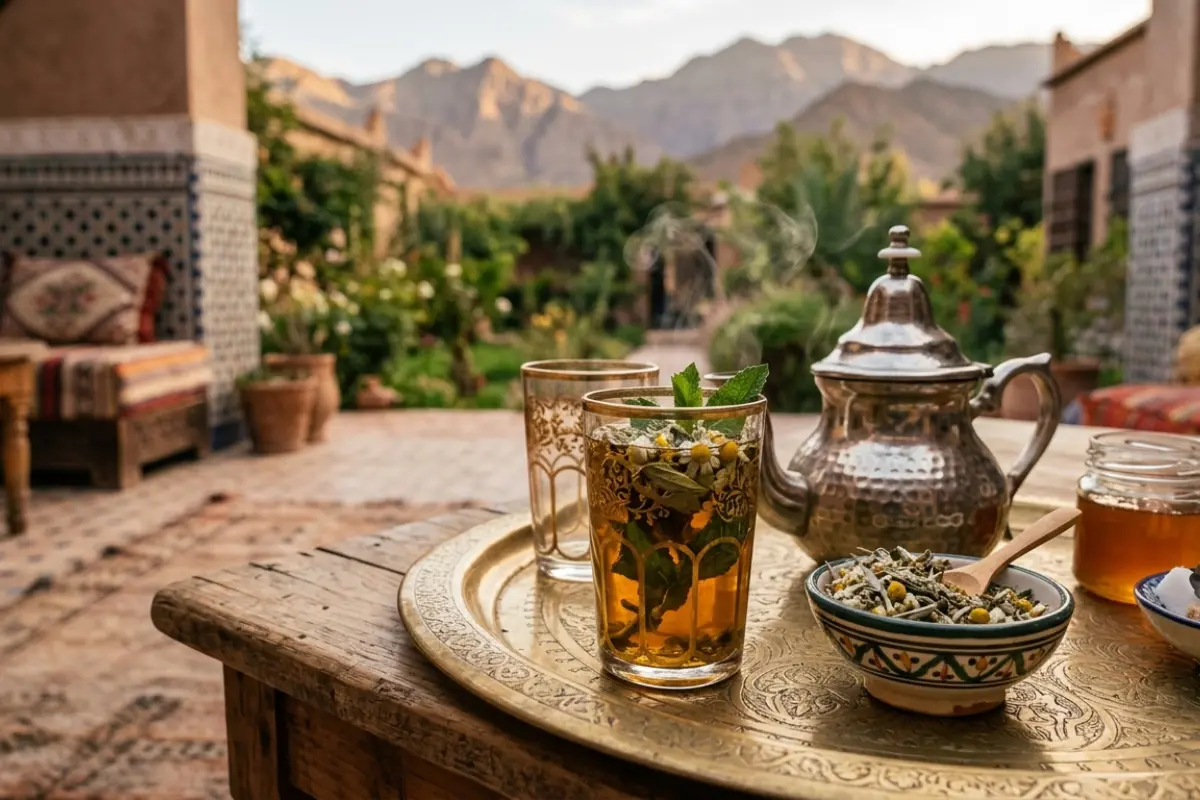
Mixed Herb Tea, known in Morocco as 'atay dial a'shab', represents the soul of Moroccan herbal medicine and hospitality. This aromatic blend combines carefully selected indigenous herbs that grow wild in the Atlas Mountains and Mediterranean regions of Morocco. Each herb contributes its unique therapeutic properties, creating a harmonious infusion that soothes the mind and body.
The tradition of brewing mixed herbal teas in Morocco dates back centuries, with knowledge passed down through generations of herbalists and traditional healers. Berber communities in the Atlas Mountains were particularly skilled in identifying and combining herbs for their medicinal properties. This tea is often prepared in the evening as a digestive aid or during times of stress for its calming effects.
What makes Moroccan mixed herb tea special is the careful balance of flavors and the ritualistic preparation method. The herbs are typically dried naturally under the Moroccan sun, preserving their essential oils and therapeutic compounds. The brewing process itself is considered meditative, allowing the preparer to connect with nature's healing power while creating a beverage that nourishes both body and spirit.
About This Recipe
Mixed herb tea has deep roots in Moroccan Berber culture, particularly among the Atlas Mountain communities who were master herbalists. These mountain dwellers developed extensive knowledge of local medicinal plants, creating healing blends that addressed various ailments from digestive issues to anxiety. The tradition of combining specific herbs was often closely guarded family knowledge, passed down through generations of women who served as the household healers. During the Islamic Golden Age, Moroccan herbalists refined these traditional blends, documenting their therapeutic properties in medical treatises. The practice spread throughout North Africa and Andalusia, where Moroccan herbs became prized for their quality and potency. Today, mixed herb tea remains an integral part of Moroccan wellness culture, often prepared in homes as an evening ritual and served in traditional hospitality settings alongside mint tea.
Nutrition / serving
Recipe Tags
Understanding the Ingredients
Fresh mint leaves
Provides cooling properties and aids digestion, essential in Moroccan tea culture for its refreshing qualities and ability to settle the stomach.
Dried lemon verbena
Known as 'louiza' in Morocco, this herb adds a citrusy fragrance and has calming properties that help reduce anxiety and promote sleep.
Dried sage leaves
Called 'salmiya' in Arabic, sage provides earthy notes and is valued for its anti-inflammatory and antioxidant properties.
Dried chamomile flowers
Adds gentle floral sweetness and is renowned for its relaxing effects and ability to soothe digestive issues.
Dried thyme
Contributes a subtle woody flavor and provides natural antiseptic properties, traditionally used to treat respiratory ailments.
Orange blossom water
A signature Moroccan ingredient that adds delicate floral notes and enhances the tea's aromatic profile.
Step-by-Step Cooking Guide
Prepare the Herbs
3 minRinse the fresh mint leaves gently under cold water and pat dry. Measure all dried herbs and combine them in a small bowl, mixing gently to distribute evenly.
Tip: Use your hands to gently bruise the mint leaves to release more essential oils.
Heat the Water
5 minBring 4 cups of filtered water to a gentle boil in a medium saucepan. The water should reach a rolling boil but not be left boiling vigorously.
Tip: Use filtered water for the purest taste, as hard water can affect the herb flavors.
Add the Herb Mixture
1 minRemove the water from heat and immediately add all the mixed herbs. Stir gently once with a wooden spoon to ensure all herbs are submerged.
Tip: Adding herbs to just-off-boiling water preserves delicate compounds that might be destroyed by vigorous boiling.
Steep and Strain
8 minCover the pot and let the herbs steep for 7-8 minutes. Strain the tea through a fine-mesh strainer into a teapot or serving vessel, pressing the herbs gently to extract maximum flavor.
Tip: Don't steep longer than 8 minutes as some herbs can become bitter with over-extraction.
Common Mistakes to Avoid
✗ Using boiling water directly on delicate herbs
Fix: Always let water cool slightly before adding herbs to preserve essential oils and prevent bitterness.
✗ Over-steeping the tea beyond 8 minutes
Fix: Keep steeping time between 5-8 minutes to avoid extracting bitter compounds from the herbs.
✗ Using old or improperly stored dried herbs
Fix: Store dried herbs in airtight containers away from light and use within one year for best flavor.
Ingredient Substitutions
Instead of: Lemon verbena
Use: Lemon balm or dried lemon zest for similar citrusy notes
Instead of: Sage
Use: Rosemary or dried oregano for earthy herbal flavor
Instead of: Orange blossom water
Use: A few drops of orange essential oil or fresh orange zest
Serving Suggestions
Serve in traditional Moroccan tea glasses with a small spoon of honey
Pair with Moroccan pastries like chebakia or makroudh
Enjoy with dates and almonds for an authentic Moroccan experience
Serve alongside light evening meals as a digestive aid
Storage & Reheating
Storage
Store leftover tea in the refrigerator for up to 2 days in a covered container. Dried herb mixture can be stored in airtight containers for up to 6 months.
Reheating
Gently reheat on the stove over low heat without boiling, or enjoy cold as an iced herbal tea.
The tea actually develops more complex flavors when allowed to cool and can be enjoyed at room temperature or chilled.
Frequently Asked Questions
Recipe by

Mohammed Benali
محمد بن علي
Beverage Specialist
View all recipes by Mohammed →
You May Also Like
Our Ebooks

The Moroccan Vegan
$12.56
Tables of Fez: A Royal Palace Legacy
$22.99
The Soul of Morocco
$20.00
YouTube
Watch step-by-step cooking videos and learn traditional Moroccan techniques.
450+
Subscribers
150+
Videos