
5
Prep (min)
10
Cook (min)
4
Servings
Easy
Level
Introduction
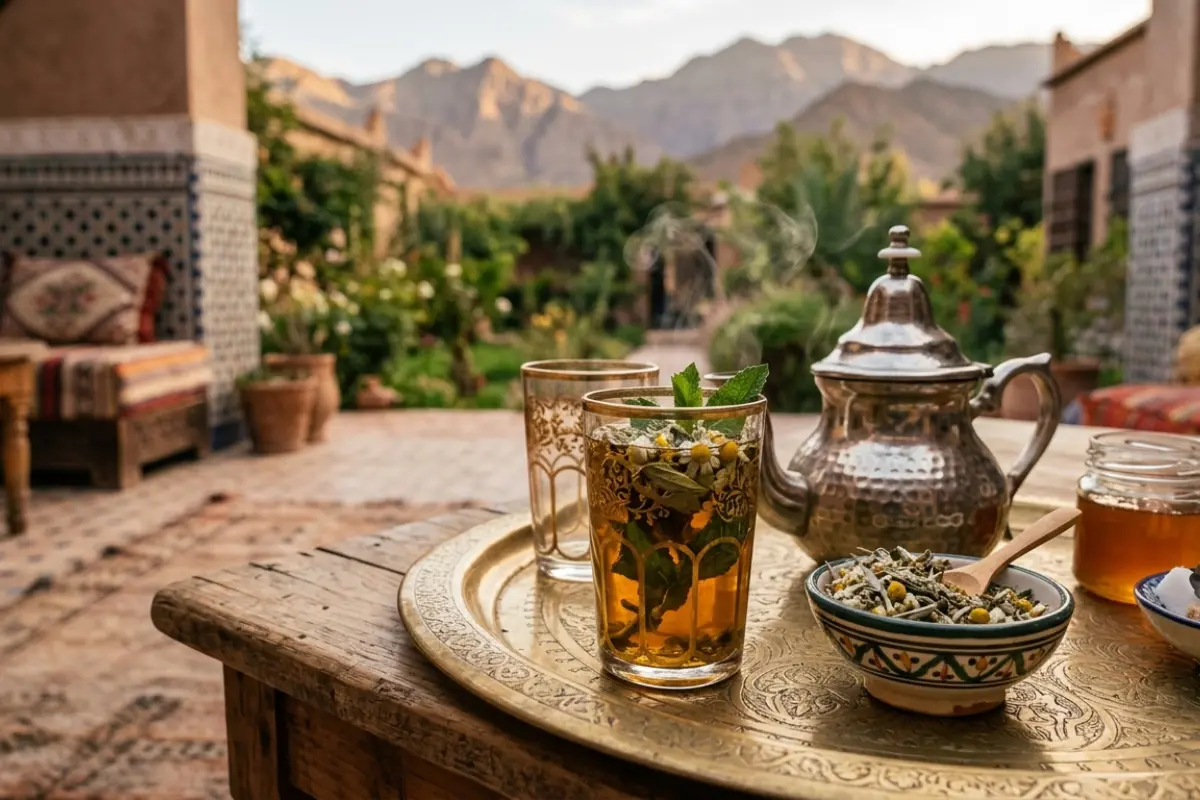
Moroccan herbal tea, known locally as 'atay bil a'shab', holds a sacred place in Moroccan culture and daily life. For centuries, the people of Morocco have harvested wild herbs from the Atlas Mountains, the Rif highlands, and the fertile plains of the Sous Valley, blending them into restorative infusions that serve both medicinal and social purposes. Unlike the world-famous Moroccan mint tea made with green tea leaves, this purely herbal version relies entirely on the bounty of nature's pharmacy, offering a caffeine-free alternative that is consumed morning, afternoon, and evening alike.
About This Recipe
The tradition of herbal tea drinking in Morocco stretches back over a thousand years, deeply intertwined with the ancient Berber traditions of herbalism and the Islamic emphasis on natural remedies. Long before gunpowder green tea was introduced to Morocco through trade with China in the 18th century, the indigenous Berber and Arab populations of North Africa had developed a sophisticated knowledge of the medicinal and culinary properties of the herbs that grew wild across the Atlas Mountains, the Rif, and the fertile coastal plains. Herbs such as mint, thyme, sage, chamomile, and verbena were gathered by hand each spring and summer and dried carefully for year-round use. The great medieval scholar and physician Ibn Rushd documented many Moroccan herbal remedies in his medical texts, and Moroccan herbalists known as attar have operated in the medina souks for centuries, selling carefully blended combinations of dried herbs, spices, and flowers for both health and pleasure. Today, mixed herbal tea continues to be an essential part of Moroccan daily life, served in homes, cafes, and riads throughout the country as a gesture of welcome, a remedy for common ailments, and a moment of quiet contemplation in the rhythm of a busy day.
Nutrition / serving
Recipe Tags
Understanding the Ingredients
Fresh Mint (Nana)
Moroccan spearmint, known as nana, is the cornerstone of nearly every Moroccan tea blend. Its cooling menthol oils soothe digestion, calm headaches, and provide the characteristic refreshing aroma that defines Moroccan tea culture. Fresh sprigs are always preferred over dried for maximum flavor impact.
Dried Chamomile Flowers
Chamomile is widely used across Morocco for its gentle floral sweetness and calming properties. Harvested from wild fields or purchased dried in the souks, chamomile flowers contribute a honey-like flavor to the blend and are traditionally used to promote relaxation and restful sleep.
Fresh or Dried Sage (Salmiya)
Sage is one of the most revered medicinal herbs in Moroccan folk medicine. Known locally as salmiya, it carries a robust earthy, slightly peppery flavor and is prized for its digestive and anti-inflammatory benefits. A few leaves go a long way in a tea blend.
Dried Thyme (Za'atar)
Moroccan thyme, or za'atar, adds a warm, slightly pungent, herbal depth to the blend. It is widely used in Moroccan households as a remedy for respiratory ailments and colds. Its oils release fully when steeped in just-boiled water, filling the room with a comforting aroma.
Dried Verbena (Louiza)
Verbena, called louiza in Moroccan Arabic and Darija, is perhaps the most beloved single-herb tea in the Moroccan repertoire. It imparts a bright, lemony, floral note to mixed herbal blends and is celebrated for its calming effect on the nervous system and digestive tract.
Honey
Moroccan honey, especially thyme or wildflower honey harvested from the Atlas Mountains, is the preferred sweetener for herbal teas. Unlike refined sugar, it adds a complex floral sweetness and layers of flavor that complement the herbs while also contributing its own natural antibacterial properties.
Fresh Rosemary (Iklil El Jabal)
Rosemary is used sparingly in Moroccan herbal tea as a piney, resinous accent that pairs beautifully with sage and thyme. It is associated with memory, vitality, and digestion in traditional Moroccan herbal medicine and adds an elegant complexity to the overall blend.
Water
The quality of water significantly affects the final taste of herbal tea. In Morocco, spring water or lightly filtered water is preferred. The water should be brought to a full boil and then allowed to rest for about thirty seconds before pouring over the delicate herbs to avoid scorching the more fragile flowers like chamomile.
Step-by-Step Cooking Guide
Prepare the Herbs
3 minRinse the fresh mint and rosemary sprigs under cold running water and gently shake off excess moisture. Measure out the dried herbs including chamomile flowers, sage, thyme, and verbena and set them aside in separate small piles. Having everything organized before you begin ensures a smooth and unhurried brewing process.
Tip: If using dried herbs exclusively, reduce the quantity by half compared to fresh, as dried herbs have a more concentrated flavor.
Boil the Water
5 minPour 1 liter of fresh cold water into a traditional Moroccan kettle or a regular saucepan and bring it to a full rolling boil over medium-high heat. Once boiling, remove from heat and allow to rest for 30 to 45 seconds. This brief rest prevents the water from scorching the delicate chamomile and verbena blossoms, which can turn bitter if exposed to temperatures above 95 degrees Celsius.
Tip: Never pour aggressively boiling water directly over chamomile as it destroys the delicate floral essential oils.
Warm the Teapot
1 minPour a small amount of the just-boiled water into your teapot and swirl it around gently to warm the vessel. Discard this water. Warming the teapot ensures that the brewing temperature remains stable once you add the herbs and steeping water, which is essential for a consistent and well-extracted infusion.
Tip: A traditional Moroccan ceramic or silver teapot is ideal, but any heat-safe teapot with a fine strainer will work beautifully.
Add the Herbs to the Teapot
1 minPlace the fresh mint sprigs into the warmed teapot first, followed by the dried chamomile flowers, sage, thyme, verbena, and a small sprig of rosemary. The layering order is important: robust herbs like sage and thyme go in first so they steep fully, while the delicate chamomile and verbena sit on top where they receive slightly less intense heat.
Tip: Do not crush or tear the herbs before adding them, as bruising can release bitter tannins rather than the sweet aromatic oils.
Steep the Tea
7 minPour the rested hot water over the herbs in the teapot, filling it completely. Place the lid on the teapot and allow the herbs to steep undisturbed for 5 to 7 minutes. The color of the tea should deepen to a beautiful golden amber hue. For a stronger infusion, steep for up to 10 minutes, but be cautious as some herbs like thyme can become overpowering if steeped too long.
Tip: Cover the teapot with a small tea cosy or a folded towel during steeping to retain heat and maximize flavor extraction.
Sweeten and Serve
2 minPour the tea through a fine mesh strainer into traditional Moroccan glass tea cups or small ceramic cups. Add honey or sugar to taste, stirring gently to dissolve. In authentic Moroccan tradition, the tea is poured from a height to aerate it and create a small froth on top, which is considered a mark of quality and care. Garnish each glass with a fresh sprig of mint if desired.
Tip: Pour from a height of at least 30 centimeters above the glass to create the signature frothy top that is a hallmark of Moroccan tea service.
Common Mistakes to Avoid
✗ Using water that is too hot and pouring it directly over delicate herbs like chamomile
Fix: Allow just-boiled water to rest for 30 to 45 seconds before pouring. This brings the temperature down to approximately 90 to 95 degrees Celsius, which is ideal for most herbal infusions without scorching the delicate blossoms.
✗ Steeping the tea for too long, resulting in a bitter and overpowering brew
Fix: Stick to a steeping time of 5 to 7 minutes for a balanced cup. If you enjoy a stronger brew, add more herbs rather than extending the steeping time, as prolonged steeping extracts harsh tannins from robust herbs like thyme and sage.
✗ Using equal quantities of all herbs, which creates a muddy and imbalanced flavor
Fix: Use mint as the dominant herb and treat the others as accents. A good ratio is approximately 60 percent mint to 40 percent mixed herbs. Rosemary and sage especially should be used very sparingly as their oils are intense and can easily dominate the blend.
✗ Adding honey to boiling water, which destroys its beneficial enzymes and delicate flavors
Fix: Always add honey after pouring the tea into the cup, when the liquid has cooled slightly to around 60 to 70 degrees Celsius. Stir gently and enjoy the full complexity that quality Moroccan honey brings to the blend.
Ingredient Substitutions
Instead of: Fresh mint
Use: Dried spearmint or dried peppermint can be used at half the quantity of fresh mint, though the bright aromatic quality will be somewhat reduced.
Instead of: Dried verbena (louiza)
Use: Lemon balm makes an excellent substitute for verbena, providing a similar lemony and calming flavor profile that works beautifully in mixed herbal blends.
Instead of: Honey
Use: Pure cane sugar, date syrup, or agave nectar can replace honey as a sweetener. Date syrup is the most authentically Moroccan alternative and adds a rich caramel undertone.
Instead of: Fresh rosemary
Use: A small pinch of dried lavender can replace rosemary, contributing a similarly piney and floral complexity without overpowering the other herbs.
Serving Suggestions
Serve alongside a platter of traditional Moroccan pastries such as kaab el ghazal (gazelle horns), chebakia, or briouats filled with almonds and honey for an authentic afternoon tea experience.
Pair with a bowl of fresh seasonal fruit, dates, and walnuts for a light and nourishing breakfast or mid-morning snack in the Moroccan tradition.
Offer the tea as a digestif after a heavy meal such as tagine or couscous, as the combination of mint, sage, and thyme is particularly effective at soothing the stomach and aiding digestion.
Serve in traditional engraved Moroccan tea glasses on a decorative silver tray with a small pot of honey on the side, allowing guests to sweeten to their own preference.
Storage & Reheating
Storage
Freshly brewed herbal tea is best consumed immediately while hot. If you have leftover tea, allow it to cool to room temperature, then strain out all the herbs and transfer the liquid to a clean glass jar. Refrigerate for up to 24 hours. Removing the herbs before storing is essential, as continued steeping will make the tea increasingly bitter and astringent.
Reheating
Gently reheat refrigerated herbal tea in a small saucepan over low heat until it reaches your desired temperature. Avoid boiling the tea when reheating as this will further alter the flavor and reduce the aromatic volatile oils. Alternatively, serve the cooled tea over ice with a slice of lemon for a refreshing iced herbal tea.
For the best flavor experience, always brew herbal tea fresh. Pre-measured herb bundles can be prepared in advance and stored in small airtight bags at room temperature for up to one week, making it easy to brew a fresh pot in minutes whenever desired.
Frequently Asked Questions
Recipe by

Mohammed Benali
محمد بن علي
Beverage Specialist
View all recipes by Mohammed →
You May Also Like
Our Ebooks

The Moroccan Vegan
$12.56

Tables of Fez: A Royal Palace Legacy
$22.99
The Soul of Morocco
$20.00
YouTube
Watch step-by-step cooking videos and learn traditional Moroccan techniques.
450+
Subscribers
150+
Videos