
20
Prep (min)
50
Cook (min)
6
Servings
Easy
Level
Introduction
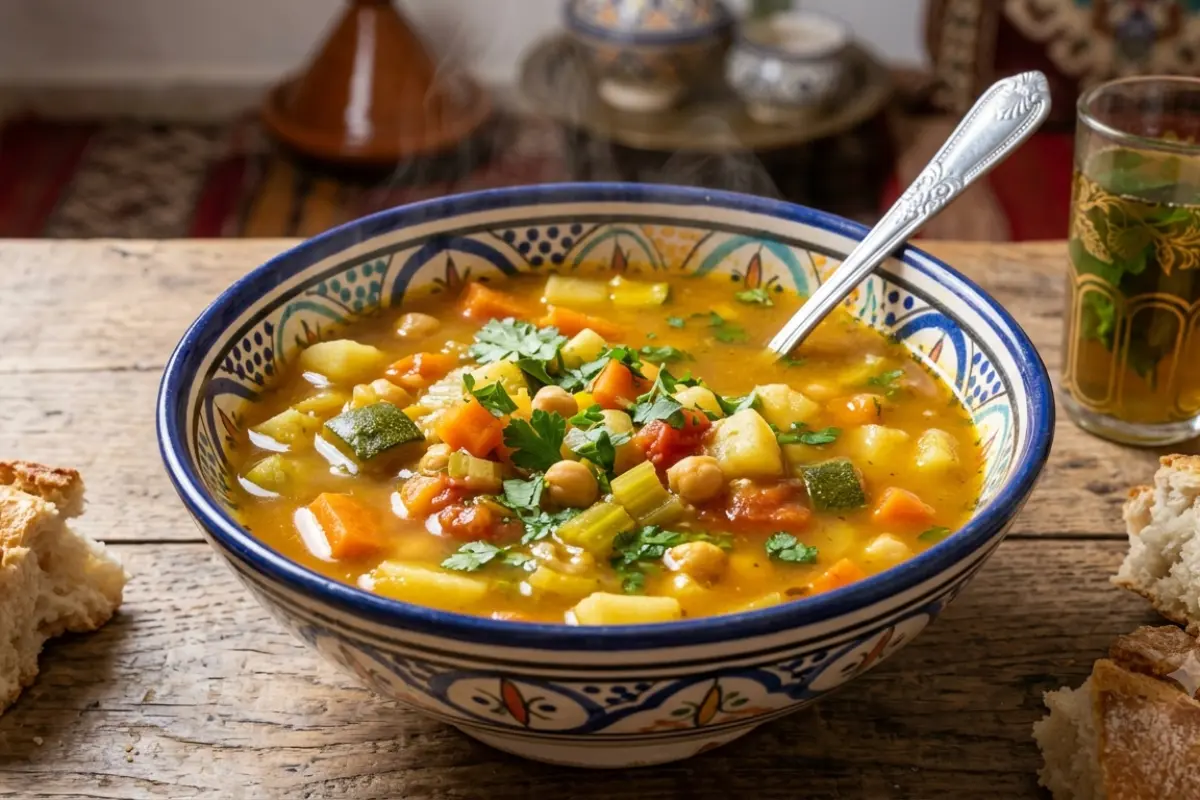
Moroccan Mixed Vegetable Broth, known locally as Maraq al-Bousto bil-Khodra al-Moshakala, is one of the most beloved everyday soups found in Moroccan households from the bustling medinas of Fes to the quiet countryside of the Atlas Mountains. This humble yet deeply satisfying dish represents the heart of Moroccan home cooking, where seasonal produce is transformed into something extraordinary through the careful layering of spices and slow, patient simmering. The broth has been a staple of Moroccan cuisine for centuries, born from a tradition of resourcefulness and a deep respect for the land's natural bounty.
Historically, vegetable broths in Morocco were prepared in large clay pots over wood fires, allowing the flavors to meld slowly over many hours. Families would use whatever vegetables were available from their gardens or local souks, making this dish infinitely adaptable and seasonal. In cities like Fes and Marrakech, street vendors and home cooks alike have long prepared variations of this broth, each adding their own regional touch through the use of local herbs, dried legumes, or handmade pasta known as berkoukes. The dish became especially prominent during the holy month of Ramadan, where a restorative broth was essential to breaking the fast.
Today, Moroccan Mixed Vegetable Broth continues to hold a cherished place on family tables throughout the country. It is celebrated not only for its incredible flavor but also for its remarkable nutritional value, as it delivers a wealth of vitamins, minerals, and fiber from a colorful medley of vegetables. Modern Moroccan cooks have embraced both traditional preparations and subtle innovations, sometimes adding chickpeas, lentils, or vermicelli to make the broth more filling, but always maintaining the foundational spirit of warmth, generosity, and wholesome nourishment that defines Moroccan culinary culture.
About This Recipe
Vegetable broths have been a cornerstone of Moroccan cuisine since ancient times, with their origins tracing back to Berber cooking traditions that predate the Arab influence on North African culinary culture. The concept of simmering seasonal vegetables with aromatic spices in a large communal pot reflects the deeply communal and resourceful nature of Moroccan food culture. In the imperial city of Fes, renowned as Morocco's culinary capital, elaborate broths and soups have been refined over centuries within the kitchens of its ancient medina, where skilled home cooks passed recipes down through generations. The use of ras el hanout in vegetable soups became widespread following the spice trade routes that brought exotic ingredients from sub-Saharan Africa, the Middle East, and beyond into Moroccan markets. During the Ottoman era and the reign of the Saadian and Alaouite dynasties, Moroccan royal kitchens elevated the humble vegetable broth into an art form, incorporating rare spices and refined techniques. Today, Moroccan Mixed Vegetable Broth remains a timeless expression of the country's rich agricultural heritage and its extraordinary ability to transform simple, fresh ingredients into dishes of remarkable depth, warmth, and nourishment.
Nutrition / serving
Recipe Tags
Understanding the Ingredients
Carrots
Carrots add natural sweetness and a vibrant orange color to the broth. They hold their shape well during long cooking and provide essential beta-carotene and vitamins. Choose firm, fresh carrots for the best flavor.
Zucchini
Zucchini contributes a mild, slightly sweet flavor and a tender texture to the soup. It cooks relatively quickly and absorbs the spiced broth beautifully, adding body and freshness to the dish.
Turnip
Turnip is a classic Moroccan soup vegetable with a subtly earthy and slightly peppery flavor. When simmered, it becomes wonderfully tender and helps thicken the broth naturally while adding depth to the overall taste.
Tomatoes
Fresh ripe tomatoes provide acidity, natural sweetness, and a rich red color to the broth. They break down during cooking to create a flavorful base that ties all the other vegetables together.
Celery
Celery, including its leaves, is a fundamental aromatic in Moroccan broths. It imparts a fresh, slightly bitter herbaceous note that balances the sweetness of the root vegetables and deepens the overall flavor profile.
Onion
Onion forms the aromatic foundation of the broth. When sautéed gently in olive oil, it becomes sweet and golden, releasing compounds that form the base of the soup's complex and savory flavor.
Chickpeas
Canned or pre-cooked chickpeas add protein, fiber, and a creamy texture to the broth. They are a beloved Moroccan pantry staple that makes the soup more substantial and nutritious without overpowering the vegetable flavors.
Olive Oil
Moroccan extra virgin olive oil is used to sauté the aromatics and enrich the broth. Its fruity, robust flavor is fundamental to authentic Moroccan cooking and adds a silky quality to the finished soup.
Ras el Hanout
This iconic Moroccan spice blend typically includes cinnamon, cumin, coriander, ginger, turmeric, and pepper. It is the defining seasoning of this broth, giving it a warm, complex, and distinctly Moroccan character.
Fresh Cilantro and Parsley
A generous handful of fresh cilantro and flat-leaf parsley are essential finishing herbs in Moroccan soups. They brighten the broth, add freshness, and provide a beautiful aromatic quality that elevates the entire dish.
Step-by-Step Cooking Guide
Prepare the Vegetables
15 minWash all vegetables thoroughly under cold running water. Peel the carrots, turnip, and onion. Dice the onion finely. Cut the carrots and turnip into medium-sized cubes of roughly 2 cm. Slice the zucchini into half-moons. Roughly chop the tomatoes and celery stalks, reserving the celery leaves for garnish. Drain and rinse the chickpeas under cold water. Set all prepared vegetables aside in separate bowls.
Tip: Cutting vegetables to a uniform size ensures they cook evenly and achieve the right texture at the same time.
Sauté the Aromatics
15 minHeat the olive oil in a large heavy-bottomed pot or Dutch oven over medium heat. Add the diced onion and cook, stirring occasionally, for 6 to 8 minutes until it becomes soft, translucent, and lightly golden. Add the chopped tomatoes to the pot and cook for an additional 5 minutes, stirring frequently, until the tomatoes begin to break down and release their juices, forming a fragrant, soft base.
Tip: Do not rush the onion and tomato base. Properly cooked aromatics create a much richer and more complex broth.
Add Spices and Hard Vegetables
5 minSprinkle the ras el hanout, ground cumin, turmeric, and salt over the softened onion and tomato mixture. Stir well to coat and cook the spices for 1 to 2 minutes until fragrant. Add the diced carrots, turnip, and celery stalks to the pot. Stir everything together to coat the vegetables evenly with the spiced tomato base.
Tip: Blooming the spices briefly in the oil before adding liquid unlocks their full aromatic potential and deepens the flavor of the broth.
Add Water and Simmer
25 minPour in approximately 1.5 liters of cold water, or enough to generously cover all the vegetables by at least 5 cm. Increase the heat to high and bring the broth to a vigorous boil. Once boiling, reduce the heat to medium-low, partially cover the pot with a lid, and allow the soup to simmer gently for 20 minutes, until the carrots and turnip are beginning to become tender.
Tip: Using cold water rather than hot water results in a cleaner, more flavorful broth as the flavor slowly extracts from the vegetables.
Add Zucchini and Chickpeas
15 minAdd the sliced zucchini and the drained chickpeas to the simmering broth. Stir gently to incorporate. Continue to simmer the soup over medium-low heat, partially covered, for another 15 minutes until the zucchini is tender and cooked through and the chickpeas are heated thoroughly. Taste the broth and adjust the seasoning with additional salt and a pinch of black pepper as needed.
Tip: Adding zucchini later in the cooking process prevents it from becoming mushy and ensures it retains a pleasant, slightly firm texture.
Finish with Fresh Herbs and Serve
5 minRemove the pot from the heat. Stir in a generous handful of freshly chopped cilantro and flat-leaf parsley. Allow the soup to rest for 2 to 3 minutes so the herbs can infuse the broth with their fresh aroma. Taste one final time for seasoning, adjusting salt and pepper as needed. Ladle the hot broth into deep bowls, ensuring each serving gets a good variety of vegetables, and garnish with a few extra herb leaves and a thin drizzle of extra virgin olive oil.
Tip: Adding fresh herbs off the heat preserves their vibrant green color and fresh fragrance, which would be lost if they were cooked for too long.
Common Mistakes to Avoid
✗ Overcooking the zucchini
Fix: Add zucchini only in the last 15 minutes of cooking. It requires far less time than root vegetables and will become unpleasantly mushy if added too early.
✗ Not blooming the spices
Fix: Always add your spices to the sautéed aromatics and cook them briefly before adding water. This step activates the essential oils in the spices and creates a far more flavorful and aromatic broth.
✗ Adding too much water too early
Fix: Start with the recommended amount of water and adjust at the end. Too much water creates a thin, watery broth that lacks depth and body. You can always add more but you cannot take it away.
✗ Skipping the fresh herb finish
Fix: Fresh cilantro and parsley are not optional in this recipe. They are a fundamental part of Moroccan soup culture and provide brightness and freshness that dried herbs simply cannot replicate.
Ingredient Substitutions
Instead of: Turnip
Use: Parsnip or kohlrabi can be used in place of turnip. They have a similar earthy sweetness and will hold up well during the long simmering time.
Instead of: Chickpeas
Use: White beans or lentils work beautifully as substitutes. Green or brown lentils should be added raw with the hard vegetables as they need more time to cook.
Instead of: Ras el Hanout
Use: If ras el hanout is unavailable, use a combination of 1 teaspoon cumin, half a teaspoon coriander, a quarter teaspoon cinnamon, a quarter teaspoon ginger, and a pinch of turmeric.
Instead of: Fresh Tomatoes
Use: One 400g can of crushed or diced tomatoes makes an excellent substitute for fresh tomatoes and can even deepen the flavor of the broth slightly.
Serving Suggestions
Serve the broth piping hot in deep ceramic bowls with a generous piece of freshly baked Moroccan khobz bread for dipping and soaking up the flavorful broth.
Add a side of harissa paste or chermoula sauce on the table so guests can stir in extra heat and herbaceous flavor according to their personal preference.
For a more substantial meal, serve the broth over a small mound of couscous placed at the bottom of the bowl, allowing the grains to absorb the rich spiced liquid.
Squeeze a wedge of fresh lemon over each bowl just before serving to add a bright, citrusy note that beautifully balances the warm spices in the broth.
Storage & Reheating
Storage
Allow the broth to cool completely to room temperature before transferring it to airtight containers. Store in the refrigerator for up to 4 days. For longer storage, freeze in portion-sized containers for up to 3 months, noting that zucchini may become slightly softer upon thawing.
Reheating
Reheat the broth gently in a saucepan over medium-low heat, stirring occasionally, until it reaches a gentle simmer and is heated all the way through. Avoid boiling vigorously as this can cause the vegetables to break apart. When reheating from frozen, thaw overnight in the refrigerator before reheating on the stovetop.
The flavor of this broth often improves significantly the next day as the spices continue to meld and develop overnight. Consider making it a day ahead for the best possible flavor. If the broth thickens in the refrigerator, add a small splash of water when reheating to return it to the desired consistency.
Frequently Asked Questions
Recipe by

Nora Alaoui
نورة العلوي
Soup & Stew Expert
View all recipes by Nora →
You May Also Like
Our Ebooks

The Moroccan Vegan
$12.56

Tables of Fez: A Royal Palace Legacy
$22.99

The Soul of Morocco
$20.00
YouTube
Watch step-by-step cooking videos and learn traditional Moroccan techniques.
450+
Subscribers
150+
Videos