
15
Prep (min)
0
Cook (min)
6
Servings
Easy
Level
Introduction
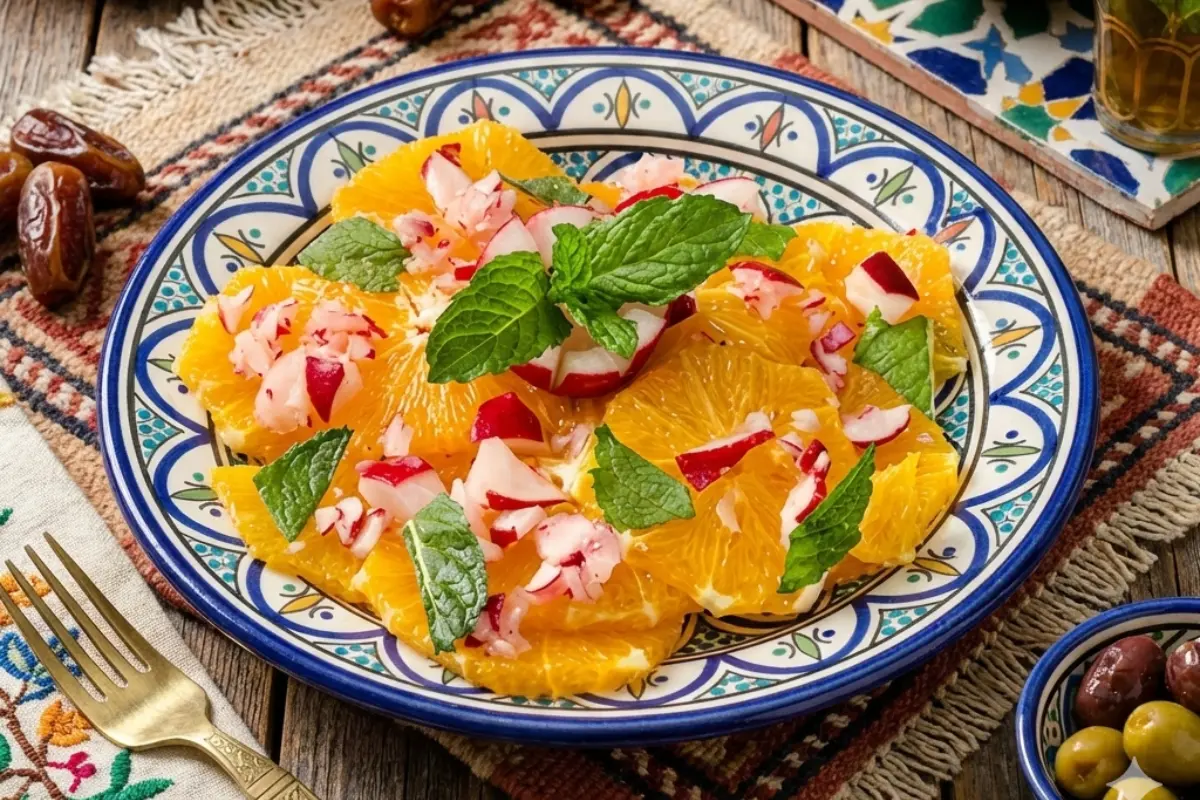
Moroccan orange and radish salad represents one of the most visually stunning, refreshing, and distinctive salads in Moroccan cuisine - a beautiful composition of sweet, juicy orange segments, crisp, peppery radish slices, briny black olives, and fresh herbs dressed with citrus juice, olive oil, and warm cumin. The combination may seem unusual to those unfamiliar with Moroccan cooking, but it creates a perfect harmony of flavors and textures - the oranges provide natural sweetness and juicy bursts, the radishes add crisp texture and pleasant peppery bite, the olives contribute briny, savory depth, and the dressing ties everything together with bright acidity and aromatic warmth. The visual impact is equally impressive - brilliant orange segments against white radish rounds and dark black olives, all garnished with vibrant green herbs, creating a salad that is as beautiful to look at as it is delicious to eat.
What makes this salad so special and so characteristically Moroccan is how it exemplifies the cuisine's genius for combining ingredients that might not seem natural partners yet create extraordinary harmony together. The pairing of sweet fruit with savory elements, pungent vegetables, and aromatic spices is a hallmark of Moroccan cooking, appearing in tagines with dried fruits, salads with citrus, and countless other preparations. Orange and radish salad takes this philosophy to its most elegant, refreshing expression - a raw salad where each ingredient retains its distinct character while contributing to a unified, balanced whole. The cumin is essential and characteristic, providing that earthy, warm depth that immediately identifies this as Moroccan rather than merely a citrus salad. Fresh herbs - typically cilantro or parsley or both - add brightness and aromatic freshness.
This salad occupies a special place in Moroccan cuisine as both an everyday side dish and a celebration salad. It appears regularly on home tables as part of the traditional salad course that begins every lunch and dinner, particularly during citrus season (winter and spring) when oranges are at their sweetest and most abundant. It's also featured at celebrations, Ramadan iftars, and special occasions where its visual beauty and refreshing quality make it particularly appealing. The salad is remarkably healthy - packed with vitamin C, fiber, antioxidants, naturally low in calories, and completely vegan. It's quick to prepare, requires no cooking, and can be made ahead, making it perfect for busy cooks and warm weather dining.
About This Recipe
Moroccan orange and radish salad represents one of the most distinctive and visually stunning expressions of Morocco's genius for combining ingredients that might seem incongruous yet create extraordinary harmony together. The salad exemplifies the Moroccan culinary philosophy of balancing sweet and savory, soft and crunchy, mild and pungent, creating dishes where contrasts create unity rather than discord. This approach to flavor combination - pairing sweet fruits with savory elements, aromatic spices, and pungent vegetables - appears throughout Moroccan cuisine in tagines with dried fruits, couscous with caramelized onions and raisins, and countless salad preparations, but orange and radish salad takes this philosophy to its most elegant, refreshing, and beautiful expression. The origins of combining oranges with savory ingredients in Moroccan cooking likely trace back centuries to when citrus cultivation became widespread in North Africa. Oranges arrived in Morocco through Arab agricultural expansion - the Arabic word for orange, 'naranj,' gives us the English word - and thrived in Morocco's Mediterranean and sub-tropical climates, particularly in regions around Marrakech, Taroudant, and the coastal plains. Oranges became so abundant and beloved that they feature in Moroccan cuisine in ways uncommon elsewhere - not just as fruit or juice but as integral ingredients in savory preparations. The practice of combining them with radishes, olives, and cumin-spiced dressing reflects the Moroccan talent for creating unexpected but perfect combinations. Radishes have equally ancient roots in Moroccan gardens - they're among the easiest and fastest vegetables to grow, appearing in Moroccan kitchen gardens for millennia and featuring in traditional agricultural practices. The specific combination of oranges, radishes, and black olives likely evolved from everyday ingredients available in Moroccan homes and gardens - oranges from backyard trees, radishes from kitchen gardens, olives from the family's olive harvest - transformed through Moroccan culinary wisdom into something far greater than the sum of parts. The use of cumin is the signature touch that makes this salad unmistakably Moroccan - cumin appears throughout Moroccan cooking in ways that distinguish it from other Mediterranean cuisines, and its earthy warmth in this salad ties together the sweet oranges, peppery radishes, and briny olives into coherent whole. Regional and family variations exist throughout Morocco - some versions emphasize cilantro while others prefer parsley, some add red onion while others consider it unnecessary, coastal versions might include preserved lemon reflecting the abundance of that condiment, some add pomegranate seeds when in season for additional color and tartness, and the proportions of oranges to radishes vary based on preference and availability. Yet the essential character remains constant - the beautiful interplay of sweet, peppery, briny, and aromatic creating that distinctive Moroccan flavor profile. The salad holds special significance during citrus season (winter and spring) when Moroccan oranges are at their peak - sweet, juicy, and abundant - making this a seasonal celebration of one of Morocco's most important crops. Today, orange and radish salad appears regularly on Moroccan tables as part of the traditional salad course, at celebrations and special occasions where its visual beauty makes it particularly appropriate, in restaurants as a showcase of Moroccan salad artistry, and increasingly in international cuisine as Moroccan cooking gains global recognition. The salad has been featured in cookbooks and food media as an example of Moroccan cuisine's sophistication and its ability to create extraordinary flavor combinations from simple, fresh ingredients through technique and wisdom rather than complexity or expense.
Nutrition / serving
Recipe Tags
Understanding the Ingredients
Oranges
Fresh, sweet oranges are the star ingredient and their quality is paramount. You'll need four to five large oranges for six servings. The best varieties are sweet oranges - navel oranges, Valencia oranges, or blood oranges (which create spectacular visual impact with their deep red color). The oranges should be heavy for their size (indicating juiciness), firm but giving slightly when squeezed, and fragrant. Avoid oranges that feel light, have soft spots, or lack fragrance. Moroccan oranges are particularly sweet and aromatic, but any good quality sweet orange works beautifully. The oranges must be segmented - the peel, pith, and membranes completely removed so you have just the tender, juicy segments. This technique, called 'supreming,' is essential for proper texture and appearance.
Radishes
Fresh, crisp radishes (one to two bunches, about twelve to fifteen radishes) provide essential peppery bite and crisp texture that contrasts beautifully with the soft, juicy oranges. Choose radishes that are firm, smooth-skinned, bright in color (whether red, pink, or white), and preferably with fresh, vibrant greens attached (a sign of freshness - though the greens aren't used in this salad). The radishes should be uniformly sized for even slicing. Small to medium radishes are preferable to very large ones, which can be woody and overly pungent. The radishes should be sliced very thinly - paper-thin if possible - using a sharp knife, mandoline, or the slicing disk of a food processor. Thin slicing creates tender texture and allows the radishes to absorb some dressing while maintaining their crisp character.
Black Olives
Moroccan black olives (about one cup) provide essential briny, savory depth that balances the oranges' sweetness and ties the salad together. Moroccan oil-cured black olives (dry-cured, wrinkled, intensely flavored) are most traditional and authentic. These are small, wrinkled black olives with concentrated, complex flavor. Alternatively, brine-cured black olives like Kalamata work beautifully. The olives should be pitted for easier eating - you can buy them already pitted or pit them yourself. Avoid bland canned black olives which have completely different character. If the olives are very salty, rinse them briefly under cold water or soak for five minutes to mellow the saltiness.
Fresh Herbs
Fresh herbs provide essential brightness, color, and aromatic freshness. Fresh cilantro (half cup, chopped) is most traditional and adds distinctive bright, slightly citrusy flavor. Fresh parsley (half cup, chopped) can be used instead of or alongside cilantro for different but equally authentic character. Fresh mint (quarter cup, finely chopped) is sometimes added for additional brightness and cooling quality. The herbs should be fresh, vibrant, and finely chopped. They're added just before serving or shortly before for maximum fresh impact. Never use dried herbs - the fresh character is essential to this raw salad.
Citrus Dressing
The dressing is simple but perfectly balanced. Fresh lemon juice (quarter cup, about two lemons) or a combination of lemon and orange juice provides bright acidity. Extra virgin olive oil (three to four tablespoons) adds richness and carries flavors. Ground cumin (one teaspoon) is essential and provides the characteristic Moroccan earthy warmth. Salt (half to one teaspoon) seasons properly. Some recipes add a touch of honey or sugar (one teaspoon) to balance acidity and enhance the oranges' sweetness. Cayenne pepper or paprika (pinch) adds subtle warmth and color. The dressing should be whisked together until slightly emulsified.
Optional Additions
Several optional ingredients appear in regional and family variations. Red onion (half a small onion, very thinly sliced) adds pungent bite and beautiful color - soak the slices in cold water for ten minutes to mellow the harshness if desired. Orange blossom water (one teaspoon) adds distinctive floral Moroccan character. Preserved lemon rind (from one preserved lemon, finely diced) contributes tangy complexity. Ground cinnamon (just a pinch) provides subtle sweet warmth. Pomegranate seeds (half cup) add jewel-like beauty and tart bursts. These additions are all optional but each adds interesting dimension to the salad.
Step-by-Step Cooking Guide
Prepare the Oranges (Supreme)
10 minThe technique of supreming oranges - removing all peel, pith, and membranes to obtain perfect, naked segments - is essential for this salad. Start with four to five large oranges. Using a sharp knife, cut a thin slice off both the top and bottom of each orange so it sits flat on the cutting board. Working from top to bottom, carefully cut away all the peel and white pith in strips, following the curve of the orange and removing all the white bitter pith - you should see only the orange flesh. Hold the peeled orange over a bowl to catch the juice. Using a sharp paring knife, carefully cut along each membrane on both sides of each segment to release perfect, membrane-free orange segments into the bowl. Work around the entire orange, releasing all segments. When done, squeeze the remaining membrane 'skeleton' over the bowl to extract all the juice - this juice will be used in the dressing. Repeat with all oranges. You should have beautiful, perfect orange segments with no pith or membrane.
Tip: Sharp knife is essential for clean cuts. Remove all white pith - it's bitter. Cut along membranes on both sides to release perfect segments. Work over bowl to catch all precious juice. Squeeze membrane skeleton for extra juice. Perfect segments make beautiful presentation.
Prepare the Radishes
8 minWash the radishes (twelve to fifteen radishes, one to two bunches) thoroughly under cold running water, scrubbing gently to remove any dirt. Trim off the greens and the root end. Pat the radishes completely dry with paper towels. Using a very sharp knife, mandoline, or the slicing disk of a food processor, slice the radishes as thinly as possible - ideally paper-thin, translucent slices. Thin slicing is important - thick radish slices are too pungent and tough, while paper-thin slices are tender, absorb dressing well, and have pleasant mild peppery flavor. If using a mandoline, use the hand guard for safety. Place the sliced radishes in a bowl of ice water for ten to fifteen minutes - this crisps them further, mellows their pungency slightly, and causes them to curl slightly for attractive appearance. Drain well and pat dry before using.
Tip: Wash radishes thoroughly - can be gritty. Slice as thin as possible - paper-thin ideal. Mandoline creates most uniform slices. Ice water bath crisps radishes and mellows pungency - highly recommended. Drain and pat dry before assembling salad.
Prepare Additional Ingredients
5 minPrepare your remaining ingredients. Pit one cup of black olives if they're not already pitted - you can use an olive pitter or carefully slice around the pit with a sharp knife and twist to remove. If using red onion, slice half a small onion very thinly into rings or half-moons, then soak in cold water for ten minutes to mellow the harsh bite - drain well and pat dry. Finely chop half cup of fresh cilantro and/or half cup of fresh parsley. If using fresh mint, finely chop quarter cup. If using preserved lemon, rinse one preserved lemon, remove the pulp, and finely dice the rind. If using pomegranate seeds, remove half cup of seeds (arils) from the pomegranate. Have all ingredients ready for assembly.
Tip: Pit olives if needed - use olive pitter or knife method. Soak sliced onion to mellow harshness - makes huge difference. Chop herbs finely for even distribution. Prepare all components before assembly for smooth process.
Make the Dressing
3 minIn a small bowl, prepare the simple but perfectly balanced dressing. Add quarter cup of fresh lemon juice (about two lemons) - you can use some of the orange juice you collected while supreming the oranges if desired, using half lemon and half orange juice for interesting variation. Add three to four tablespoons of extra virgin olive oil - use good quality oil as the flavor matters. Add one teaspoon of ground cumin (essential for authentic Moroccan character), half to one teaspoon of salt, and a small pinch of cayenne pepper or paprika. If using, add one teaspoon of honey or sugar for balance, and one teaspoon of orange blossom water for floral notes. Whisk everything together vigorously for thirty seconds until the dressing is well combined and slightly emulsified - it should look slightly thick and creamy rather than separated. Taste the dressing - it should be bright with lemon, aromatic with cumin, well-seasoned, and balanced. Adjust any element to your preference.
Tip: Fresh lemon juice essential - never bottled. Can use orange juice collected from supreming for variation. Whisk well to emulsify slightly. Taste and adjust - should be bright, aromatic, balanced. Dressing should taste bold - will be mellowed by ingredients.
Assemble the Salad
5 minNow for the beautiful assembly. In a large, shallow serving bowl or platter (a wide, flat presentation shows off the salad's beauty best), create an attractive arrangement. Start with a layer of orange segments arranged in a slightly overlapping pattern - they can be arranged in concentric circles, in rows, or in a casual scattered pattern. Tuck the thin radish slices among and over the oranges, distributing them evenly throughout - the white radish slices should be visible against the orange. Scatter the black olives throughout the salad, distributing them evenly. If using red onion rings, distribute them over the salad. The salad should look colorful, abundant, and beautiful - bright orange, white radish, dark black olives creating visual drama. At this point, the salad can be covered and refrigerated for up to two hours if needed.
Tip: Use wide, shallow bowl or platter for best presentation. Arrange oranges attractively - overlapping pattern is beautiful. Distribute radishes evenly among oranges. Scatter olives throughout for even distribution. Visual arrangement matters - this salad is meant to be beautiful.
Dress and Finish
3 minJust before serving (important - don't dress too far in advance or the salad will become watery), give the dressing a final whisk to re-emulsify. Drizzle the dressing evenly over the entire salad, making sure to distribute it throughout. You may not need all the dressing - start with three-quarters and add more if desired. Sprinkle the chopped fresh herbs (cilantro, parsley, and/or mint) generously over the entire salad - the fresh green herbs should be prominently visible and abundant. If using preserved lemon, scatter the diced rind over the salad. If using pomegranate seeds, scatter them over the top for jewel-like beauty. The salad should look vibrant, fresh, colorful, and abundant. Serve immediately for best texture - the salad is meant to be enjoyed fresh and crisp. If any dressing remains, serve it on the side for those who want additional.
Tip: Dress just before serving - prevents wateriness. Start with 3/4 of dressing, add more if needed. Herbs should be generous and prominently visible. Pomegranate seeds add beautiful jewel-like appearance. Serve immediately for best crispness and texture.
Common Mistakes to Avoid
✗ Not Removing Pith and Membranes from Oranges
Fix: Leaving the white pith or membranes creates bitter, chewy, unpleasant texture. The oranges must be properly supremed - all peel, pith, and membranes completely removed, leaving only naked, tender segments. Take the time to do this properly - it's essential for the salad's success.
✗ Cutting Radishes Too Thick
Fix: Thick radish slices are too pungent, tough, and dominating. The radishes should be sliced paper-thin - almost translucent - for tender texture and pleasant mild peppery flavor. Use a mandoline or very sharp knife and take the time to slice thinly. The ice water soak also helps.
✗ Dressing Too Far in Advance
Fix: Dressing the salad more than fifteen to twenty minutes before serving causes the oranges to release water and the radishes to wilt, creating a watery, limp salad. Always dress just before serving for crisp, fresh texture. The components can be prepped hours ahead, but final assembly and dressing should be done at the last moment.
✗ Using Bland Canned Olives
Fix: Bland, water-packed canned black olives have completely different character from proper brined or oil-cured olives and create disappointing results. Use quality Moroccan oil-cured olives, Kalamata olives, or any good brine-cured Mediterranean black olives. The olives provide essential savory depth - they must be flavorful.
✗ Insufficient Seasoning
Fix: Raw vegetables and fruit need bold seasoning to taste good. The dressing should be well-salted, bright with lemon, and aromatic with cumin. Taste the dressing before adding to the salad and adjust until it's properly seasoned and balanced. Bland dressing creates bland salad.
✗ Skipping the Cumin
Fix: Cumin is what makes this salad distinctly Moroccan rather than just a random fruit and vegetable combination. The earthy, warm cumin ties together the sweet oranges, peppery radishes, and briny olives, creating that characteristic Moroccan flavor profile. Never omit the cumin - it's essential.
Ingredient Substitutions
Instead of: Sweet Oranges
Use: Blood oranges create spectacular visual impact with deep red color. Cara Cara oranges (pink flesh) also beautiful. Grapefruit creates more tart, less sweet variation. Tangerines or mandarins work but are sweeter and less substantial. Fresh orange quality matters more than specific variety.
Instead of: Red Radishes
Use: Watermelon radishes (beautiful pink interior) create stunning appearance. Daikon radish (white) works with milder flavor. Breakfast radishes (elongated) are excellent. Any crisp radish variety works - key is thin slicing and ice water soak.
Instead of: Black Olives
Use: Green olives create different but delicious variation with brighter, more assertive flavor. A mixture of black and green is beautiful. Kalamata olives are excellent. Any quality brined or oil-cured Mediterranean olive works - avoid bland canned.
Instead of: Fresh Cilantro
Use: Fresh parsley works beautifully and is equally authentic. Fresh mint adds cooling quality. Combination of parsley and mint is traditional in some regions. Never use dried herbs - fresh character is essential for this raw salad.
Instead of: Fresh Lemon Juice
Use: Fresh lime juice creates interesting variation. Orange juice alone makes sweeter dressing. Combination of lemon and orange (half each) is delicious. White wine vinegar or champagne vinegar work but create different character. Always fresh, never bottled.
Serving Suggestions
Serve as part of traditional Moroccan salad spread alongside carrot salad, zaalouk, taktouka, and others.
Present as refreshing starter or palate cleanser at beginning of meal.
Include at Ramadan iftar as light, refreshing salad to break the fast.
Serve alongside grilled fish or chicken - the citrus complements seafood beautifully.
Include in brunch or lunch buffet as colorful, healthy option.
Serve as light, refreshing side dish with tagines and couscous.
Present at dinner parties - visually stunning and conversation-starting.
Pack in lunch boxes - travels well and refreshing at room temperature.
Serve in summer as cooling, hydrating salad on hot days.
Storage & Reheating
Storage
This salad is best enjoyed freshly made and dressed. However, the components can be prepared several hours ahead - orange segments, sliced radishes (stored in ice water), pitted olives, and chopped herbs can all be prepared and stored separately in the refrigerator. The dressing can be made up to one day ahead and refrigerated. Assemble and dress the salad just before serving for best texture. Once dressed, the salad should be eaten within one to two hours as the oranges release juice and the radishes wilt. Leftover dressed salad can be refrigerated for up to one day but will be watery and less crisp - drain excess liquid before serving.
Reheating
This is a raw salad served cold or at room temperature - no reheating required or desired. If the salad has been refrigerated, remove thirty minutes before serving to take off the chill - room temperature enhances the flavors. If the salad has released liquid during storage, drain it well before serving. Refresh with additional fresh herbs, a squeeze of lemon, and a drizzle of olive oil if needed.
Best enjoyed fresh - don't plan on leftovers. Prep components hours ahead, assemble and dress just before serving. Store components separately if making ahead. Once dressed, eat within 1-2 hours for best texture. Drain excess liquid from leftovers before serving.
Frequently Asked Questions
Recipe by

Samira Tazi
سميرة تازي
Salad & Meze Specialist
View all recipes by Samira →
You May Also Like
Our Ebooks

The Moroccan Vegan
$12.56

Tables of Fez: A Royal Palace Legacy
$22.99

The Soul of Morocco
$20.00
YouTube
Watch step-by-step cooking videos and learn traditional Moroccan techniques.
450+
Subscribers
150+
Videos