
10
Prep (min)
25
Cook (min)
4
Servings
Easy
Level
Introduction
Green Pea Soup with Mint, known in Moroccan Arabic as Shorba Jalbana bil Naanaa, is one of the most cherished light soups in the Moroccan culinary repertoire. Rooted in the agricultural traditions of Morocco's fertile northern regions, this soup has been prepared in family kitchens for generations, particularly during spring when fresh peas are harvested in abundance. The city of Fez, renowned for its sophisticated culinary culture, has long been associated with refined soups that balance simplicity with depth of flavor, and this vibrant green dish is no exception.
The combination of green peas and fresh mint is a pairing that reflects Morocco's deep appreciation for herbal aromatics in cooking. Mint, or naanaa in Darija, holds a special cultural significance in Morocco — it is not merely an ingredient but a symbol of hospitality, most famously used in the nation's beloved mint tea. Incorporating it into a savory soup speaks to the versatility Moroccan cooks have long celebrated, using the herb to lift and brighten dishes that might otherwise feel heavy or one-dimensional. The addition of warming spices like cumin and a drizzle of good-quality olive oil grounds the soup in unmistakably Moroccan flavors.
This soup has become particularly popular during the holy month of Ramadan, when light, nourishing broths are favored to break the fast without overwhelming the stomach. It is also a staple in Moroccan households during cooler months, prized for its quick preparation and its ability to comfort and revitalize. Modern Moroccan chefs have embraced it as a canvas for creativity, sometimes adding preserved lemon, harissa, or a swirl of yogurt, but the traditional version remains timeless in its clean, honest flavors and its celebration of fresh, seasonal ingredients.
About This Recipe
The tradition of pea soups in Morocco stretches back centuries, deeply connected to the agricultural cycles of the country's fertile northern plains and the Saiss plateau surrounding Fez and Meknes. Green peas, known as jalbana in Darija, have been cultivated in Morocco since at least the medieval period, introduced and refined through the country's historical trade connections with Andalusia and the broader Mediterranean world. The Fezzi culinary tradition, considered by many Moroccans to be the most refined and sophisticated in the country, has long incorporated seasonal legumes and fresh herbs into elegant soups that showcase the quality of local produce. Mint, a herb cultivated throughout Morocco and central to the country's cultural identity through its use in atay (mint tea), was a natural pairing for the sweetness of fresh peas. The combination reflects the Moroccan philosophy of balancing contrasting flavors — earthy and bright, sweet and savory, warming and refreshing. In traditional Moroccan households, this soup was historically prepared during the brief spring window when fresh peas were available, making it a seasonal delight eagerly anticipated each year. With the widespread availability of quality frozen peas, the recipe has become a year-round staple, though many families still prefer to prepare it in spring with freshly podded peas from local souks. Today, the soup appears regularly on the Ramadan table, valued for its gentle nourishment and ease of preparation after a long day of fasting.
Nutrition / serving
Recipe Tags
Understanding the Ingredients
Green Peas
Fresh or frozen green peas form the heart of this soup. Fresh peas picked at the peak of spring deliver a natural sweetness and vibrant color that is hard to match. Frozen peas are an excellent year-round substitute and often retain their flavor and nutrients very well. Avoid canned peas as they tend to be mushy and lack the bright green color essential to this dish.
Fresh Mint
Fresh mint is essential and cannot be replaced with dried mint in this recipe. Moroccan spearmint (naanaa beldi) has a slightly sweeter and more delicate flavor than common peppermint and is the traditional choice. The mint is added toward the end of cooking and again as a garnish to preserve its bright aroma and vivid green color. It provides the signature freshness that defines the soup.
Yellow Onion
A medium yellow onion softened in olive oil forms the aromatic base of the soup. It adds a gentle sweetness and body to the broth without overpowering the delicate flavor of the peas. Dicing it finely ensures it melts into the soup during blending for a smooth, velvety texture.
Garlic
Two to three cloves of garlic add depth and a gentle pungency that complements the sweetness of the peas. Moroccan cooking often uses garlic in modest amounts so that it enhances rather than dominates the dish. Roasting the garlic briefly before adding it will mellow its sharpness and add a subtle nuttiness to the soup.
Extra Virgin Olive Oil
Moroccan extra virgin olive oil, particularly from the Meknes or Marrakech regions, is prized for its fruity and slightly peppery character. It is used to sauté the aromatics at the start and can also be drizzled over the finished soup as a garnish. This fat carries the fat-soluble flavors of the spices and adds a richness that rounds out the overall taste.
Ground Cumin
Cumin is the quintessential Moroccan spice and appears in countless savory dishes across the country. In this soup it provides an earthy, warm undertone that anchors the bright flavors of the peas and mint. A small amount is used so that it seasons without overwhelming. Freshly ground cumin from whole toasted seeds will deliver the most vibrant flavor.
Vegetable or Chicken Broth
A good-quality broth forms the liquid base of the soup and significantly affects its final flavor. Homemade vegetable broth made with carrots, celery, and onion is ideal for a lighter vegetarian version, while a light chicken broth adds more body and richness. The broth should be mild enough to let the pea and mint flavors shine through.
Fresh Lemon Juice
A squeeze of fresh lemon juice added just before serving brightens all the flavors and balances the natural sweetness of the peas. Lemon is a widely used finishing ingredient in Moroccan cuisine and works particularly well in this soup by adding a clean acidity that makes every other flavor more vivid. Use only fresh juice, not bottled, for the best result.
Step-by-Step Cooking Guide
Prepare and Sauté the Aromatics
10 minDice the yellow onion finely and mince the garlic cloves. Heat two tablespoons of extra virgin olive oil in a medium-to-large pot over medium heat. Once the oil shimmers, add the diced onion and a pinch of salt. Cook, stirring occasionally, for about six to eight minutes until the onion is soft, translucent, and beginning to turn golden at the edges. Add the minced garlic and cook for one more minute, stirring constantly to prevent the garlic from burning. The kitchen should smell sweet and aromatic at this point.
Tip: Do not rush the onion softening step. Properly cooked onions build a sweeter, richer base for the soup. If the onion begins to brown too quickly, lower the heat and add a small splash of water.
Add Spices and Toast Briefly
2 minSprinkle the ground cumin and a pinch of black pepper directly over the softened onion and garlic. Stir everything together and cook for about thirty seconds to one minute, allowing the spices to toast gently in the oil. This brief toasting step awakens the aromatic compounds in the cumin and deepens the overall flavor of the soup. You will notice the fragrance become more pronounced and nutty.
Tip: Keep stirring during this step and watch the heat carefully. Cumin can turn bitter if it burns, so err on the side of slightly lower heat if you are unsure.
Add the Broth and Bring to a Simmer
7 minPour in the vegetable or chicken broth, stirring to deglaze any toasted bits from the bottom of the pot. Increase the heat to medium-high and bring the broth to a gentle boil. Once boiling, reduce the heat to medium-low and let it simmer uncovered for about five minutes to allow the flavors of the aromatics and spices to meld into the liquid. Taste the broth at this stage and adjust salt as needed.
Tip: Using warm or room-temperature broth speeds up the process. Cold broth straight from the refrigerator will slow things down and may cause uneven seasoning extraction.
Add the Green Peas and Cook
6 minAdd the green peas directly to the simmering broth. If using fresh peas, cook for five to seven minutes until they are bright green and completely tender. If using frozen peas, cook for only three to four minutes since they are already partially cooked. It is important not to overcook the peas at this stage as this will dull their vivid green color and diminish their fresh flavor. Add three-quarters of the fresh mint leaves to the pot and stir to combine.
Tip: Reserve about one tablespoon of whole cooked peas before blending if you would like a textural garnish for presentation. The reserved peas add a pleasing contrast to the smooth pureed soup.
Blend the Soup to a Smooth Puree
5 minRemove the pot from the heat and allow the soup to cool for about three minutes before blending. Using an immersion blender, blend the soup directly in the pot until completely smooth and velvety. Alternatively, carefully transfer the soup in batches to a countertop blender, covering the lid with a kitchen towel to prevent hot liquid from splashing. Blend each batch on high speed for thirty to forty-five seconds for a silky texture. Return the blended soup to the pot if using a countertop blender.
Tip: If you prefer a slightly chunkier texture, blend only half of the soup and stir it back into the unblended portion. This gives the soup more body and a more rustic character.
Finish, Season, and Serve
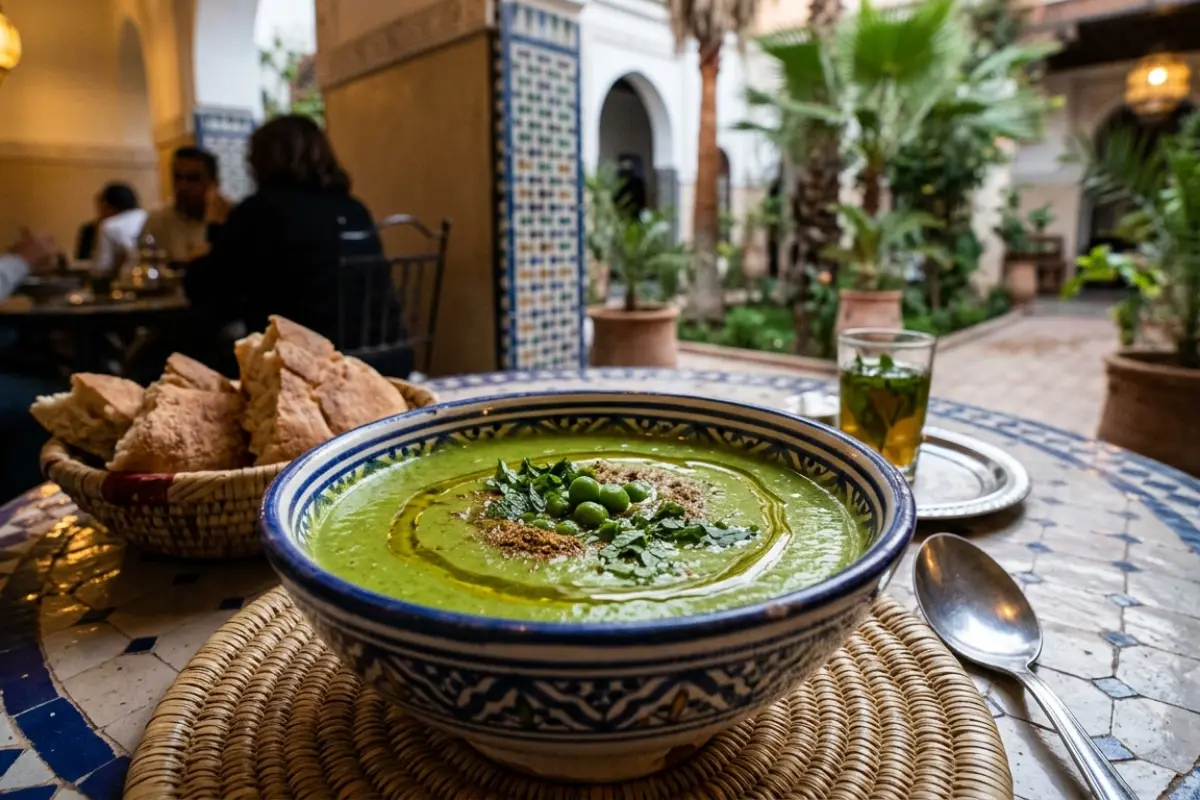
5 minReturn the pot to low heat and warm the blended soup gently for two to three minutes. Stir in the fresh lemon juice and taste for seasoning, adding more salt, cumin, or lemon juice as needed. Ladle the soup into warm bowls. Garnish each serving with a drizzle of extra virgin olive oil, a few fresh mint leaves, the reserved whole peas if prepared earlier, and a light dusting of ground cumin. Serve immediately with warm crusty Moroccan khobz bread on the side.
Tip: Warm your serving bowls by filling them with hot water for one minute before ladling in the soup. This keeps the soup hotter for longer at the table, which is especially appreciated during colder months.
Common Mistakes to Avoid
✗ Overcooking the green peas, resulting in a dull, grayish-green soup
Fix: Cook fresh peas for no more than seven minutes and frozen peas for no more than four minutes. The peas should be bright green and just tender when blended. Immediate blending after cooking and avoiding continued heating helps preserve the vibrant color.
✗ Adding dried mint instead of fresh mint
Fix: Dried mint lacks the volatile aromatic compounds that give fresh mint its characteristic brightness. Always use fresh spearmint leaves in this recipe. If fresh mint is absolutely unavailable, substitute with fresh basil combined with a tiny amount of dried mint as a last resort, though the flavor profile will differ.
✗ Skipping the seasoning of the broth before adding peas
Fix: Under-seasoned broth produces a flat, one-dimensional soup. Taste and adjust the salt level of your broth before adding the peas, as it is harder to evenly season a pureed soup after blending. Building flavor in layers at every stage is the key to a well-balanced result.
✗ Blending hot soup without proper precautions
Fix: Blending hot liquid in a countertop blender can cause pressure buildup and dangerous splashing. Always let the soup cool slightly for a few minutes, never fill the blender more than halfway, and hold a folded kitchen towel firmly over the lid while blending. An immersion blender is the safest option for hot soups.
Ingredient Substitutions
Instead of: Fresh green peas
Use: Frozen green peas work excellently and are available year-round. For a different flavor profile, shelled edamame or split green peas (cooked separately until soft) can also be used, though these will change the character of the soup significantly.
Instead of: Fresh mint
Use: Fresh basil provides a different but complementary herbal note and works well in this soup. A small amount of fresh coriander (cilantro) can also be used, which will give the soup a more distinctly Moroccan flavor, though it departs from the traditional recipe.
Instead of: Extra virgin olive oil
Use: A mild-flavored butter can be used for a slightly richer, creamier result. Argan oil, if available, adds an unmistakably Moroccan nutty dimension to the soup as a finishing drizzle.
Instead of: Vegetable or chicken broth
Use: Plain water with a bouillon cube or paste can substitute in a pinch. For a creamier version, replace one cup of broth with coconut milk or heavy cream, which creates a richer texture while still pairing well with the mint.
Instead of: Fresh lemon juice
Use: A small amount of preserved lemon pulp (without the rind) can replace fresh lemon juice and adds a distinctly Moroccan salty-sour flavor. White wine vinegar used very sparingly can also provide the necessary acidity in the absence of lemon.
Serving Suggestions
Serve the soup in wide, shallow bowls for elegant presentation, garnished with a swirl of good olive oil, a few whole fresh mint leaves, a pinch of cumin, and a small handful of microgreens or pea shoots for color contrast.
Accompany the soup with warm Moroccan khobz bread or semolina flatbread for dipping. A side of harissa paste served separately allows guests to add heat according to their preference.
For a more substantial meal, serve alongside a light Moroccan salad of grated carrots with cumin and lemon, or a simple cucumber and tomato salad dressed with olive oil and fresh herbs.
During Ramadan, this soup is traditionally served as the first course after breaking the fast with dates and water, followed by other dishes. Its light and nourishing qualities make it an ideal opener that warms the stomach gently.
For a dinner party presentation, serve small portions in espresso cups or shot glasses as an amuse-bouche, garnished with a single mint leaf and a tiny drizzle of argan oil for a sophisticated touch.
Storage & Reheating
Storage
Allow the soup to cool completely to room temperature before transferring to airtight containers. Store in the refrigerator for up to four days. The soup can also be frozen in portions for up to three months. Freeze before adding the lemon juice and fresh mint garnish, as these are best added fresh when serving. Use freezer-safe containers and leave a small amount of headspace to allow for expansion.
Reheating
Reheat refrigerated soup gently in a saucepan over medium-low heat, stirring occasionally, until just heated through. Avoid boiling the soup during reheating as this can dull the green color and diminish the fresh flavor. For frozen soup, thaw overnight in the refrigerator before reheating on the stovetop. An alternative is to reheat from frozen in a saucepan over low heat with a splash of added broth or water to restore the original consistency.
The soup may thicken considerably in the refrigerator as the starch from the peas continues to absorb liquid. When reheating, add a small amount of broth or water a little at a time while stirring to return it to the desired consistency. Always re-season with a squeeze of fresh lemon and a pinch of salt after reheating, as chilling tends to mute flavors.
Frequently Asked Questions
Recipe by

Nora Alaoui
نورة العلوي
Soup & Stew Expert
View all recipes by Nora →
You May Also Like
Our Ebooks

The Moroccan Vegan
$12.56

Tables of Fez: A Royal Palace Legacy
$22.99

The Soul of Morocco
$20.00
YouTube
Watch step-by-step cooking videos and learn traditional Moroccan techniques.
450+
Subscribers
150+
Videos