
15
Prep (min)
40
Cook (min)
4
Servings
Easy
Level
Introduction
Kawia del Badinjan, which translates loosely to 'roasted eggplant salad,' is one of Morocco's most treasured cold appetizers, deeply woven into the culinary fabric of cities like Fez, Meknes, and Marrakech. The word 'kawia' in Moroccan Darija refers to the practice of charring or roasting vegetables directly over an open flame or under a broiler, a technique that has been practiced in Moroccan kitchens for centuries. This method of cooking imparts a signature smoky depth that no amount of stovetop sautéing can replicate, making the fire-roasting step absolutely essential to the dish's identity.
About This Recipe
Kawia, the art of fire-roasting vegetables, is one of the oldest cooking techniques in Moroccan culinary tradition, predating modern kitchen equipment by many centuries. In traditional Moroccan homes, particularly across the imperial cities of Fez and Meknes, vegetables were routinely charred directly in the embers of wood-burning clay ovens known as kanoun, or held over open flame to achieve that deep, irreplaceable smokiness. The pairing of eggplant with peppers and garlic reflects the Moorish and Andalusian influences that have shaped Moroccan cuisine since the 13th and 15th centuries, when waves of Moorish refugees brought their agricultural traditions and flavor preferences to Morocco following the Reconquista of Spain. Eggplant, introduced to North Africa via trade routes connecting the Middle East and Mediterranean, quickly became a central ingredient in Moroccan cooking due to its versatility and ability to absorb spices and smoke. Today, roasted eggplant with pepper and garlic remains a beloved appetizer served in homes, restaurants, and street food stalls across Morocco, a timeless dish that connects modern Moroccan cooks to a long and flavorful past.
Nutrition / serving
Recipe Tags
Understanding the Ingredients
Eggplant
Large globe eggplants are preferred for this dish as they have a thick, meaty flesh that holds up well to roasting and develops a beautifully creamy, smoky interior when charred over an open flame or under a broiler. Choose firm, shiny eggplants without soft spots for the best results.
Green Bell Pepper
Green bell peppers add a mild bitterness and vegetal sweetness that balances the richness of the eggplant. They are traditionally roasted alongside the eggplant until their skins blister and char, then peeled to reveal their tender, silky flesh beneath.
Garlic
Garlic is a foundational flavor in Moroccan cooking. For this salad, raw garlic cloves are pounded or finely minced and added after cooking to preserve their sharp, pungent bite, which contrasts beautifully with the mellow smokiness of the roasted vegetables.
Olive Oil
Extra-virgin olive oil is the finishing fat of choice in this dish. Moroccan olive oil, particularly from the Meknès or Beni Mellal regions, has a fruity, slightly peppery character that elevates the salad. It is drizzled generously over the finished dish both for flavor and to give the salad a glossy, inviting appearance.
Fresh Lemon Juice
Lemon juice provides essential acidity that cuts through the oiliness of the eggplant and brightens all the flavors. Freshly squeezed lemon juice is always preferred over bottled varieties for the most vibrant flavor.
Ground Cumin
Cumin is one of the most commonly used spices in Moroccan cuisine. Its warm, earthy aroma complements the smoky eggplant perfectly and is a defining characteristic of this salad. Freshly ground cumin will deliver the most aromatic result.
Paprika
Sweet or mild paprika adds a warm red color and a subtle sweetness to the salad. In some regional variations, a pinch of hot paprika or cayenne is added alongside it to introduce a gentle heat.
Fresh Parsley
Flat-leaf parsley is used as both a flavor ingredient and a garnish. Its clean, grassy flavor adds freshness to the dish and provides a beautiful green contrast against the dark smoky eggplant when used as a topping.
Salt
Sea salt or kosher salt is used to season the salad. Salting the eggplant before roasting can also help draw out excess moisture and any residual bitterness, though this step is optional with fresh, high-quality eggplants.
Step-by-Step Cooking Guide
Roast the Eggplant and Peppers
30 minPlace the whole eggplants and green bell peppers directly over an open gas flame or under a broiler set to high heat. Turn them frequently using tongs to ensure all sides char evenly. The eggplants are ready when the skin is completely blackened and the flesh feels very soft and collapsed when pressed, about 25 to 30 minutes. The peppers are ready when blistered and charred all over, about 15 to 20 minutes.
Tip: If using a broiler, line a baking sheet with foil for easy cleanup. Place the vegetables as close to the heating element as possible for the most effective charring.
Steam and Peel the Vegetables
15 minTransfer the roasted eggplants and peppers to a large bowl and cover tightly with plastic wrap or a plate. Allow them to steam for 10 to 15 minutes. This steaming process makes the charred skins much easier to peel away. Once cooled enough to handle, peel off and discard all the charred skin from both the eggplants and peppers. Remove the seeds and stems from the peppers.
Tip: Do not rinse the peeled vegetables under water as this washes away the valuable smoky flavor. Use paper towels to wipe off any remaining charred bits.
Drain and Chop the Vegetables
5 minPlace the peeled eggplant flesh in a colander and gently press it to release as much excess liquid as possible. Allow it to drain for at least 5 minutes. Then transfer the eggplant and peeled peppers to a cutting board and chop or roughly mash them together using a knife or fork. The texture should be chunky and rustic, not a smooth puree.
Tip: The more liquid you drain from the eggplant, the more concentrated and flavorful the final salad will be. Do not skip this draining step.
Season the Salad
5 minTransfer the chopped vegetables to a mixing bowl. Add the minced garlic, ground cumin, paprika, salt, fresh lemon juice, and a generous drizzle of extra-virgin olive oil. Mix everything together thoroughly, tasting as you go and adjusting the seasoning to your preference. The balance of smoky, tangy, garlicky, and earthy flavors is the hallmark of a great kawia.
Tip: Add the garlic a little at a time and taste as you go, as raw garlic can be very pungent. You can always add more but you cannot take it away.
Rest and Serve
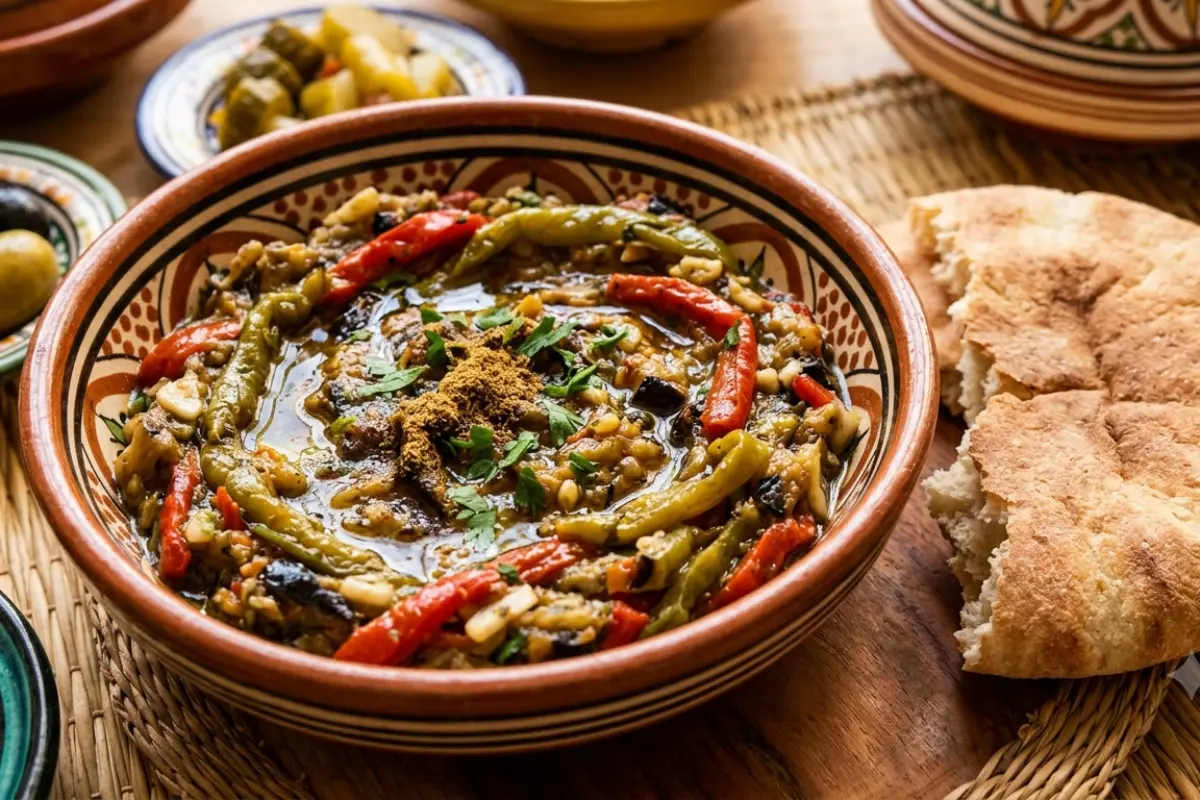
5 minAllow the salad to rest at room temperature for at least 15 minutes before serving to let the flavors meld together beautifully. Transfer to a serving platter, garnish with freshly chopped parsley, a few extra drizzles of olive oil, and a light dusting of paprika for color. Serve at room temperature or slightly chilled alongside warm Moroccan bread.
Tip: This salad tastes even better the next day after the flavors have had time to develop overnight in the refrigerator. Make it a day ahead for best results.
Common Mistakes to Avoid
✗ Not charring the eggplant sufficiently
Fix: The eggplant must be completely blackened on the outside and fully collapsed and soft inside. Undercooked eggplant will be spongy and bitter. Do not rush this step and ensure all sides are thoroughly charred.
✗ Skipping the draining step
Fix: Eggplant contains a large amount of water that must be drained out after roasting. Failing to drain it properly will result in a watery, diluted salad. Always press the flesh in a colander and let it drain for several minutes.
✗ Adding too much garlic all at once
Fix: Raw garlic is very strong and can easily overpower the delicate smoky flavor of the roasted vegetables. Start with a small amount, mix, taste, and then add more gradually until you reach the desired intensity.
✗ Over-processing the vegetables into a puree
Fix: Traditional kawia should have a rustic, chunky texture. Avoid using a food processor or blender. Use a fork or knife to mash and chop the vegetables by hand, leaving visible pieces for the authentic texture.
Ingredient Substitutions
Instead of: Green Bell Pepper
Use: Red or yellow bell peppers can be used for a sweeter flavor profile, or a combination of colors for a more visually striking presentation.
Instead of: Fresh Lemon Juice
Use: White wine vinegar or apple cider vinegar can be used in a pinch, though the flavor will be slightly different from the bright citrusy note that fresh lemon provides.
Instead of: Fresh Parsley
Use: Fresh cilantro is a popular alternative in some Moroccan households and adds a more aromatic, slightly citrusy herbal note to the finished dish.
Instead of: Sweet Paprika
Use: Smoked paprika can be used for an even deeper smoky flavor, or a pinch of cayenne pepper can be added alongside the sweet paprika for a spicier version of the dish.
Serving Suggestions
Serve as part of a traditional Moroccan mezze spread alongside other cold salads such as taktouka, carrot salad with cumin, and zaalouk for a colorful and varied appetizer course.
Serve at room temperature with warm, freshly baked Moroccan khobz bread for scooping, or alongside crusty baguette as a dip or spread.
Use as a filling for Moroccan sandwiches along with grilled meats, fresh tomatoes, and harissa for a flavorful and satisfying street-food style meal.
Pair with a simple green salad and some olives for a light vegetarian lunch that showcases the best of Moroccan vegetable cooking.
Storage & Reheating
Storage
Store the finished kawia in an airtight container in the refrigerator for up to 4 days. The flavors will continue to develop and deepen over time, making leftovers particularly delicious.
Reheating
This dish is traditionally served at room temperature or cold and does not require reheating. Simply remove it from the refrigerator 20 to 30 minutes before serving to allow it to come to room temperature.
Before serving leftovers, stir the salad well and taste for seasoning. You may want to add a fresh squeeze of lemon juice and a small drizzle of olive oil to refresh the flavors, as the acid can mellow during storage.
Frequently Asked Questions
Recipe by

Samira Tazi
سميرة تازي
Salad & Meze Specialist
View all recipes by Samira →
You May Also Like
Our Ebooks

The Moroccan Vegan
$12.56

Tables of Fez: A Royal Palace Legacy
$22.99

The Soul of Morocco
$20.00
YouTube
Watch step-by-step cooking videos and learn traditional Moroccan techniques.
450+
Subscribers
150+
Videos