
30
Prep (min)
120
Cook (min)
4
Servings
Medium
Level
Introduction
The Rooster Tagine with Figs and Honey is one of the most storied dishes in Moroccan culinary heritage, tracing its roots back to the imperial kitchens of Fez, a city long regarded as the cultural and gastronomic capital of Morocco. The combination of poultry with dried fruits and honey reflects the ancient Andalusian influence that shaped Fassi cuisine for centuries, blending Persian, Arab, and Berber culinary philosophies into a single, breathtaking dish. Historically, rooster was prized over hen for its firm, flavorful meat, which holds up beautifully during the long, slow cooking process required by the tagine method.
About This Recipe
The tradition of combining poultry with dried fruits, honey, and warm spices in Morocco dates back to the medieval period when Andalusian Muslims and Jews fleeing the Iberian Peninsula brought their sophisticated culinary traditions to Fez, Meknes, and Tetouan. The city of Fez became the epicenter of this culinary fusion, and the Fassi kitchen, widely regarded as the pinnacle of Moroccan gastronomy, perfected the art of balancing sweet and savory in slow-cooked stews. Rooster was historically the poultry of choice for celebration dishes because it was not a daily food source like eggs-laying hens; its sacrifice marked weddings, births, and religious observances. The use of figs in Moroccan cooking is deeply intertwined with Islamic culture, as the fig is one of the fruits mentioned in the Quran, and its presence in celebratory dishes carries spiritual and cultural significance. Honey has been a cornerstone of Moroccan cuisine and medicine for millennia, with Berber tribes in the Atlas Mountains harvesting wild honey as both a sweetener and a remedy. The combination of all these elements in a single tagine represents the essence of Moroccan culinary philosophy: generous, layered, deeply perfumed, and rooted in a history of cultural exchange that spans continents and centuries.
Nutrition / serving
Recipe Tags
Understanding the Ingredients
Rooster
Rooster meat is denser and more flavorful than standard chicken due to the bird's age and activity level. It requires longer cooking times but rewards with a rich, deep flavor that permeates the braising liquid. If unavailable, a mature free-range hen is the best alternative.
Dried Figs
Dried figs provide natural sweetness and a chewy, jammy texture that melts slightly into the sauce during cooking. Moroccan dried figs from the Tafilalet region are prized for their concentrated flavor. They are added toward the later stages of cooking to prevent them from disintegrating completely.
Honey
Pure Moroccan wildflower or thyme honey is traditionally used, lending a floral sweetness that balances the savory spices. Honey is stirred in near the end of cooking to preserve its aromatic compounds and to lightly glaze the meat and figs.
Ras el Hanout
This signature Moroccan spice blend typically contains over a dozen spices including cardamom, cumin, coriander, allspice, nutmeg, and dried rose petals. It forms the aromatic backbone of the tagine and gives the dish its unmistakably Moroccan character.
Saffron
Moroccan saffron from Taliouine, one of the world's finest, adds a golden hue and a subtle floral bitterness that contrasts beautifully with the sweetness of the figs and honey. It is bloomed in warm water before being added to the pot.
Preserved Lemon
A staple of Moroccan cooking, preserved lemon adds a bright, salty citrus note that cuts through the richness of the meat and the sweetness of the figs. Only the rind is used, rinsed to remove excess salt before adding to the dish.
Onion
Grated onion forms the aromatic base of this tagine, slowly caramelizing around the meat to create a sweet, savory foundation for the sauce. Grating rather than slicing the onion helps it break down completely into the braising liquid.
Cinnamon Sticks
Whole cinnamon sticks infuse the braising liquid with warm, woody sweetness throughout the long cooking process. They complement the figs and honey while adding depth to the spice profile of the dish.
Step-by-Step Cooking Guide
Marinate the Rooster
15 minCut the rooster into 6 to 8 serving pieces. In a large bowl, combine the ras el hanout, ground ginger, turmeric, half the bloomed saffron, salt, pepper, and half the olive oil. Rub this marinade thoroughly into every piece of the rooster, ensuring it penetrates under the skin where possible. Cover and refrigerate for at least 2 hours, or overnight for best results.
Tip: Marinating overnight significantly deepens the flavor of rooster meat, which is denser than chicken and benefits from extended spice absorption.
Build the Aromatic Base
12 minHeat the remaining olive oil in the base of a heavy tagine or wide Dutch oven over medium heat. Add the grated onion and cook, stirring frequently, for 8 to 10 minutes until softened and just beginning to turn golden. Add the minced garlic, the remaining saffron water, and the cinnamon sticks, stirring for another minute until fragrant.
Tip: Grating the onion rather than slicing it allows it to melt into the sauce, creating a silkier, more integrated base.
Sear the Rooster Pieces
12 minIncrease heat to medium-high. Add the marinated rooster pieces to the pot in a single layer, skin side down. Sear for 4 to 5 minutes per side until a golden-brown crust forms on the exterior. Work in batches if necessary to avoid overcrowding, which would cause steaming rather than browning.
Tip: A proper sear locks in the juices and adds a layer of flavor through the Maillard reaction that slow braising alone cannot achieve.
Braise the Tagine
90 minReturn all rooster pieces to the pot. Add 1 cup of warm water or light chicken stock, pouring it around the edges rather than directly over the meat. Nestle the strips of preserved lemon rind among the pieces. Cover tightly with the tagine lid or a tight-fitting lid and reduce heat to low. Cook gently for 75 to 90 minutes, checking occasionally and adding small amounts of water if the liquid reduces too much.
Tip: Low and slow is the key to rooster. Rushing the cooking with high heat will result in tough, stringy meat that fails to absorb the flavors of the braise.
Add Figs and Honey
20 minOnce the rooster is nearly tender, gently nestle the dried figs among the meat pieces. Drizzle the honey evenly over the top of the entire dish. Replace the lid and continue cooking on low heat for an additional 20 minutes, allowing the figs to plump and soften and the honey to meld into the sauce, creating a glistening, lightly caramelized glaze.
Tip: Do not stir vigorously once the figs are added, as they will become very soft and may fall apart. Gently tilt the pot or use a spoon to baste.
Garnish and Serve
5 minTransfer the rooster pieces carefully to a warm serving tagine or deep platter, arranging the figs around and on top of the meat. Spoon the reduced, glossy braising sauce generously over everything. Garnish with toasted sesame seeds and a few fresh or dried mint leaves. Serve immediately with warm Moroccan khobz bread to soak up the rich sauce.
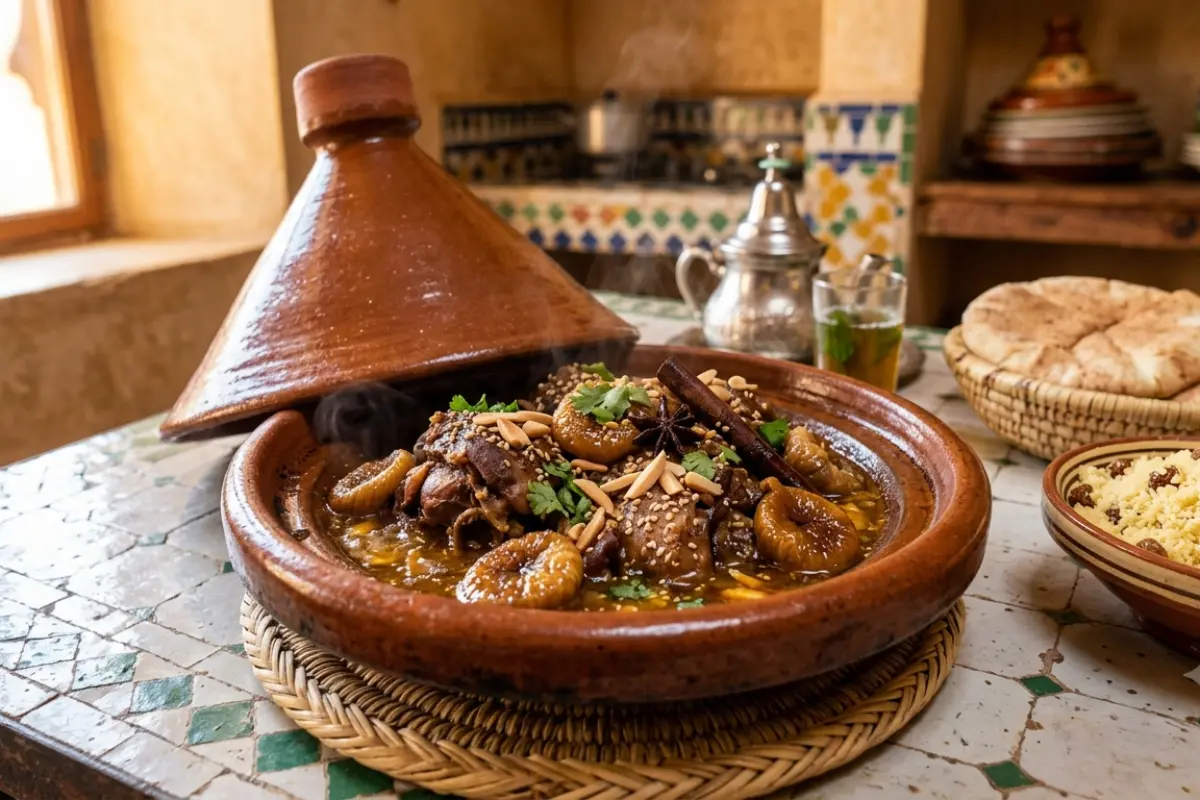
Tip: Presenting the tagine directly in its cooking vessel on a decorative wooden stand makes for an impressive and authentic table setting that keeps the dish warm throughout the meal.
Common Mistakes to Avoid
✗ Using standard broiler chicken instead of rooster
Fix: Rooster or mature free-range poultry is essential for this recipe. Young broiler chickens will become mushy after the extended cooking time required. If rooster is unavailable, use a mature stewing hen and reduce cooking time to 60 minutes.
✗ Adding figs and honey too early
Fix: Figs and honey should only be added in the final 20 minutes of cooking. Adding them at the start causes the figs to completely dissolve into the sauce and the honey to lose its floral aroma through prolonged heat exposure.
✗ Cooking on too high a heat
Fix: A tagine requires gentle, low heat to develop its flavors and keep the meat tender. High heat causes the liquid to evaporate too quickly, the sauce to become grainy, and the meat to seize and toughen.
✗ Not blooming the saffron before adding
Fix: Saffron must be steeped in a few tablespoons of warm water for at least 10 minutes before use. This releases its color and flavor compounds fully. Adding dry saffron threads directly to the pot results in uneven flavor distribution.
Ingredient Substitutions
Instead of: Rooster
Use: Mature stewing hen or large free-range chicken thighs with bone-in, skin-on
Instead of: Dried Figs
Use: Medjool dates or dried prunes, which offer a similar sweetness and texture
Instead of: Honey
Use: Date syrup or pure maple syrup for a slightly different but complementary sweetness
Instead of: Preserved Lemon
Use: One teaspoon of fresh lemon zest combined with a pinch of salt, though the flavor will be less complex
Instead of: Ras el Hanout
Use: A blend of equal parts cumin, coriander, cinnamon, and allspice with a pinch of cayenne and nutmeg
Serving Suggestions
Serve the tagine directly in its clay vessel set on a decorative wooden stand, accompanied by warm, freshly baked Moroccan khobz bread for scooping up the rich sauce.
Pair with a side of fluffy couscous lightly seasoned with butter and a pinch of cinnamon to absorb the braising juices.
Offer a simple cucumber and tomato salad dressed with cumin and lemon juice as a refreshing contrast to the richness of the tagine.
A glass of cold Moroccan mint tea or a still rose water drink complements the sweet and savory flavors beautifully.
Storage & Reheating
Storage
Allow the tagine to cool completely before transferring to an airtight container. Store in the refrigerator for up to 3 days. The flavors continue to deepen overnight, making leftovers especially delicious.
Reheating
Reheat gently in a covered saucepan over low heat, adding a splash of water or chicken stock to loosen the sauce if it has thickened too much during storage. Avoid microwaving as it can dry out the meat and make the figs rubbery.
If freezing, remove the preserved lemon rind before storing as it can become bitter after freezing. The dish freezes well for up to 2 months. Thaw overnight in the refrigerator before reheating.
Frequently Asked Questions
Recipe by

Fatima El Amrani
فاطمة العمراني
Master Chef
View all recipes by Fatima →
You May Also Like
Our Ebooks

The Moroccan Vegan
$12.56

Tables of Fez: A Royal Palace Legacy
$22.99

The Soul of Morocco
$20.00
YouTube
Watch step-by-step cooking videos and learn traditional Moroccan techniques.
450+
Subscribers
150+
Videos