
5
Prep (min)
10
Cook (min)
4
Servings
Easy
Level
Introduction
Rose tea has been a cornerstone of Moroccan beverage culture for centuries, with its roots tracing back to the ancient trade routes that connected Morocco to Persia, the Ottoman Empire, and the Arab world. The Dadès Valley, often called the Valley of Roses, located in the High Atlas Mountains near Ouarzazate, has been cultivating the famous Damask rose (Rosa damascena) for generations. Every spring, the region hosts the Rose Festival, celebrating the harvest of these precious blooms that are used in everything from culinary creations to cosmetics and, most importantly, in the preparation of aromatic teas enjoyed across the kingdom.
In Moroccan tradition, the art of tea preparation is never merely about quenching thirst — it is a deeply social and spiritual ritual. Rose tea infused with saffron and cardamom holds a particularly elevated status, reserved for welcoming honored guests, celebrating life milestones such as engagements and weddings, and marking religious occasions during Ramadan. The inclusion of saffron, one of the world's most precious spices grown in the Taliouine region of Morocco, elevates this simple beverage into something truly regal, while cardamom adds a warming, slightly citrusy depth that balances the floral sweetness of the roses.
Modern Moroccan households continue to pass down the secrets of this tea from mother to daughter, with subtle variations in sweetness, spice intensity, and steeping time distinguishing each family's unique recipe. Whether sipped slowly in a riad courtyard surrounded by orange blossom trees or served in ornate Moroccan tea glasses at a festive gathering, Rose Tea with Cardamom and Saffron remains one of the most evocative and cherished drinks of North African culture. Its preparation is considered a form of love and care, and sharing it with others is an expression of warmth, generosity, and deep-rooted Moroccan hospitality.
About This Recipe
The tradition of rose-infused beverages in Morocco is deeply intertwined with the country's centuries-old cultivation of the Damask rose in the Dadès Valley, a fertile river valley nestled between the High Atlas and Anti-Atlas mountain ranges near the town of Kelaat Mgouna. Berber farmers in this region have cultivated Rosa damascena since at least the 10th century, when the rose was introduced to Morocco via ancient trade routes connecting the Maghreb to Persia and the Arab world. The annual rose harvest in April and May transforms the valley into a sea of pink blossoms and draws visitors from across Morocco and beyond to participate in the Rose Festival, a celebration of this precious crop that forms the backbone of the local economy. Historically, rose petals were used primarily in the production of rose water and rose oil (attar), both of which became essential ingredients in Moroccan cooking, perfumery, and medicine. The addition of saffron, harvested in the town of Taliouine in the Souss region, reflects Morocco's long history as a hub of the spice trade, with saffron cultivation dating back over a thousand years to Arab and Berber agricultural traditions. The combination of rose, saffron, and cardamom in a single tea represents the convergence of indigenous Moroccan botanical traditions with Persian and Ottoman culinary influences that flowed through Morocco along the Silk Road. This tea became particularly associated with celebratory and spiritual occasions, served at weddings, engagement ceremonies, and during Ramadan as a sophisticated and nourishing beverage that honored guests with the finest ingredients the Moroccan landscape had to offer. Today, Rose Tea with Cardamom and Saffron remains a symbol of Moroccan refinement, warmth, and the enduring legacy of the country's extraordinary spice heritage.
Nutrition / serving
Recipe Tags
Understanding the Ingredients
Dried Rose Petals
The star ingredient of this tea, dried rose petals ideally sourced from the Dadès Valley in Morocco provide a delicate, sweet floral aroma and a beautiful pale pink color. Damask rose petals are preferred for their intense fragrance and authentic flavor. Ensure the petals are food-grade and free from pesticides for the best results.
Saffron Threads
Moroccan saffron from the Taliouine region is among the finest in the world, prized for its deep crimson threads and rich golden color when steeped. Saffron imparts a subtle earthy, honey-like flavor and a stunning golden hue to the tea. A small pinch goes a long way, making it worth the investment for an authentic experience.
Green Cardamom Pods
Freshly crushed green cardamom pods release aromatic essential oils that provide a warm, slightly citrusy, and floral spice note to the tea. Cardamom is widely used in Moroccan and Middle Eastern beverages and acts as a natural digestive aid. Crushing the pods just before use ensures maximum flavor release.
Green Tea
Moroccan Gunpowder green tea serves as the base of this recipe, providing a slightly astringent backbone that balances the sweetness of the rose petals and honey. This same green tea is used in the iconic Moroccan mint tea, making it a pantry staple in every Moroccan household.
Honey
Pure Moroccan honey, especially thyme or lavender honey from the Atlas Mountains, is the preferred sweetener for this tea. It complements the floral notes of rose and saffron without overpowering them. Honey can be adjusted to personal taste and is added after pouring to preserve its natural enzymes and flavor.
Rose Water
A small splash of rose water is added at the end of brewing to intensify the floral aroma and give the tea an extra layer of fragrance. Moroccan rose water is typically distilled from fresh Damask rose petals and is used extensively in both sweet and savory Moroccan cuisine.
Fresh Water
The quality of water used significantly affects the final taste of the tea. Filtered or spring water is recommended as it is free from chlorine and other minerals that can interfere with the delicate floral and spice flavors. Water should be heated to just below boiling to avoid burning the delicate green tea leaves and rose petals.
Step-by-Step Cooking Guide
Prepare the Saffron Infusion
5 minPlace a generous pinch of saffron threads (approximately 10-15 threads) into a small bowl or cup. Pour two tablespoons of warm water over the saffron and allow it to steep for at least 5 minutes. This blooming process activates the saffron's color and flavor compounds, ensuring the golden hue and earthy richness are fully extracted before adding to the tea.
Tip: Do not use boiling water for the saffron bloom as it can destroy some of the delicate aromatic compounds. Warm water between 70-80°C is ideal for this step.
Crush the Cardamom Pods
2 minUsing a mortar and pestle, lightly crush 6 green cardamom pods to crack them open and expose the seeds inside. You do not need to grind them into a fine powder — simply cracking the pods is sufficient to release their aromatic oils during steeping. Remove and discard the outer green husks if desired, keeping only the small black seeds.
Tip: Crushing the cardamom fresh just before brewing releases significantly more aroma and flavor than using pre-ground cardamom. The difference in fragrance is immediately noticeable.
Heat the Water
5 minPour 4 cups of filtered or spring water into a small teapot or saucepan and heat over medium flame until the water reaches approximately 85°C (185°F), which is just below boiling. Look for small bubbles beginning to form at the bottom of the pot without a full rolling boil. This temperature is ideal for green tea as it prevents bitterness.
Tip: If you do not have a thermometer, bring water to a full boil and then let it cool for about 2 minutes before using it to steep the tea.
Steep the Tea Base
5 minAdd 1 teaspoon of Moroccan Gunpowder green tea and the crushed cardamom seeds into the heated water. Allow the mixture to steep for 3 minutes. Then add the dried rose petals (approximately 2 tablespoons) and steep for an additional 2 minutes. Be careful not to over-steep the green tea as it can become bitter, which would overpower the delicate floral flavors.
Tip: Watch the color of the tea carefully during steeping. It should turn a beautiful soft pink from the rose petals and a warm golden tone from the saffron once added.
Add Saffron and Rose Water
2 minStrain the brewed saffron infusion into the teapot, stirring gently to incorporate the golden liquid evenly. Add a teaspoon of rose water and stir once more. Taste the tea and adjust the saffron level if desired. The tea should now have a beautiful amber-golden-pink color with an intensely aromatic floral and spiced fragrance.
Tip: Add the rose water last and avoid boiling the tea after adding it, as heat can cause the delicate rose water aroma to dissipate quickly.
Strain and Serve
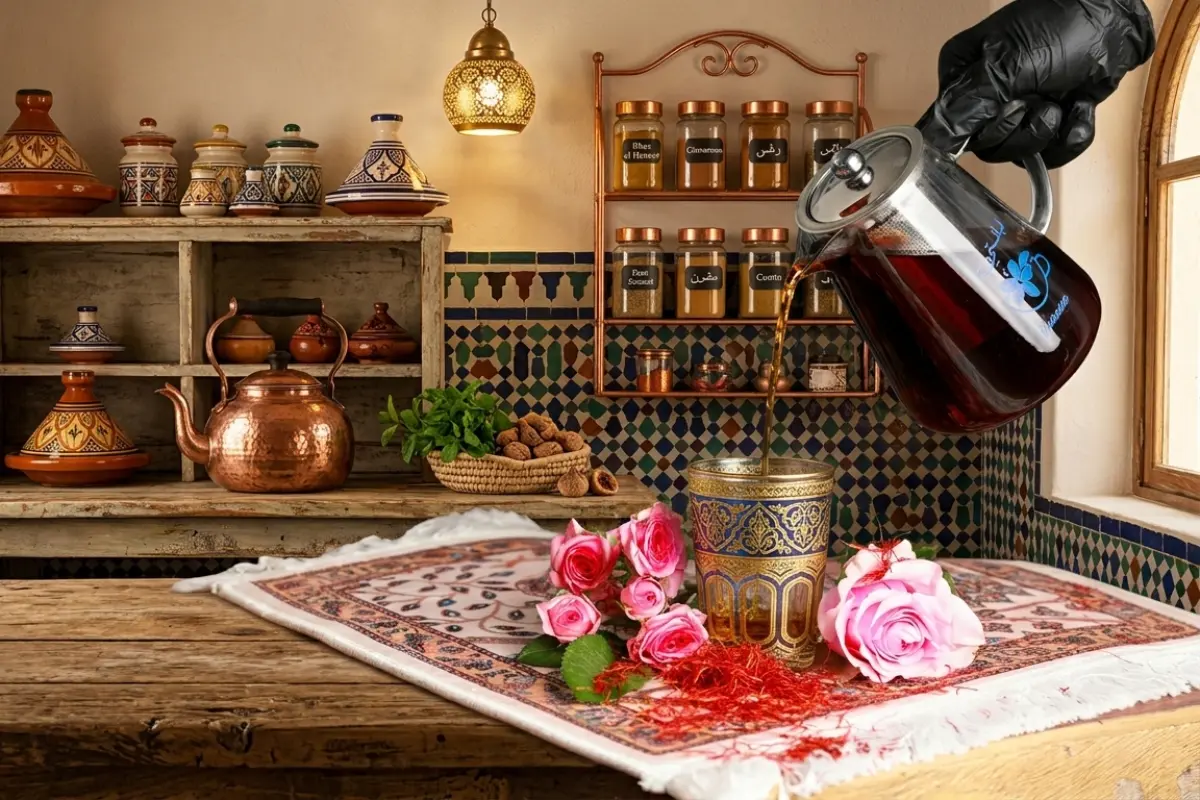
3 minUsing a fine mesh strainer, pour the tea into traditional Moroccan tea glasses or elegant serving cups, filtering out the rose petals, cardamom seeds, and any tea leaves. Serve the honey on the side or drizzle approximately half a teaspoon per glass directly into the tea. Garnish each glass with a few fresh or dried rose petals and an additional saffron thread for a stunning presentation.
Tip: Pour the tea from a height of about 30 centimeters above the glass in the traditional Moroccan style to create a light froth on the surface and to further mix the flavors.
Common Mistakes to Avoid
✗ Using boiling water to steep green tea and rose petals
Fix: Always use water heated to 80-85°C rather than a full boil. Boiling water destroys the delicate compounds in green tea, making it bitter, and also breaks down the fragile aromatic oils in the rose petals, resulting in a flat, harsh flavor.
✗ Over-steeping the green tea base
Fix: Limit the green tea steeping time to no more than 3 minutes. Over-steeping releases excessive tannins that create an unpleasant bitterness that overwhelms the floral and spiced notes of this tea. If you prefer a milder tea, reduce steeping time to 2 minutes.
✗ Adding too much saffron
Fix: Saffron is extremely potent and a small pinch of 10-15 threads is more than sufficient for 4 servings. Adding too much saffron makes the tea medicinal and overpoweringly bitter. Always bloom saffron separately in warm water first to control the amount being added.
✗ Using rose water made with artificial fragrance
Fix: Always use pure distilled rose water made from real rose petals. Artificially scented rose water contains synthetic compounds that smell pleasant on their own but turn soapy and unpleasant when heated and mixed with other ingredients. Look for rose water with only one ingredient listed.
Ingredient Substitutions
Instead of: Dried Rose Petals
Use: Dried hibiscus flowers can be used for a more tart and ruby-red tea, though the flavor profile will shift from floral-sweet to tangy. Rose hip tea bags are another option but will provide a less authentic result.
Instead of: Saffron Threads
Use: A very small pinch of turmeric can replicate the golden color of saffron, but the flavor will be earthier and more pungent. Marigold petals (dried calendula) offer a mild floral alternative with a similar golden hue and none of the bitterness.
Instead of: Green Cardamom Pods
Use: A small pinch of ground cardamom (approximately one-eighth of a teaspoon per 4 servings) can replace fresh pods, though the flavor will be slightly less vibrant. A tiny pinch of allspice mixed with a drop of orange zest can also approximate the warming citrus-spice quality.
Instead of: Honey
Use: Pure cane sugar, agave nectar, or Medjool date syrup can all be used as sweeteners. Date syrup adds a deep caramel-like richness that pairs beautifully with saffron and rose, making it a particularly delicious Moroccan-style alternative.
Instead of: Moroccan Gunpowder Green Tea
Use: Chinese Gunpowder green tea is the most widely available equivalent and works perfectly. White tea or a very light first-flush Darjeeling can be used for a more delicate base that allows the floral notes to shine even more prominently.
Serving Suggestions
Serve this rose tea in traditional hand-painted Moroccan tea glasses alongside a plate of Moroccan almond-filled pastries such as kaab el ghzal (gazelle horns) or chebakia for a complete traditional tea ceremony experience.
Pair the tea with a selection of dates stuffed with almond paste and a small bowl of salted pistachios to balance the floral sweetness with savory and nutty notes.
For a festive Ramadan iftar table, serve this tea chilled over ice with a slice of fresh orange and a sprig of fresh mint as a refreshing and elegant alternative to traditional warm tea.
This tea makes a beautiful welcome drink for guests arriving at a celebration or gathering, served in small ornate glasses on a traditional Moroccan silver tray alongside rose-flavored Turkish delight or nougat.
Storage & Reheating
Storage
Leftover brewed rose tea can be stored in a sealed glass pitcher or jar in the refrigerator for up to 48 hours. The flavors will continue to develop and deepen slightly upon refrigeration, making a pleasant iced tea the following day. Do not store with the rose petals and cardamom still in the liquid as they will make the tea increasingly bitter over time.
Reheating
To reheat, gently warm the stored tea in a small saucepan over low heat until it reaches your desired serving temperature. Do not bring the tea to a boil when reheating as this will diminish the delicate rose and saffron aromas. Add a fresh splash of rose water just before serving to restore the fragrant top notes.
For best results, prepare a fresh batch of this tea each time it is served as the aromatic compounds in rose petals and saffron are most vibrant when freshly brewed. If you want to prepare ahead, you can pre-bloom the saffron and measure out the dry ingredients up to a day in advance to speed up the brewing process when guests arrive.
Frequently Asked Questions
Recipe by

Mohammed Benali
محمد بن علي
Beverage Specialist
View all recipes by Mohammed →
You May Also Like
Our Ebooks

The Moroccan Vegan
$12.56

Tables of Fez: A Royal Palace Legacy
$22.99
The Soul of Morocco
$20.00
YouTube
Watch step-by-step cooking videos and learn traditional Moroccan techniques.
450+
Subscribers
150+
Videos