
5
Prep (min)
10
Cook (min)
4
Servings
Easy
Level
Introduction
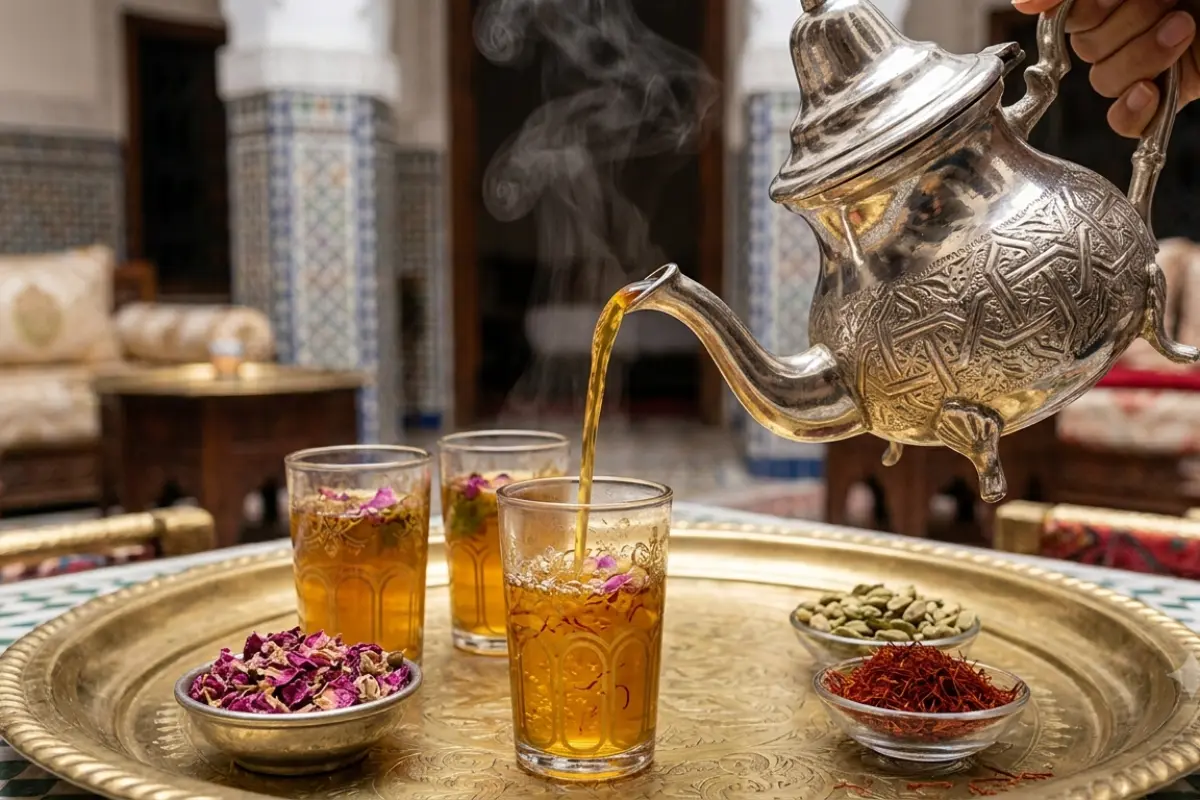
Rose tea with cardamom and saffron represents one of Morocco's most cherished traditional beverages, deeply rooted in the country's rich cultural heritage. This exquisite blend combines three of the most prized ingredients in Moroccan cuisine, creating a drink that is both therapeutic and luxurious. The tradition of brewing floral teas dates back centuries in Morocco, where the art of tea preparation is considered a sacred ritual passed down through generations.
The combination of rose petals, cardamom, and saffron creates a symphony of flavors and aromas that transport you to the bustling souks of Marrakech or the serene gardens of Fes. Each ingredient brings its own unique properties - rose petals for their calming and romantic essence, cardamom for its warming digestive benefits, and saffron for its golden color and distinctive flavor that has made it more valuable than gold throughout history.
This tea is traditionally served during important celebrations, religious holidays, and as a gesture of hospitality to honored guests. The preparation itself is a meditative process that requires patience and attention to detail, reflecting the Moroccan philosophy that good things come to those who take time to appreciate life's simple pleasures.
About This Recipe
Rose tea with cardamom and saffron has its origins in the ancient spice routes that connected Morocco to India and Persia. This luxurious blend reflects Morocco's position as a crossroads of cultures, where Arabian, Berber, and Mediterranean influences merged to create unique culinary traditions. The use of rose petals in Moroccan cuisine dates back to the 10th century when the Damask rose was introduced to the Dades Valley, now famous for its Festival of Roses. Saffron, brought by Arab traders, became a symbol of wealth and hospitality, while cardamom arrived through trade connections with India. This tea was traditionally prepared in wealthy households and served to honored guests as a sign of respect and prosperity. Today, it remains a cherished beverage that embodies the sophistication and warmth of Moroccan hospitality.
Nutrition / serving
Recipe Tags
Understanding the Ingredients
Dried rose petals
Use food-grade dried rose petals, preferably organic. They provide a delicate floral aroma and are rich in vitamin C and antioxidants.
Green cardamom pods
Fresh cardamom pods offer the best flavor. Crush them lightly to release their essential oils and aromatic compounds.
Saffron threads
Premium saffron threads give the tea its golden color and distinctive taste. A little goes a long way with this precious spice.
Water
Use filtered water for the best taste, as impurities in water can affect the delicate flavors of the tea.
Honey
Raw honey complements the floral notes and adds natural sweetness without overpowering the delicate flavors.
Step-by-Step Cooking Guide
Prepare the saffron
5 minSoak saffron threads in 2 tablespoons of warm water for 5 minutes to release their color and flavor
Tip: Gently rub the saffron between your fingers while soaking to maximize extraction
Crush cardamom
1 minLightly crush cardamom pods using the flat side of a knife to open them and release their oils
Tip: Don't over-crush as this can make the tea bitter
Boil water
3 minBring 4 cups of filtered water to a gentle boil in a medium saucepan
Tip: Avoid rapid boiling as it can make the tea taste harsh
Add spices
3 minAdd crushed cardamom pods and rose petals to the boiling water, reduce heat and simmer
Tip: Keep the heat low to preserve the delicate flavors
Strain and serve
2 minStrain the tea, add saffron water and honey to taste, serve immediately in small glasses
Tip: Serve in traditional Moroccan tea glasses for the authentic experience
Common Mistakes to Avoid
✗ Using too much saffron
Fix: Use only a pinch (6-8 threads) as saffron can quickly overpower other flavors
✗ Boiling the tea too vigorously
Fix: Keep heat low and gentle to preserve the delicate floral notes
✗ Steeping for too long
Fix: Don't exceed 5 minutes steeping time to avoid bitterness
✗ Adding sugar instead of honey
Fix: Honey complements the floral notes better than processed sugar
Ingredient Substitutions
Instead of: Dried rose petals
Use: Rose hip tea or hibiscus petals for a similar floral note
Instead of: Fresh cardamom pods
Use: 1/2 teaspoon ground cardamom (use less as ground spice is more concentrated)
Instead of: Saffron
Use: A small amount of turmeric for color, though flavor will be different
Instead of: Honey
Use: Maple syrup or agave nectar for vegan option
Serving Suggestions
Serve with traditional Moroccan pastries like chebakia or makroudh
Pair with dates or dried fruits for a traditional Moroccan experience
Accompany with almond cookies or ma'amoul during Eid celebrations
Serve as a digestive tea after heavy meals
Enjoy with a selection of Moroccan sweets during afternoon tea time
Storage & Reheating
Storage
This tea is best consumed immediately after preparation. However, you can store the brewed tea in the refrigerator for up to 24 hours in a covered container.
Reheating
Gently reheat in a saucepan over low heat. Avoid microwaving as it can alter the delicate flavors. Do not boil when reheating.
Store dried ingredients in airtight containers away from light and heat. Saffron should be kept in a cool, dark place and can last up to 2 years when properly stored.
Frequently Asked Questions
Recipe by

Mohammed Benali
محمد بن علي
Beverage Specialist
View all recipes by Mohammed →
You May Also Like
Our Ebooks

The Moroccan Vegan
$12.56

Tables of Fez: A Royal Palace Legacy
$22.99
The Soul of Morocco
$20.00
YouTube
Watch step-by-step cooking videos and learn traditional Moroccan techniques.
450+
Subscribers
150+
Videos