
20
Prep (min)
10
Cook (min)
4
Servings
Easy
Level
Introduction
Semolina and Lemon Salad, or Kbiba, is one of Morocco's most cherished cold salads, deeply rooted in the culinary traditions of ancient Moroccan cities such as Fez and Meknes. For centuries, Moroccan households have relied on semolina as a foundational ingredient, using it in everything from couscous to bread and desserts. The transformation of this humble grain into a vibrant, herb-laden salad is a testament to the ingenuity and creativity of Moroccan home cooks who knew how to extract maximum flavor from simple pantry staples.
The salad holds a special place in Moroccan food culture, particularly during the holy month of Ramadan and during warm summer gatherings where light yet nourishing dishes are preferred. The combination of fine semolina, freshly squeezed lemon juice, fragrant parsley, and a generous drizzle of extra virgin olive oil creates a dish that is at once humble and sophisticated. Its clean, bright flavors make it an ideal starter or side dish that pairs beautifully with grilled meats, tagines, and a variety of other Moroccan meze.
Beyond its taste, Semolina and Lemon Salad is celebrated for its simplicity and speed of preparation, making it accessible to cooks of all skill levels. The dish requires no elaborate cooking techniques, relying instead on the quality of its ingredients and the careful balance of flavors. Whether served at a lavish family feast or a casual weekday meal, this salad consistently earns its place on the Moroccan table as a refreshing and beloved classic.
About This Recipe
The Kbiba salad made with semolina and lemon is a dish deeply embedded in the urban culinary heritage of Morocco, particularly in the imperial cities of Fez and Meknes where fine semolina has been a kitchen staple for centuries. Semolina's history in Morocco dates back to the Amazigh Berber ancestors who cultivated durum wheat across the fertile plains of the Atlas region and developed countless ways to prepare it. Over generations, resourceful Moroccan cooks discovered that fine semolina, when hydrated and dressed with the bright local citrus, fragrant herbs, and freshly pressed olive oil abundantly produced in Moroccan groves, created a salad of remarkable lightness and flavor. The dish became especially popular during the warmest months of the year and during Ramadan, when light, easily digestible foods were prized at the Iftar table. Its simplicity made it a democratic dish enjoyed across all social classes, from modest family homes to the elaborate spreads of wealthy merchants. Today, Semolina and Lemon Salad remains a cherished fixture of Moroccan cuisine, proudly served in homes and at festive gatherings as a celebration of the country's deep agricultural traditions and its unmatched ability to transform humble ingredients into extraordinary food.
Nutrition / serving
Recipe Tags
Understanding the Ingredients
Fine semolina
Fine semolina, made from durum wheat, forms the base of this salad. It is lightly cooked or hydrated with boiling water, giving it a soft yet slightly textured consistency that absorbs the lemon dressing beautifully. Choose the finest grind available for the best silky result.
Fresh lemon juice
Freshly squeezed lemon juice provides the essential bright, tangy flavor that defines this salad. It not only seasons the semolina but also helps to lighten and lift the overall taste of the dish. Bottled lemon juice is not recommended as it lacks the vibrant freshness needed.
Extra virgin olive oil
Moroccan extra virgin olive oil adds richness, depth, and a fruity, slightly peppery note to the salad. It binds the ingredients together and enhances the semolina's flavor. A high-quality Moroccan olive oil from regions like Meknès or Marrakech is ideal.
Fresh flat-leaf parsley
Freshly chopped flat-leaf parsley adds a vibrant green color and a clean, herbal freshness to the salad. It is one of the primary aromatics used in this dish and should be finely chopped to distribute evenly throughout the semolina.
Fresh mint
Fresh mint leaves provide a cool, refreshing dimension that complements the lemon perfectly. Moroccan cuisine frequently pairs mint with citrus and semolina-based dishes, and its inclusion here elevates the salad with a subtle sweetness and fragrance.
Onion
Finely diced white or red onion adds a mild sharpness and crunch to the salad. It is sometimes soaked briefly in cold water and lemon juice to mellow its raw bite before being incorporated into the dish, ensuring it enhances rather than overwhelms the other flavors.
Ground cumin
Ground cumin is a quintessential Moroccan spice that adds warmth and an earthy depth to the salad. A small amount is all that is needed to give the dish its characteristic Moroccan character without overpowering the delicate lemon and herb flavors.
Salt
Salt is essential for seasoning both the semolina during hydration and the finished salad. Fine sea salt or kosher salt dissolves easily and distributes evenly. Proper seasoning at each stage ensures a well-balanced and flavorful final dish.
Step-by-Step Cooking Guide
Hydrate the Semolina
10 minPlace the fine semolina in a large mixing bowl. Bring water or light vegetable broth to a boil and pour it over the semolina in a 1:1 ratio. Add a pinch of salt and a drizzle of olive oil. Stir briefly, then cover the bowl with a plate or plastic wrap and let the semolina absorb the liquid for 8 to 10 minutes until fully swollen and tender.
Tip: Use just enough boiling liquid to hydrate the semolina without making it mushy. The semolina should remain fluffy and separate after hydration.
Fluff and Cool the Semolina
5 minOnce the semolina has absorbed all the liquid, use a fork or your hands to fluff and separate the grains, breaking up any clumps. Spread it out slightly in the bowl and allow it to cool to room temperature before adding the remaining ingredients. This step is crucial to prevent the herbs from wilting.
Tip: Rubbing the semolina between your palms while fluffing helps to achieve an even, lump-free texture similar to fine couscous.
Prepare the Aromatics
5 minFinely chop the flat-leaf parsley and fresh mint leaves. Dice the onion as finely as possible and place it in a small bowl with a squeeze of lemon juice and a pinch of salt. Let it marinate for 5 minutes to soften its raw edge. Measure out the ground cumin and set all components aside for assembly.
Tip: Soaking the onion in lemon juice for a few minutes removes harsh bitterness and makes it more pleasant to eat raw in the salad.
Dress the Semolina
3 minTo the cooled semolina, add the freshly squeezed lemon juice and extra virgin olive oil. Toss gently to coat all the grains evenly. Season with salt and ground cumin and mix well. Taste the dressing at this stage and adjust the lemon, salt, or cumin to your preference before adding the fresh herbs.
Tip: Add the lemon juice gradually and taste as you go, since lemon acidity can vary. The semolina should taste bright and well-seasoned but not overly sour.
Combine and Toss
3 minAdd the chopped parsley, mint, and marinated onion to the dressed semolina. Toss everything together gently until well combined and evenly distributed. Take care not to overmix, as the semolina can become dense if worked too aggressively. The salad should look vibrant and colorful.
Tip: Fold rather than stir vigorously to preserve the light, fluffy texture of the semolina and prevent the herbs from bruising.
Rest and Serve
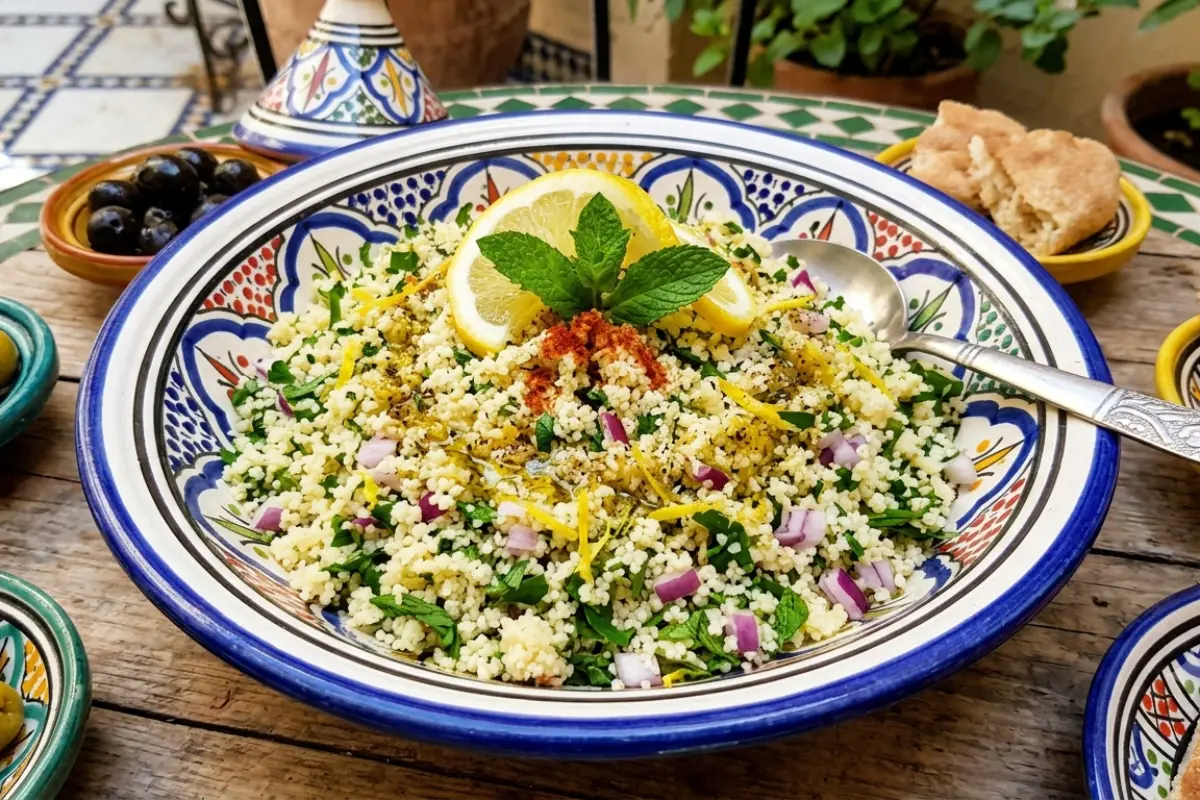
10 minAllow the assembled salad to rest for at least 10 minutes at room temperature or in the refrigerator for the flavors to meld and deepen. Before serving, give it a final taste and adjust seasoning if needed. Transfer to a serving platter, drizzle with a little extra olive oil, and garnish with a few whole mint leaves and lemon slices for presentation.
Tip: Chilling the salad for 30 minutes before serving intensifies the flavors and makes it especially refreshing during warm weather.
Common Mistakes to Avoid
✗ Adding too much liquid to the semolina
Fix: Use a precise 1:1 ratio of semolina to boiling water or broth. Excess liquid will make the semolina mushy and heavy, ruining the light texture of the salad.
✗ Adding herbs to hot semolina
Fix: Always allow the semolina to cool to room temperature before adding fresh parsley and mint. Hot semolina will wilt and discolor the herbs, affecting both flavor and appearance.
✗ Using bottled lemon juice instead of fresh
Fix: Always use freshly squeezed lemon juice for the best, brightest flavor. Bottled juice has a flat, processed taste that will diminish the quality of the finished salad.
✗ Skipping the resting time after assembly
Fix: Allow the salad to rest for at least 10 minutes after combining all ingredients. This allows the semolina to absorb the dressing and the flavors to meld together properly.
Ingredient Substitutions
Instead of: Fine semolina
Use: Bulgur wheat or couscous can be used in place of semolina for a similar texture and flavor profile.
Instead of: Fresh mint
Use: Fresh cilantro or additional flat-leaf parsley can replace mint if it is unavailable, though the flavor profile will be slightly different.
Instead of: Extra virgin olive oil
Use: A mild-flavored avocado oil can substitute for olive oil while maintaining the smooth, rich texture of the dressing.
Instead of: White onion
Use: Thinly sliced green onions or scallions can replace white onion for a milder, more delicate flavor.
Serving Suggestions
Serve the salad as part of a traditional Moroccan meze spread alongside olives, zaalouk, taktouka, and fresh Moroccan bread for a complete appetizer course.
Pair the salad with grilled chicken or lamb brochettes as a refreshing side dish that balances the richness of the grilled meat.
Serve chilled in individual bowls during Ramadan as a light and nourishing starter before the main Iftar meal.
Garnish with slices of preserved lemon and a sprinkle of paprika for a more elegant presentation at dinner parties.
Storage & Reheating
Storage
Store the salad in an airtight container in the refrigerator for up to 2 days. The flavors actually improve after a few hours as the semolina absorbs the lemon dressing more fully.
Reheating
This salad is best served cold or at room temperature and does not require reheating. If it has been refrigerated, remove it 15 minutes before serving to take the chill off.
If the salad seems dry after refrigeration, refresh it with an additional squeeze of fresh lemon juice and a small drizzle of olive oil before serving, then toss gently to redistribute.
Frequently Asked Questions
Recipe by

Samira Tazi
سميرة تازي
Salad & Meze Specialist
View all recipes by Samira →
You May Also Like
Our Ebooks

The Moroccan Vegan
$12.56

Tables of Fez: A Royal Palace Legacy
$22.99

The Soul of Morocco
$20.00
YouTube
Watch step-by-step cooking videos and learn traditional Moroccan techniques.
450+
Subscribers
150+
Videos