
15
Prep (min)
10
Cook (min)
6
Servings
Easy
Level
Introduction
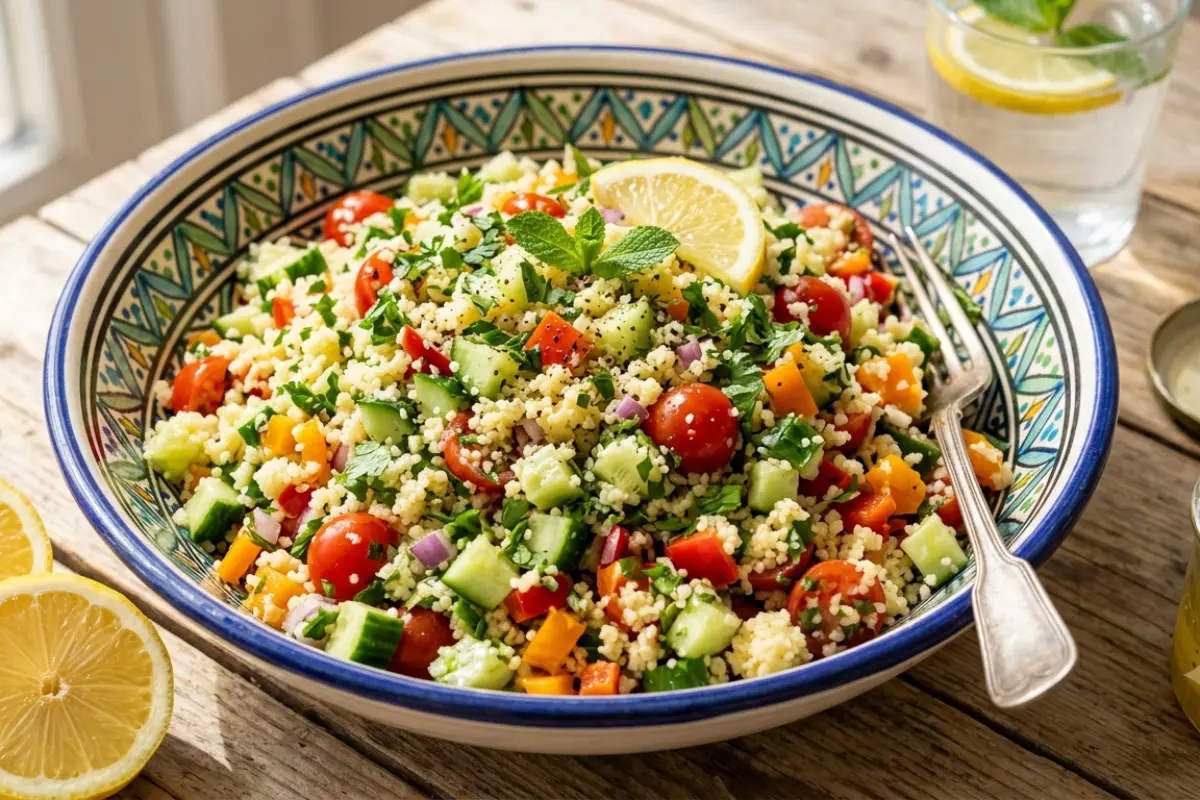
Semolina Salad with Lemon, known as 'Salatet Kbiba bil Smid wa Limoun' in Arabic, is a beloved Moroccan dish that showcases the country's mastery of grain-based salads. This refreshing preparation transforms humble semolina into an elegant and satisfying dish through the magic of fresh lemon juice, aromatic herbs, and carefully selected vegetables.
Originating from the coastal cities of Morocco where fresh citrus is abundant, this salad represents the lighter side of Moroccan cuisine. The dish perfectly balances the nutty flavor of semolina with the bright acidity of lemon, creating a harmonious blend that cleanses the palate and nourishes the body. It's particularly popular during the warmer months when fresh, light meals are preferred.
What makes this salad truly special is its versatility and nutritional value. The semolina provides complex carbohydrates and protein, while the fresh vegetables and herbs contribute vitamins and minerals. The lemon dressing not only adds flavor but also helps preserve the salad's freshness, making it an ideal dish for gatherings, picnics, or meal preparation.
About This Recipe
Semolina Salad with Lemon represents the evolution of Moroccan cuisine influenced by Mediterranean coastal traditions. This dish likely developed in Morocco's Atlantic coastal cities where fresh citrus fruits flourish year-round and where lighter, grain-based salads became popular as alternatives to heavier tagines and stews. The use of semolina, a durum wheat product, reflects Morocco's historical grain trade connections with Mediterranean countries. The preparation method and flavor profile show clear influences from both Berber grain traditions and Arab culinary techniques, particularly in the use of fresh herbs and citrus-based dressings. Over time, this salad became a staple of Moroccan home cooking, valued for its nutritional benefits, refreshing taste, and ability to complement the country's more robust main dishes. Today, it remains popular in Moroccan households and has gained recognition internationally as a healthy, flavorful representation of North African cuisine.
Nutrition / serving
Recipe Tags
Understanding the Ingredients
Fine Semolina
Use fine-grain semolina for the best texture. It should be cooked until fluffy and light, not dense or sticky.
Fresh Lemon Juice
Freshly squeezed lemon juice is essential for the bright, clean flavor. Avoid bottled juice which lacks the aromatic oils.
Extra Virgin Olive Oil
High-quality Moroccan olive oil provides richness and helps bind the flavors together while adding healthy fats.
Fresh Parsley
Flat-leaf parsley adds color, freshness, and a mild peppery flavor that complements the lemon beautifully.
Fresh Mint
Mint provides a cooling element and aromatic freshness that's characteristic of Moroccan cuisine.
Step-by-Step Cooking Guide
Cook the Semolina
8 minBring salted water to boil and gradually whisk in semolina to prevent lumps. Cook while stirring constantly until thick and smooth.
Tip: Add semolina slowly while whisking vigorously to avoid lumps forming
Cool and Fluff
15 minSpread cooked semolina on a large plate and let cool completely. Fluff with a fork to break up any clumps and create light texture.
Tip: Cooling completely prevents the salad from becoming mushy when mixed with other ingredients
Prepare Vegetables
10 minFinely dice tomatoes, cucumber, and onion. Chop fresh herbs finely. Ensure all pieces are uniform for best texture.
Tip: Remove seeds from tomatoes to prevent excess moisture in the salad
Make Dressing
3 minWhisk together lemon juice, olive oil, salt, and pepper until well emulsified. Taste and adjust seasoning as needed.
Tip: Let the dressing sit for a few minutes to allow flavors to meld before using
Combine and Rest
5 minMix cooled semolina with vegetables and herbs, then add dressing gradually. Let salad rest for 30 minutes before serving.
Tip: Add dressing gradually to achieve the perfect moisture level without making the salad soggy
Common Mistakes to Avoid
✗ Adding dressing while semolina is still warm
Fix: Always let semolina cool completely to room temperature before adding any liquids or dressing
✗ Using too much liquid making the salad soggy
Fix: Add dressing gradually and let the semolina absorb it slowly, adding more only if needed
✗ Not seasoning adequately
Fix: Semolina needs generous seasoning - taste and adjust salt, pepper, and lemon juice multiple times
Ingredient Substitutions
Instead of: Fine semolina
Use: Couscous or bulgur wheat for different textures
Instead of: Fresh lemon juice
Use: Lime juice or white wine vinegar for different acidic notes
Instead of: Fresh herbs
Use: Dried herbs using 1/3 the amount, though fresh is strongly preferred
Serving Suggestions
Serve as a refreshing side dish with grilled meats or fish
Enjoy as a light lunch with crusty bread and olives
Present as part of a mezze platter with other Moroccan salads
Garnish with lemon wedges and extra fresh herbs for elegant presentation
Storage & Reheating
Storage
Store covered in refrigerator for up to 3 days. The flavors actually improve after resting overnight.
Reheating
This salad is best served at room temperature or chilled. Remove from refrigerator 20-30 minutes before serving.
If salad seems dry after storage, refresh with a little extra lemon juice and olive oil before serving.
Frequently Asked Questions
Recipe by

Samira Tazi
سميرة تازي
Salad & Meze Specialist
View all recipes by Samira →
You May Also Like
Our Ebooks

The Moroccan Vegan
$12.56

Tables of Fez: A Royal Palace Legacy
$22.99

The Soul of Morocco
$20.00
YouTube
Watch step-by-step cooking videos and learn traditional Moroccan techniques.
450+
Subscribers
150+
Videos