
5
Prep (min)
10
Cook (min)
4
Servings
Easy
Level
Introduction
Sheeba, known botanically as Artemisia absinthium or wormwood, has been used in Moroccan culinary and medicinal traditions for centuries. Its name in Darija — the Moroccan Arabic dialect — literally translates to 'old age' or 'wisdom,' a fitting tribute to a plant that has been revered across North African and Mediterranean cultures for its powerful digestive and therapeutic properties. In Morocco, sheeba is not merely an ingredient but a cultural symbol of warmth, care, and ancient knowledge passed down through matriarchal lines in households from Fez to the Saharan south.
About This Recipe
Sheeba tea has deep roots in the Amazigh (Berber) and Arab traditions of Morocco, where wormwood has been used for thousands of years as both a medicinal herb and a flavoring agent. The practice of blending sheeba with green tea became widespread after Chinese gunpowder green tea was introduced to Morocco through trade routes in the 18th and 19th centuries, gradually replacing older infusions of sheeba steeped alone in hot water. The combination with rose petals reflects the enduring Moroccan love of floral aromas in both cuisine and daily life, an influence seen across the country from the rose festivals of Kelaat M'Gouna in the Dades Valley to the rose water used in pastries and religious ceremonies. Cardamom, brought to Morocco through ancient spice trade routes connecting sub-Saharan Africa, the Arabian Peninsula, and the Mediterranean, added a warming dimension to this already complex blend. Today, Sheeba Tea with Rose and Cardamom remains a beloved household drink across Morocco, particularly in the south and in cities like Marrakech and Fez, where it is served as a gesture of hospitality, a post-meal digestif, and a comforting remedy during illness. The ritual of preparing and pouring this tea — with the characteristic high pour and the layering of fragrant ingredients — is itself a form of cultural expression, passed down from grandmothers to grandchildren as one of Morocco's most intimate and enduring culinary traditions.
Nutrition / serving
Recipe Tags
Understanding the Ingredients
Sheeba (Wormwood / Artemisia)
Sheeba is the dried leaves and stems of Artemisia absinthium, a bitter aromatic herb with silver-green foliage. In Morocco, it is sold dried in souks and is prized for its digestive, anti-inflammatory, and calming properties. Its flavor is intensely bitter and slightly camphor-like, which is why it must be balanced carefully with sweeteners and complementary aromatics.
Dried Rose Petals
Moroccan dried rose petals, particularly those from the Dades Valley near Ouarzazate, are world-renowned for their intense fragrance and deep red color. They impart a floral sweetness and a subtle tartness to the tea, beautifully counterbalancing the bitterness of the sheeba. Always use food-grade, unsprayed dried petals for the best flavor and safety.
Green Cardamom Pods
Cardamom adds a warm, citrusy, and slightly spicy note that bridges the bitterness of sheeba and the floral sweetness of rose. In Moroccan tradition, cardamom is also valued for its digestive benefits and its ability to freshen the breath. Lightly crushing the pods before brewing releases their essential oils and ensures a more fragrant infusion.
Gunpowder Green Tea
Moroccan tea culture is built on the foundation of Chinese gunpowder green tea, a tightly rolled, strong variety that forms the base of most Moroccan tea blends. It provides a slightly smoky, robust backbone that supports the more delicate herbal and floral ingredients in this recipe.
Fresh Mint Leaves
A small addition of fresh spearmint leaves adds a cooling, refreshing contrast to the warm spices and herbal bitterness in this blend. Moroccan mint tea is iconic, and including just a few leaves in this recipe nods to that beloved tradition while keeping the sheeba and rose as the stars.
Sugar
Moroccan tea is traditionally served very sweet. The sugar is not merely a sweetener here but an essential ingredient that tempers the bitterness of the wormwood and allows the floral and spiced notes to fully express themselves. Moroccan cone sugar (pain de sucre) is traditional, but regular white sugar works equally well.
Water
Freshly drawn, filtered water at a temperature just below boiling (around 85–90°C / 185–195°F) is ideal for this tea. Boiling water can make the green tea bitter and destroy the delicate volatile oils of the rose petals and cardamom, so allowing boiled water to rest for one minute before pouring is recommended.
Step-by-Step Cooking Guide
Prepare the Teapot and Warm It
2 minBegin by rinsing a traditional Moroccan brass or silver teapot with hot water to warm it. This ensures the tea steeps at the correct temperature and does not cool too quickly. Discard the warming water and set the teapot on a low flame or a small gas burner.
Tip: A warmed teapot maintains brewing temperature and enhances the final flavor of the tea significantly.
Rinse the Green Tea
2 minAdd 1.5 teaspoons of gunpowder green tea to the teapot. Pour a small amount of nearly boiling water over the leaves just enough to cover them, swirl gently for 10 seconds, then discard this rinse water. This step washes away dust, reduces bitterness, and opens up the tea leaves for better infusion.
Tip: This rinsing step, called 'washing the tea,' is an important Moroccan tea ritual that should not be skipped.
Add Herbs and Spices
2 minAdd the dried sheeba (about 1 teaspoon), dried rose petals (1 tablespoon), and 4 lightly crushed green cardamom pods to the teapot with the rinsed green tea. Add a small handful of fresh mint leaves on top of the herbs. Layering the ingredients in this order allows the flavors to meld harmoniously during steeping.
Tip: Do not over-add sheeba — its bitterness is potent. One teaspoon for a four-cup pot is ideal for a balanced flavor.
Add Hot Water and Steep
6 minPour approximately 700ml (3 cups) of hot water that has been brought to a full boil and then rested for 60 seconds into the teapot. Place the teapot over a very low flame or remove from heat entirely and allow the tea to steep for 5 to 6 minutes. The color should develop into a beautiful amber-green hue with visible rose petal fragments.
Tip: Steeping longer than 7 minutes may intensify the bitterness of the sheeba beyond the desired balance.
Add Sugar and Adjust Sweetness
2 minAdd 3 to 4 tablespoons of sugar (or to taste) directly into the teapot. Stir gently, or alternatively pour one glass of tea and return it to the pot to help dissolve and blend the sugar evenly. Taste and adjust sweetness as needed — Moroccan tea is traditionally on the sweeter side.
Tip: The classic Moroccan saying is that tea should be 'as sweet as love.' Adjust sugar to your preference but do not under-sweeten as sugar is essential to balance the sheeba.
Aerate and Serve
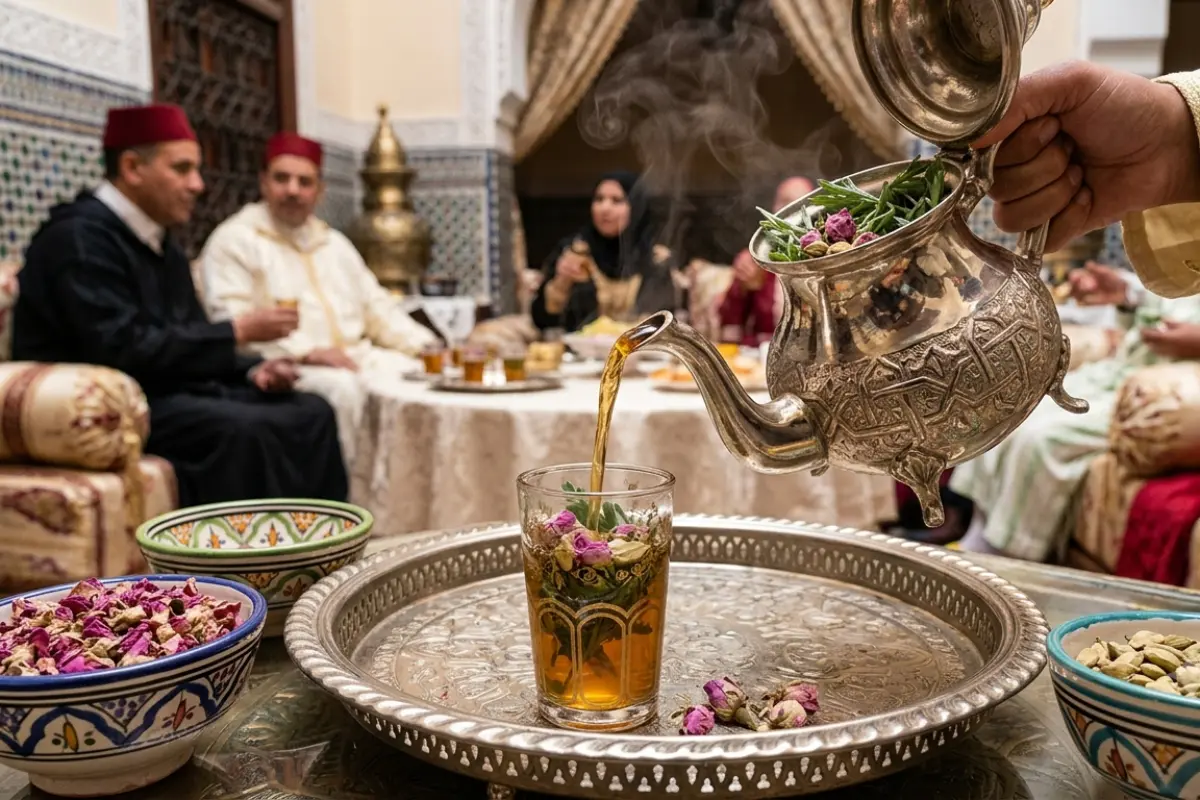
2 minRaise the teapot high above the small Moroccan tea glasses and pour the tea from a height of approximately 30–40 cm to create a natural foam on the surface of each glass. This aeration technique, deeply rooted in Moroccan tea ceremony tradition, enhances the aroma and creates the signature frothy crown that is a sign of well-made Moroccan tea. Garnish each glass with an extra dried rose petal and serve immediately.
Tip: The high-pour technique not only aerates the tea but also cools it slightly for a more comfortable drinking temperature.
Common Mistakes to Avoid
✗ Using too much sheeba
Fix: Sheeba is intensely bitter and a little goes a long way. Stick to no more than 1 teaspoon per pot of 4 servings. Adding too much makes the tea unpleasantly medicinal and overpowers the rose and cardamom.
✗ Using boiling water directly on the ingredients
Fix: Water that is at a rolling boil (100°C) will destroy the delicate essential oils in the rose petals and cardamom and make the green tea excessively bitter. Always let boiled water rest for 60 seconds before pouring it into the teapot.
✗ Skipping the tea rinsing step
Fix: Rinsing the green tea first removes dust and unwanted bitterness. Skipping this step results in a harsher, more astringent flavor that overshadows the floral and herbal notes.
✗ Not crushing the cardamom pods
Fix: Whole uncrushed cardamom pods do not release their aromatic essential oils efficiently during short steeping periods. Always lightly crush or crack the pods with the flat side of a knife before adding them to the pot.
✗ Under-sweetening the tea
Fix: In Moroccan tea culture, sugar is an integral ingredient, not an optional addition. Under-sweetening this tea leaves the sheeba bitterness uncomfortably prominent. Add sugar generously and taste before serving.
Ingredient Substitutions
Instead of: Gunpowder Green Tea
Use: Regular loose-leaf green tea or Moroccan Alwazah tea bags can be used as an accessible substitute, though they will produce a slightly lighter and less smoky flavor profile.
Instead of: Dried Rose Petals
Use: A few drops of food-grade rose water can substitute for dried petals if fresh dried petals are unavailable, though the visual effect and subtle texture of petals in the glass will be lost.
Instead of: Green Cardamom Pods
Use: A pinch of ground cardamom (about 1/8 teaspoon) can substitute for whole pods. Use sparingly as ground cardamom is more potent and can easily overwhelm the other delicate flavors.
Instead of: White Sugar
Use: Moroccan cone sugar (sucre pain) is the most authentic choice. Honey can also be used for a more complex sweetness, though it should be stirred in after pouring as it can affect the steeping process.
Serving Suggestions
Serve this aromatic tea alongside traditional Moroccan pastries such as kaab el ghazal (gazelle horns), chebakia, or briouats with almond paste for a classic afternoon tea spread.
Pair with a simple spread of Moroccan dates, walnuts, and a drizzle of argan oil on bread for a light and authentic Moroccan breakfast or mid-morning break.
Serve in ornate Moroccan tea glasses on a decorative silver tray with a small bowl of extra sugar cubes and dried rose petals for guests to customize their experience.
This tea is particularly suited as a post-dinner digestif, as both sheeba and cardamom are well-known digestive aids in Moroccan traditional medicine.
Storage & Reheating
Storage
Brewed Sheeba Rose Cardamom Tea is best consumed immediately after preparation. If needed, leftover tea can be stored in a sealed glass pitcher or container in the refrigerator for up to 24 hours. After that, the flavor deteriorates and the tea becomes excessively bitter from prolonged contact with the herbs.
Reheating
Gently reheat stored tea in a small saucepan over low heat until just steaming. Do not bring to a full boil as this will intensify the bitterness of the sheeba and destroy any remaining aromatic compounds from the cardamom and rose petals.
For best results, brew fresh each time. If preparing for a large gathering, premix the dry ingredients (sheeba, rose petals, cardamom, and green tea) into individual portions that can be quickly brewed on demand, ensuring each pot is fresh and aromatic.
Frequently Asked Questions
Recipe by

Mohammed Benali
محمد بن علي
Beverage Specialist
View all recipes by Mohammed →
You May Also Like
Our Ebooks

The Moroccan Vegan
$12.56

Tables of Fez: A Royal Palace Legacy
$22.99
The Soul of Morocco
$20.00
YouTube
Watch step-by-step cooking videos and learn traditional Moroccan techniques.
450+
Subscribers
150+
Videos