
15
Prep (min)
30
Cook (min)
4
Servings
Easy
Level
Introduction
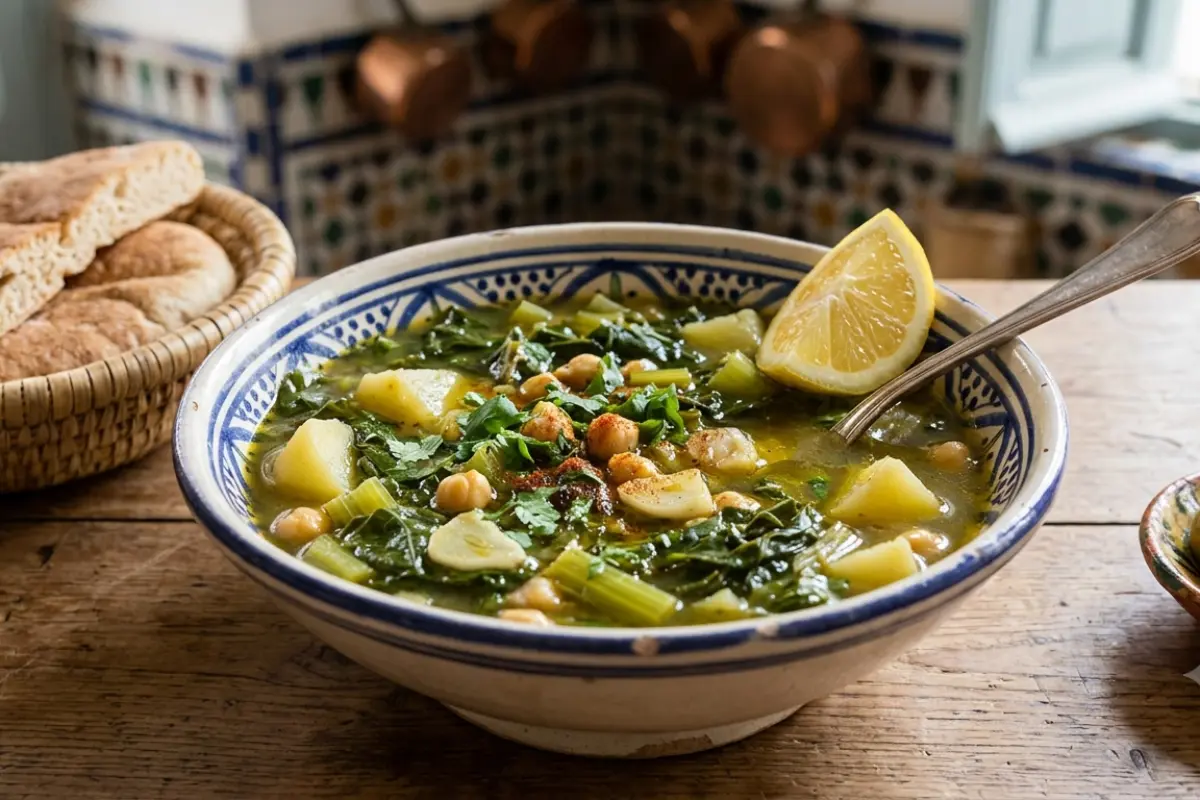
Swiss chard soup with garlic and lemon, known in Moroccan households as Shorba Selq, is one of the most enduring and cherished preparations in the canon of Moroccan vegetable cookery. The dish draws its roots from the ancient Moorish culinary traditions that flourished in the imperial city of Fez, where cooks mastered the art of transforming humble garden greens into deeply satisfying meals with minimal ingredients. Selq, the Arabic word for Swiss chard or silverbeet, has been cultivated in North Africa for centuries and appears in medieval Andalusian cookbooks that influenced Moroccan cuisine profoundly after the fall of Granada in 1492.
In the medinas of Fez, Meknes, and Marrakech, this soup has long been a fixture of the family table, particularly during the holy month of Ramadan when it is served as part of the Iftar spread alongside harira, dates, and chebakia. The combination of Swiss chard with generous amounts of garlic and a generous squeeze of fresh lemon juice reflects a distinctly Moroccan philosophy of balancing earthiness with brightness. Olive oil, another cornerstone of the Moroccan larder, is used both to soften the aromatics and to finish the soup with a final drizzle, adding richness and depth to every spoonful.
Beyond Ramadan, this soup is a go-to remedy for cold winter evenings and a favored light meal for families seeking nutritious, budget-friendly dishes. Modern Moroccan home cooks have kept the recipe largely intact, preserving the simplicity that makes it so appealing. Rich in vitamins A, C, and K from the Swiss chard, and fortified by the immune-boosting properties of raw and cooked garlic, this soup has rightfully earned its reputation as both medicine and comfort food in one humble bowl.
About This Recipe
Swiss chard, known as selq in Moroccan Arabic and darija, has been a cultivated vegetable in the Maghreb for well over a thousand years, with references to its culinary use appearing in medieval Arabic agricultural texts and Andalusian cookbooks from the 13th and 14th centuries. The combination of leafy greens with garlic, olive oil, and lemon is a culinary philosophy shared across the Mediterranean world, but in Morocco it took on a distinctly local character shaped by the flavors of the imperial cities — particularly Fez, where the confluence of Arab, Berber, and Andalusian cooking traditions gave rise to a sophisticated vegetable cuisine. After the expulsion of the Moors from Spain in 1492, thousands of Andalusian families settled in Fez and other Moroccan cities, bringing with them refined techniques for cooking vegetables that became deeply embedded in the local food culture. Swiss chard soup became a staple of the urban Moroccan table, valued for its economy, its nourishing qualities, and the way it could be prepared quickly from garden-grown ingredients. In rural Berber communities, similar preparations were made with wild greens gathered from the countryside, seasoned with wild garlic and drizzled with the local olive oil pressed from centuries-old trees. Today, Shorba Selq remains a cherished everyday dish across Morocco, prepared with the same simple reverence for quality ingredients and balanced flavor that has always defined the best of Moroccan home cooking.
Nutrition / serving
Recipe Tags
Understanding the Ingredients
Swiss Chard
The star of the dish, Swiss chard brings a slightly earthy, mildly bitter flavor that mellows beautifully when cooked. Both the leafy green parts and the tender parts of the stems can be used. Choose bunches with vibrant, unwilted leaves and firm stems for the best flavor and nutritional value.
Garlic
Garlic is used generously in this soup and plays a dual role. Some is sautéed at the beginning to form a flavor base, while a small amount may be added raw or near the end to provide a sharper, more pungent note. Moroccan cooks favor fresh garlic cloves over pre-minced garlic for this recipe.
Fresh Lemon Juice
Lemon juice is the defining finishing touch of this soup, cutting through the richness of the olive oil and lifting the earthy tones of the chard. It should be added off the heat or just before serving to preserve its bright, fresh flavor. Use unwaxed lemons if possible for the best taste.
Olive Oil
Extra virgin olive oil is the preferred fat in this recipe, contributing a fruity, slightly peppery quality that complements the chard. It is used to sauté the garlic and onion, and a final drizzle is often added at serving for extra richness. Moroccan olive oil from regions like Meknès or Beni Mellal is particularly prized.
Onion
A yellow or white onion forms the aromatic backbone of the soup. It is diced and softened in olive oil before the garlic and chard are added, creating a sweet, savory base. Moroccan red onions can also be used for a slightly sharper flavor profile.
Ground Cumin
Cumin is the primary spice in this soup, adding a warm, slightly smoky earthiness that pairs beautifully with the chard and garlic. Moroccan cumin, known for its intensity, is ideally toasted briefly in a dry pan before use to release its essential oils.
Preserved Lemon Rind
Optional but highly traditional, a small piece of preserved lemon rind adds a complex, briny citrus depth that fresh lemon alone cannot replicate. It is a hallmark of Moroccan flavor and appears in many vegetable dishes across the country. Rinse well and use only the rind, discarding the pulp.
Vegetable or Chicken Broth
The liquid base of the soup provides body and depth. Vegetable broth keeps the soup fully vegetarian, while chicken broth adds a richer, more savory character. Homemade broth is preferred, but a good-quality store-bought broth works well. Water can also be used for a lighter, more delicate result.
Step-by-Step Cooking Guide
Prepare the Swiss Chard
8 minWash the Swiss chard thoroughly under cold running water to remove any grit or soil. Separate the leaves from the stems by folding each leaf and slicing along the stem. Chop the stems into small pieces about 1 cm thick, and roughly chop the leaves into large pieces. Keep stems and leaves separate as they have different cooking times. Dry slightly before using.
Tip: Do not discard the stems — they add texture and nutrients to the soup. The stems take longer to cook than the leaves, so adding them first ensures everything is tender at the same time.
Sauté the Aromatics
8 minHeat the olive oil in a large, heavy-bottomed pot over medium heat. Add the diced onion and cook, stirring occasionally, until softened and translucent, about 5 to 7 minutes. Add the minced garlic and ground cumin, and stir continuously for 1 to 2 minutes until the garlic is fragrant and just beginning to turn golden. Be careful not to burn the garlic as it will turn bitter.
Tip: Use a wide, heavy pot to ensure even heat distribution. If you are using preserved lemon, add the finely chopped rind at this stage along with the garlic so it can bloom in the oil.
Add the Chard Stems and Broth
12 minAdd the chopped Swiss chard stems to the pot and stir to coat them with the oil and aromatics. Pour in the vegetable or chicken broth and bring the mixture to a gentle boil over medium-high heat. Season with salt and a pinch of black pepper. Reduce the heat to medium-low, cover the pot, and simmer for 10 minutes until the stems begin to soften.
Tip: Adding the stems before the leaves is key to achieving uniform tenderness. Taste the broth at this stage and adjust the salt before adding the leaves, as the chard itself can release some mineral saltiness.
Add the Chard Leaves and Simmer
12 minAdd the chopped Swiss chard leaves to the pot in batches, stirring them in as they wilt to make room for more. Once all the leaves are incorporated, cover the pot and simmer over medium-low heat for another 10 to 12 minutes until all the chard is very tender and the broth has developed a rich green color. Stir occasionally to ensure even cooking.
Tip: The soup will reduce slightly as the chard cooks down. If it becomes too thick for your preference, add a small amount of hot water or broth to reach your desired consistency.
Finish with Lemon and Adjust Seasoning
3 minRemove the pot from the heat. Squeeze the fresh lemon juice directly into the soup, starting with half a lemon and tasting before adding more. Stir well and taste for salt, cumin, and acidity, adjusting as needed. If desired, add an extra minced garlic clove raw at this point for a more pungent garlic finish, which is traditional in many Moroccan households.
Tip: Adding lemon juice off the heat preserves its bright, fresh flavor. Avoid boiling the soup after adding lemon, as prolonged heat can dull the citrus notes and create a slightly bitter aftertaste.
Serve and Garnish
2 minLadle the soup into warmed bowls. Drizzle each serving with a small stream of extra virgin olive oil for richness. Garnish with a thin slice of fresh lemon on the rim of the bowl, a light dusting of ground cumin, and optionally a sprinkle of finely chopped fresh cilantro or parsley. Serve immediately with crusty Moroccan khobz bread on the side.
Tip: Warming the bowls before serving by filling them with hot water for a minute keeps the soup hotter for longer, which is especially appreciated during cold evenings or Ramadan Iftar gatherings.
Common Mistakes to Avoid
✗ Burning the garlic during sautéing
Fix: Keep the heat at medium and stir constantly once the garlic is added. Garlic burns quickly and turns acrid when overcooked, so watch it carefully and remove the pot from heat momentarily if it starts to darken too fast.
✗ Adding the chard leaves and stems at the same time
Fix: Always add the stems first and give them a head start of about 10 minutes before adding the leaves. Stems are much denser and require longer cooking to become tender, while leaves wilt and soften quickly.
✗ Adding lemon juice while the soup is still boiling
Fix: Remove the pot from the heat before adding fresh lemon juice. Boiling destroys the volatile aromatic compounds in lemon that provide its bright, fresh flavor, leaving a duller and sometimes bitter taste.
✗ Under-seasoning the soup
Fix: Swiss chard has a naturally mild and slightly mineral flavor that requires adequate seasoning. Taste at multiple stages — after adding the broth, after the chard is cooked, and after adding lemon — adjusting salt and cumin each time.
Ingredient Substitutions
Instead of: Swiss Chard
Use: Spinach or kale can be used as alternatives. Spinach cooks much faster and produces a more delicate flavor, while kale is chewier and more robust. Adjust cooking time accordingly — spinach needs only 3 to 4 minutes, kale needs up to 15 minutes.
Instead of: Fresh Lemon Juice
Use: Preserved lemon juice or a splash of white wine vinegar can provide acidity if fresh lemons are unavailable. Use sparingly and taste as you go, as preserved lemon has a saltier, more complex profile than fresh lemon.
Instead of: Vegetable Broth
Use: Water can be used for a lighter soup with a cleaner flavor. If using water, consider adding a small piece of Parmesan rind or a bay leaf for added depth. Chicken broth is also an excellent option for a richer, more savory result.
Instead of: Preserved Lemon Rind
Use: A small strip of fresh lemon zest added during cooking can approximate some of the flavor. Alternatively, a pinch of sea salt plus extra fresh lemon juice at the end can mimic the briny citrus quality of preserved lemon.
Serving Suggestions
Serve with warm, freshly baked Moroccan khobz bread for dipping — the dense, slightly chewy texture of this round flatbread is perfect for soaking up the garlicky broth.
Pair alongside a simple Moroccan salad of grated carrots with cumin and lemon for a balanced and nutritious light meal.
During Ramadan Iftar, serve this soup as part of a spread that includes harira, dates, chebakia, and msemen for a traditional and festive table.
A drizzle of harissa stirred into individual bowls just before serving adds a beautiful heat for those who enjoy a spicier version of this soup.
Storage & Reheating
Storage
Allow the soup to cool completely before transferring to an airtight container. Store in the refrigerator for up to 3 days. The flavors deepen overnight, making leftover soup often even more delicious than freshly made. For longer storage, freeze in portioned containers for up to 2 months.
Reheating
Reheat gently in a saucepan over medium-low heat, stirring occasionally, until just heated through. Avoid boiling vigorously during reheating as this can dull the lemon flavor and make the chard overly soft. If reheating from frozen, thaw overnight in the refrigerator before warming on the stovetop.
Add a fresh squeeze of lemon juice and a small drizzle of olive oil when reheating to refresh the flavors. The soup tends to thicken in the refrigerator as it cools; add a splash of water or broth when reheating to restore the original consistency.
Frequently Asked Questions
Recipe by

Nora Alaoui
نورة العلوي
Soup & Stew Expert
View all recipes by Nora →
You May Also Like
Our Ebooks

The Moroccan Vegan
$12.56

Tables of Fez: A Royal Palace Legacy
$22.99

The Soul of Morocco
$20.00
YouTube
Watch step-by-step cooking videos and learn traditional Moroccan techniques.
450+
Subscribers
150+
Videos