
15
Prep (min)
35
Cook (min)
4
Servings
Easy
Level
Introduction
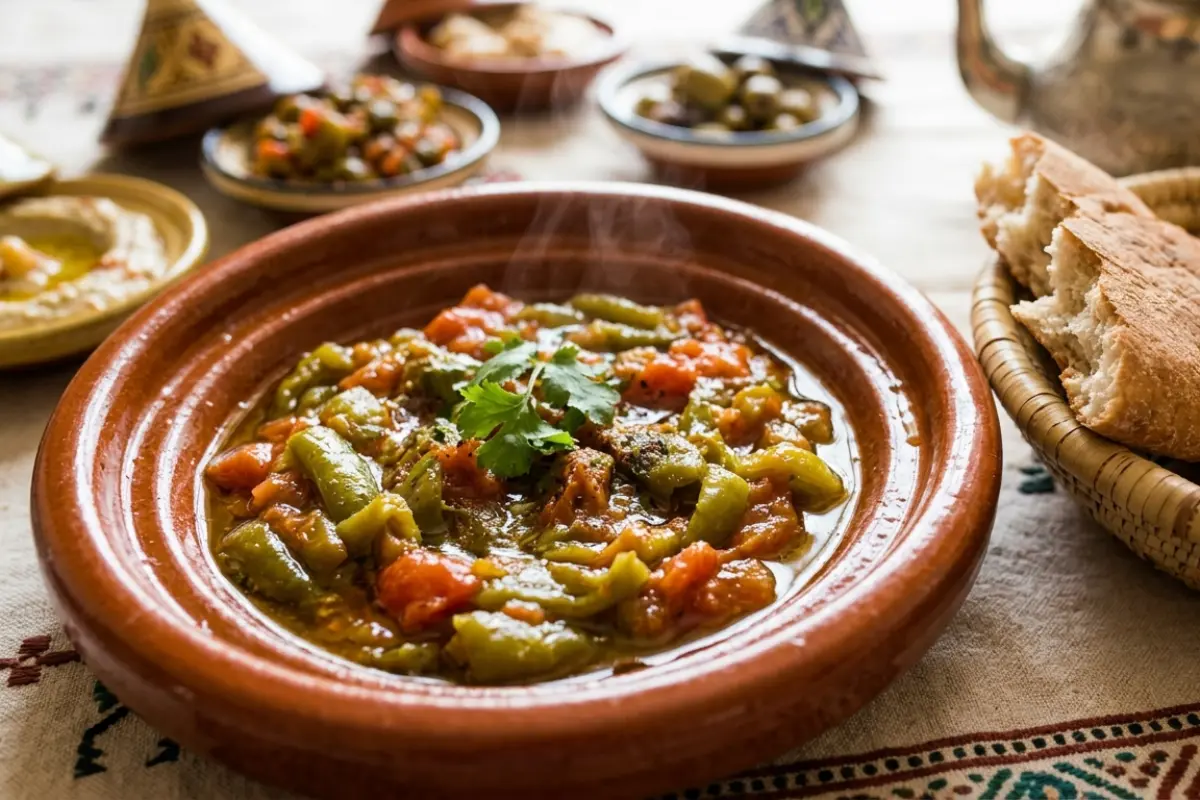
Taktouka is one of Morocco's most cherished cooked salads, a dish that transforms the simplest of ingredients — ripe tomatoes and green peppers — into something far greater than the sum of its parts. Found across the length and breadth of Morocco, from the bustling medinas of Marrakech and Fes to the coastal kitchens of Essaouira, Taktouka holds a place of honor on nearly every traditional Moroccan table. It is a dish that speaks to the Moroccan philosophy of cooking: patience, quality ingredients, and the artful use of spice.
The origins of Taktouka are rooted in the rural and domestic traditions of Moroccan cuisine, where fresh seasonal vegetables were cooked down slowly to create deeply flavorful accompaniments to grilled meats, eggs, or simply eaten with khobz, the traditional round Moroccan bread. The word 'Taktouka' itself is believed to derive from the Moroccan Arabic verb meaning 'to pound' or 'to crush,' a reference to the way the cooked peppers and tomatoes are gently broken down during the cooking process to create their characteristic jammy, stew-like consistency. This technique of slow-cooking and lightly mashing distinguishes Taktouka from a raw salad and gives it its unique, almost sauce-like texture.
Over generations, Taktouka has become a symbol of Moroccan hospitality and everyday comfort food. It is commonly served as part of a trio of cooked salads alongside dishes like zaalouk (roasted eggplant salad) and bakoula (sautéed mallow greens), welcoming guests to the table before the main course arrives. Modern Moroccan restaurants around the world have embraced Taktouka as an authentic appetizer that showcases the depth and vibrancy of Moroccan culinary traditions. Despite its simplicity, mastering Taktouka requires understanding the balance of flavors and the importance of allowing the vegetables to cook down properly, creating a dish that is simultaneously rustic and refined.
About This Recipe
Taktouka is deeply embedded in the fabric of Moroccan culinary history, a dish whose origins stretch back through generations of domestic Moroccan cooking. Its roots lie in the agricultural traditions of Morocco, where the abundant summer harvest of tomatoes and peppers provided home cooks with the raw materials for a simple yet nourishing cooked salad. The technique of roasting peppers over an open flame, a practice common throughout the Mediterranean and Middle East, was adopted by Moroccan cooks and became a defining characteristic of this dish, imparting a smoky complexity that elevates it far beyond its humble ingredients. Historically associated with the imperial cities of Marrakech and Fes, where the art of preparing elaborate spreads of cooked salads became a point of cultural pride, Taktouka was and continues to be a cornerstone of Moroccan hospitality. It is traditionally served alongside other cooked salads such as zaalouk and bakoula at the start of a formal Moroccan meal, welcoming guests and demonstrating the cook's skill and care. Over time, Taktouka spread across all social classes and regions of Morocco, becoming as much at home on the modest daily table as on the grandest festive spread. Its enduring popularity speaks to the timeless appeal of Moroccan cooking: transforming a handful of fresh, affordable ingredients into something deeply satisfying through skill, patience, and the judicious use of spice.
Nutrition / serving
Recipe Tags
Understanding the Ingredients
Green Bell Peppers
Green bell peppers are the backbone of Taktouka, providing a slightly bitter, vegetal flavor that balances the sweetness of the tomatoes. They are typically charred or roasted first to develop deeper flavor and make peeling easier. You can also use a mix of green and red peppers for a sweeter, more complex taste.
Ripe Tomatoes
Fresh, ripe tomatoes are essential for authentic Taktouka. They provide natural sweetness and acidity, and their high water content helps create the dish's characteristic saucy consistency as they break down during cooking. In winter months, canned whole peeled tomatoes can be used as a substitute without sacrificing much flavor.
Garlic
Garlic is a fundamental aromatic in Taktouka, adding pungency and depth. It is typically minced and gently cooked in olive oil at the beginning, or added halfway through cooking to preserve some of its sharpness. Moroccan cooks tend to use fresh garlic cloves rather than powder for maximum flavor.
Olive Oil
Extra virgin olive oil is the preferred fat for Taktouka, contributing richness and a fruity, slightly peppery note that complements the vegetables. A generous amount is used both for cooking and as a finishing drizzle to give the dish its glossy, inviting appearance.
Ground Cumin
Cumin is perhaps the most important spice in Taktouka, lending its warm, earthy, and slightly smoky character to the dish. Freshly ground cumin offers the best aroma and flavor. It is typically added during cooking and sometimes again at the end as a finishing spice.
Sweet Paprika
Sweet paprika adds a vibrant red color and a mild, sweet pepper flavor to Taktouka. Moroccan paprika is typically bright and fragrant; Spanish sweet paprika is an excellent substitute. Some recipes also incorporate a small amount of hot paprika or cayenne for a gentle heat.
Fresh Cilantro
Fresh cilantro, known as 'kzbour' in Moroccan Arabic, is a classic finishing herb for Taktouka. Added at the end of cooking, it provides a bright, citrusy freshness that lifts the entire dish. For those who dislike cilantro, fresh flat-leaf parsley makes an acceptable substitute.
Salt
Salt is essential for drawing out moisture from the vegetables and enhancing all the other flavors. It should be added in stages during cooking rather than all at once, allowing you to adjust the seasoning as the dish reduces and concentrates.
Step-by-Step Cooking Guide
Roast and Peel the Peppers
15 minPlace the whole green peppers directly over a gas flame or under a broiler, turning occasionally, until the skin is blackened and charred on all sides. Transfer the charred peppers to a bowl, cover tightly with plastic wrap or a lid, and allow them to steam for 10 minutes. This steaming process loosens the skin, making it easy to peel. Once cooled enough to handle, peel off the charred skin, remove the seeds and membranes, and cut or tear the flesh into rough strips or chunks.
Tip: Do not rinse the peeled peppers under water as this will wash away the delicious smoky flavor that is essential to authentic Taktouka.
Prepare the Tomatoes
10 minScore a small 'X' on the bottom of each tomato and blanch them in boiling water for 30 seconds. Transfer immediately to a bowl of cold water to stop the cooking. Peel away the skins, which should come off easily. Cut the peeled tomatoes in half, gently squeeze out some of the seeds, and then roughly chop the flesh into chunks. Removing some seeds helps prevent the final dish from becoming too watery.
Tip: Use the ripest, most fragrant tomatoes you can find. In summer, heirloom or beefsteak tomatoes work beautifully. In cooler months, canned San Marzano tomatoes are an excellent alternative.
Sauté the Garlic
3 minHeat a generous amount of extra virgin olive oil in a wide, heavy-bottomed skillet or tagine over medium heat. Add the minced garlic and cook gently for 1 to 2 minutes, stirring constantly, until it becomes fragrant and just begins to turn golden. Be careful not to let the garlic burn, as this will impart a bitter taste to the entire dish.
Tip: Using a wide pan rather than a deep pot allows for better evaporation and helps the vegetables cook down to the correct jammy consistency more efficiently.
Cook the Tomatoes and Spices
12 minAdd the chopped tomatoes to the pan with the garlic. Stir in the sweet paprika, ground cumin, and a good pinch of salt. Cook over medium heat, stirring occasionally, for about 10 to 12 minutes until the tomatoes have completely broken down and released their juices, and the mixture has started to thicken. The tomatoes should become very soft and saucy, with most of the raw tomato flavor cooked away.
Tip: If the tomatoes seem very watery, increase the heat slightly to help the excess liquid evaporate faster. The mixture should look like a thick, rustic tomato sauce.
Add the Peppers and Simmer
15 minAdd the roasted and peeled pepper strips to the tomato mixture. Stir everything together well to combine, and continue cooking over medium-low heat for another 10 to 15 minutes, stirring and gently pressing the vegetables with the back of a spoon to help them break down further. The final texture should be chunky yet saucy, with the peppers and tomatoes almost merged into one cohesive mixture. Taste and adjust the seasoning with additional salt or cumin as needed.
Tip: This is the key stage where the dish develops its signature character. Do not rush this step — the slow simmering allows the flavors to meld and deepen beautifully.
Finish and Serve
5 minRemove the pan from the heat and stir in the freshly chopped cilantro. Transfer the Taktouka to a serving plate or shallow bowl, drizzle generously with a final pour of extra virgin olive oil, and garnish with a few more fresh cilantro leaves. Serve warm or at room temperature alongside warm Moroccan bread for dipping. A few sliced olives or a squeeze of lemon juice can be added as optional garnishes.
Tip: Taktouka is at its most flavorful when served slightly warm rather than piping hot. The flavors also develop and improve if the dish is allowed to sit for 15 to 20 minutes before serving.
Common Mistakes to Avoid
✗ Not roasting the peppers properly before adding them
Fix: Always char and peel the peppers before adding them to the pan. Skipping this step results in a dish with tough pepper skins and a raw, bitter flavor instead of the smoky, tender character that defines authentic Taktouka.
✗ Using underripe or flavorless tomatoes
Fix: The quality of the tomatoes directly determines the quality of the final dish. Use the ripest, most fragrant fresh tomatoes available, or substitute with good-quality canned whole peeled tomatoes during off-season months.
✗ Cooking on too high a heat and rushing the process
Fix: Taktouka requires patient, low-to-medium heat cooking to allow the vegetables to break down gradually and the flavors to develop. High heat will cause burning and prevent the characteristic jammy texture from forming.
✗ Adding the cilantro too early
Fix: Fresh cilantro loses its bright, citrusy flavor when cooked for too long. Always add it off the heat or in the very last moments of cooking to preserve its fresh, vibrant character as a finishing herb.
Ingredient Substitutions
Instead of: Green Bell Peppers
Use: A mix of red and yellow bell peppers can be used for a sweeter, less bitter flavor profile, or long Italian frying peppers for a more authentic Moroccan texture.
Instead of: Fresh Tomatoes
Use: One 400g can of whole peeled San Marzano tomatoes works very well as a substitute, especially in winter. Drain some of the juice before adding to prevent the dish from becoming too liquid.
Instead of: Fresh Cilantro
Use: Fresh flat-leaf parsley is the best substitute for those who dislike cilantro, providing a similar fresh, green finish without the distinctive soapy note that some people find off-putting.
Instead of: Extra Virgin Olive Oil
Use: While olive oil is traditional and preferred, a light, neutral-flavored oil such as sunflower or avocado oil can be used in a pinch, though it will lack the fruity depth that olive oil contributes.
Serving Suggestions
Serve Taktouka warm as part of a traditional Moroccan mezze spread alongside zaalouk, bakoula, and a simple cucumber and tomato salad, with plenty of warm khobz bread for dipping.
Use Taktouka as a flavorful base for baked or poached eggs — simply make a well in the center of the warm taktouka, crack in two eggs, cover the pan, and cook until the whites are set for a Moroccan-style shakshuka.
Serve alongside grilled lamb chops, kefta meatballs, or roasted chicken as a vibrant, vegetable-based accompaniment that balances the richness of the meat.
Spoon Taktouka onto toasted slices of crusty bread and top with crumbled feta cheese and a drizzle of argan oil for a contemporary Moroccan-inspired bruschetta.
Storage & Reheating
Storage
Allow Taktouka to cool completely to room temperature before storing. Transfer to an airtight container and refrigerate for up to 4 days. The flavors actually deepen and improve after a day in the refrigerator, making it an excellent make-ahead dish.
Reheating
Reheat Taktouka gently in a small saucepan over low heat, stirring occasionally, until warmed through. Add a splash of water or olive oil if it has thickened too much during storage. Alternatively, microwave in a covered container for 1 to 2 minutes, stirring halfway through.
Taktouka can also be frozen for up to 2 months in a freezer-safe container. Thaw overnight in the refrigerator before reheating. Add fresh cilantro after reheating rather than before freezing to preserve its fresh flavor and color.
Frequently Asked Questions
Recipe by

Samira Tazi
سميرة تازي
Salad & Meze Specialist
View all recipes by Samira →
You May Also Like
Our Ebooks

The Moroccan Vegan
$12.56

Tables of Fez: A Royal Palace Legacy
$22.99

The Soul of Morocco
$20.00
YouTube
Watch step-by-step cooking videos and learn traditional Moroccan techniques.
450+
Subscribers
150+
Videos