
30
Prep (min)
25
Cook (min)
6
Servings
Medium
Level
Introduction
Tanta is one of Morocco's most cherished and lesser-known traditional breads, deeply rooted in the culinary traditions of the Fez region and the surrounding rural communities of the Middle Atlas foothills. Unlike the more internationally recognized khobz or msemen, tanta carries an intimate, home-kitchen character that speaks to the ingenuity of Moroccan home bakers who have passed its recipe through generations of women gathering around clay ovens and communal wood-fired hearths. Its name, colloquially used across northern and central Morocco, evokes warmth, simplicity, and the unbreakable bond between food and family memory.
The addition of honey to tanta is a practice that dates back centuries in Morocco, where beekeeping has long been a sacred craft, particularly in the Atlas Mountains and the Rif highlands. Moroccan honey, known for its intense floral complexity derived from thyme, cedar, and wildflower blossoms, lends the bread a subtle sweetness that complements rather than overpowers the natural wheat flavor. Wild herbs such as dried thyme, rosemary, and black nigella seeds are traditionally folded into the dough, infusing each bite with aromatic depth and providing the bread with a distinctive identity that sets it apart from other Moroccan flatbreads.
Today, tanta with honey and herbs is experiencing a cultural revival as younger Moroccan chefs and food enthusiasts seek to document and celebrate the full breadth of their culinary heritage. Served at traditional Moroccan breakfasts alongside argan oil, amlou paste, and mint tea, this bread represents far more than sustenance. It is a living archive of regional identity, agricultural tradition, and the art of transforming simple, honest ingredients into something profoundly nourishing and beautiful.
About This Recipe
Tanta is a traditional flatbread deeply embedded in the rural culinary heritage of Morocco, particularly in the regions surrounding Fez, Meknes, and the Middle Atlas highlands. Historically prepared by Berber and Arab families in clay-walled kitchens and communal outdoor ovens called ferran, tanta was the everyday bread of agricultural communities who relied on locally milled semolina wheat as their primary grain. The infusion of honey into the dough reflects Morocco's ancient beekeeping traditions, which date back to pre-Islamic Berber civilization, when mountain communities harvested wild honey from cedar and thyme-rich forests and used it not only as food but as medicine and a symbol of abundance. Herbs such as thyme, known locally as zaatar beldi, grew wild across the hillsides and were incorporated into breads, stews, and teas as a natural expression of the landscape. Over centuries, tanta became more than sustenance; it was a bread baked for celebrations, offered to guests as a gesture of generosity, and shared at dawn during harvest seasons. As Morocco modernized and urban baking shifted toward French-influenced baguettes and industrial khobz, tanta gradually retreated into the domain of rural grandmothers and home kitchens. Today, a growing movement of Moroccan culinary historians, chefs, and food bloggers is working to document and revive breads like tanta, recognizing them as irreplaceable expressions of regional identity, agricultural history, and the rich diversity of Morocco's bread-making traditions.
Nutrition / serving
Recipe Tags
Understanding the Ingredients
Semolina flour (fine)
Fine semolina, known as smida in Moroccan Arabic, is the primary flour used in tanta, giving the bread its characteristic slightly grainy yet tender crumb. It absorbs moisture slowly, which contributes to the bread's dense yet pillowy texture. Choosing fine-grade semolina rather than coarse is essential for achieving a smooth, workable dough.
All-purpose flour
A portion of all-purpose flour is blended with the semolina to soften the dough and make it easier to shape. This combination is a hallmark of many traditional Moroccan breads, balancing structure with tenderness. The gluten in all-purpose flour helps the bread hold its round form during cooking.
Pure Moroccan honey
Moroccan honey, ideally sourced from thyme or wildflower varieties found in the Atlas Mountains, provides a floral, mildly sweet quality to the dough. It also contributes to browning and moisture retention, keeping the bread soft for longer. The honey is both mixed into the dough and served as a finishing drizzle at the table.
Dried thyme
Wild Moroccan thyme, known as zaatar beldi, is one of the most beloved herbs in North African cuisine. In this recipe, dried thyme is kneaded directly into the dough, releasing its aromatic oils during cooking and imparting a subtle earthiness that pairs beautifully with the sweetness of honey. It also has recognized digestive and antimicrobial properties.
Nigella seeds (black cumin)
Known locally as habbatus sauda or sanouj, nigella seeds are a traditional Moroccan bread topping and dough additive with a slightly bitter, peppery flavor that beautifully contrasts the honey's sweetness. They are rich in antioxidants and have been used in Moroccan folk medicine for centuries. Sprinkling them on top of the bread before cooking also adds a decorative, artisanal finish.
Olive oil
Moroccan extra virgin olive oil, particularly from the Meknes or Marrakech regions, enriches the dough with subtle fruity notes and ensures a moist, supple texture. It also greases the cooking surface, helping the tanta achieve an even golden crust without sticking. A small brush of olive oil on top before serving keeps the crust beautifully shiny.
Active dry yeast
Yeast provides the gentle leavening that gives tanta its slight lift and airy pockets within a generally dense crumb. Authentic versions sometimes use a natural sourdough starter passed between neighbors, but active dry yeast is the modern home-kitchen equivalent that delivers reliable, consistent results. Proper activation in warm water before adding to the dough is crucial.
Salt
Fine sea salt balances all the flavors in the dough, tempering the sweetness of the honey and enhancing the aromatic quality of the herbs. Salt also strengthens the gluten network during kneading, improving the bread's overall structure and allowing it to hold its shape during cooking.
Warm water
Water at approximately 38 to 40 degrees Celsius is used to hydrate the dough and activate the yeast. The amount of water may need slight adjustment depending on the humidity and the brand of semolina used, as absorption rates can vary. Adding water gradually ensures the dough reaches the correct soft, non-sticky consistency.
Step-by-Step Cooking Guide
Activate the Yeast
10 minIn a small bowl, combine the active dry yeast with two tablespoons of warm water and one teaspoon of the honey. Stir gently and allow the mixture to rest for 8 to 10 minutes until it becomes frothy and fragrant. This step confirms the yeast is alive and active, which is essential for achieving a properly risen tanta. If the mixture does not foam, the yeast may be expired and should be replaced before proceeding.
Tip: Use water that is warm to the touch but not hot. Temperatures above 45 degrees Celsius will kill the yeast.
Mix and Knead the Dough
15 minIn a large mixing bowl, combine the fine semolina flour, all-purpose flour, salt, and dried thyme. Create a well in the center and pour in the activated yeast mixture, remaining honey, olive oil, and warm water gradually. Mix with your hands or a wooden spoon until a shaggy dough forms, then transfer to a lightly floured surface. Knead vigorously for 10 to 12 minutes until the dough is smooth, elastic, and slightly tacky but not sticky. The semolina will initially feel grainy but will smooth out with consistent kneading.
Tip: If the dough feels too stiff, add warm water one tablespoon at a time. Avoid adding too much flour or the bread will become dense and dry.
First Rise
60 minShape the kneaded dough into a smooth ball and place it in a lightly oiled bowl. Cover the bowl with a clean damp kitchen towel or plastic wrap and set it in a warm, draft-free spot to rise for 45 minutes to 1 hour, or until the dough has visibly puffed and increased in size by about half. In cooler kitchens, placing the covered bowl near a warm oven or in a turned-off oven with only the light on can help encourage a good rise.
Tip: Do not skip the resting period. Under-proofed dough will result in a heavy, dense tanta that lacks the characteristic slight chewiness.
Shape the Tanta
15 minGently punch down the risen dough to release the gas and divide it into 6 equal portions. On a lightly semolina-dusted surface, flatten each portion by hand into a round disc approximately 1.5 centimeters thick. The rounds should be rustic and slightly uneven, which is characteristic of authentic hand-shaped tanta. Sprinkle the tops of each round generously with nigella seeds, pressing them lightly into the surface so they adhere during cooking. Allow the shaped rounds to rest on a floured surface for a further 10 minutes before cooking.
Tip: Use your palms rather than a rolling pin to maintain the bread's hand-crafted texture. Uniform thickness ensures even cooking.
Cook the Tanta
25 minHeat a large cast-iron skillet or heavy-bottomed pan over medium heat and lightly grease it with a brush of olive oil. Place one or two rounds of tanta in the pan, nigella-side up, and cook for 5 to 7 minutes on the first side until the bottom is deep golden brown and the edges look set. Carefully flip the bread and cook for a further 4 to 5 minutes on the second side until evenly browned and cooked through. The bread should sound slightly hollow when tapped on the bottom. Repeat with the remaining rounds, re-oiling the pan between batches as needed.
Tip: Resist the urge to press the bread down with a spatula during cooking, as this will prevent it from developing its natural interior air pockets.
Finish and Serve
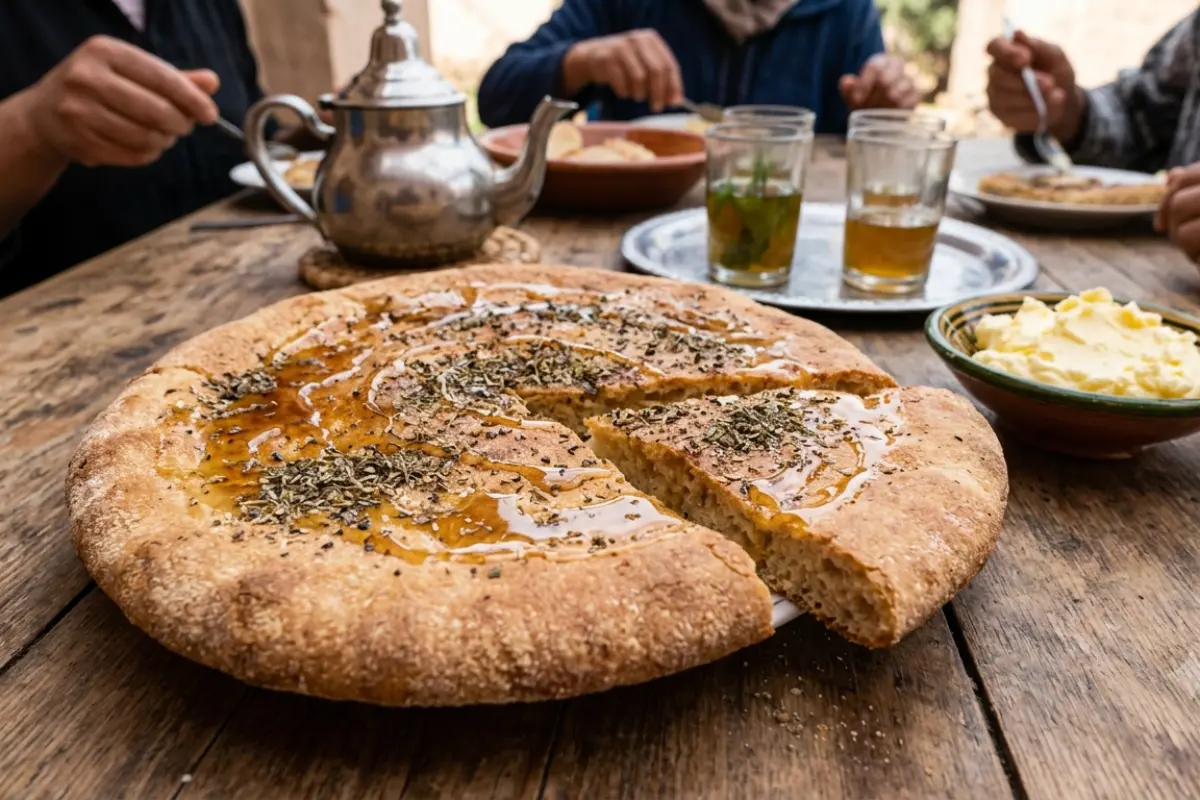
5 minRemove the cooked tanta rounds from the pan and immediately brush the tops with a thin layer of olive oil while still hot to keep them soft and give them a beautiful sheen. Stack the rounds on a wooden board or traditional Moroccan serving platter lined with a clean cloth. Drizzle generously with extra Moroccan honey just before serving and scatter a few fresh thyme leaves or an extra pinch of dried thyme over the top for garnish. Serve immediately while warm alongside butter, argan oil, amlou, and a pot of freshly brewed Moroccan mint tea.
Tip: Tanta is best enjoyed fresh off the pan. The honey drizzled at serving creates a gorgeous caramelized sweetness on the warm surface that cannot be replicated after the bread has cooled.
Common Mistakes to Avoid
✗ Using coarse semolina instead of fine semolina
Fix: Always use fine-grade semolina (smida) for tanta. Coarse semolina will result in a gritty, crumbly texture that does not hold together well. If only coarse semolina is available, pulse it briefly in a blender or food processor to refine the grain before using.
✗ Cooking on too high a heat
Fix: High heat will burn the outside of the tanta before the interior is cooked through, leaving the center doughy and raw. Always cook on medium heat and allow time for the bread to cook gently and evenly on both sides.
✗ Skipping the resting period after shaping
Fix: The 10-minute rest after shaping allows the gluten to relax and the yeast to produce a final burst of gas, contributing to a slightly lighter texture. Skipping this step results in tanta that is noticeably tougher and denser.
✗ Adding honey to the dough when the water is too hot
Fix: Honey can inhibit yeast activity if added to excessively hot water. Always ensure the water has cooled to a comfortable warm temperature before combining all dough ingredients together.
✗ Making the rounds too thick
Fix: Overly thick rounds will remain undercooked in the center. Aim for a consistent thickness of approximately 1.5 centimeters. If rounds are thicker, reduce the heat slightly and extend the cooking time by 2 to 3 minutes per side.
Ingredient Substitutions
Instead of: Fine semolina flour
Use: Whole wheat flour can be used as a substitute for up to half of the semolina for a nuttier, more rustic flavor, though the texture will be denser and slightly less chewy than the original.
Instead of: Moroccan honey
Use: Acacia honey or wildflower honey from any quality source can substitute for Moroccan honey. Avoid strongly flavored honeys like buckwheat, which may overpower the delicate herb notes in the dough.
Instead of: Dried thyme
Use: Dried oregano or a blend of dried rosemary and marjoram can substitute for thyme, offering a similarly aromatic Mediterranean herbaceous quality that complements the honey well.
Instead of: Nigella seeds
Use: Sesame seeds can be used in place of nigella seeds for a milder, nuttier topping. Alternatively, poppy seeds offer a similar visual effect with a slightly different flavor profile.
Instead of: Olive oil
Use: Argan oil is a beautifully authentic Moroccan substitute that adds a distinctive nutty depth to the bread. Use culinary-grade argan oil rather than cosmetic grade.
Serving Suggestions
Serve warm tanta with honey and herbs as the centerpiece of a traditional Moroccan breakfast spread alongside small bowls of extra honey, fresh Moroccan butter, amlou paste made from argan oil and almond, and slices of fresh tomato dressed with olive oil and cumin.
Tanta pairs exceptionally well with a pot of freshly brewed Moroccan mint tea poured from a height to create a frothy top. The combination of sweet honey bread and fragrant mint tea is one of the most iconic and comforting pairings in Moroccan culinary culture.
For a savory twist, serve tanta alongside a bowl of harira soup or a Moroccan egg and vegetable tagine, allowing guests to tear pieces of the flatbread to scoop and enjoy the accompanying dishes.
Tanta can be served at afternoon tea as a sweet treat, drizzled with additional honey and topped with a sprinkle of crushed toasted almonds or a dusting of cinnamon for an indulgent presentation.
Storage & Reheating
Storage
Store cooled tanta in an airtight container or wrapped tightly in clean kitchen cloth at room temperature for up to 2 days. For longer storage, wrap individual rounds in plastic wrap and place in a resealable bag in the freezer for up to 1 month.
Reheating
To reheat, wrap the tanta loosely in foil and warm in an oven preheated to 170 degrees Celsius for 8 to 10 minutes. Alternatively, heat briefly in a dry skillet over low heat for 2 to 3 minutes per side until warmed through and the crust crisps slightly.
Avoid microwaving tanta as it will make the bread rubbery and tough. Always reheat gently in a pan or oven to preserve the original texture. A fresh drizzle of honey after reheating will refresh the bread's flavor and aroma beautifully.
Frequently Asked Questions
Recipe by

Abdrahman Idrissi
عبد الرحمن الإدريسي
Pastry & Bread Chef
View all recipes by Abdrahman →
You May Also Like
Our Ebooks

The Moroccan Vegan
$12.56

Tables of Fez: A Royal Palace Legacy
$22.99
The Soul of Morocco
$20.00
YouTube
Watch step-by-step cooking videos and learn traditional Moroccan techniques.
450+
Subscribers
150+
Videos