
20
Prep (min)
55
Cook (min)
4
Servings
Medium
Level
Introduction
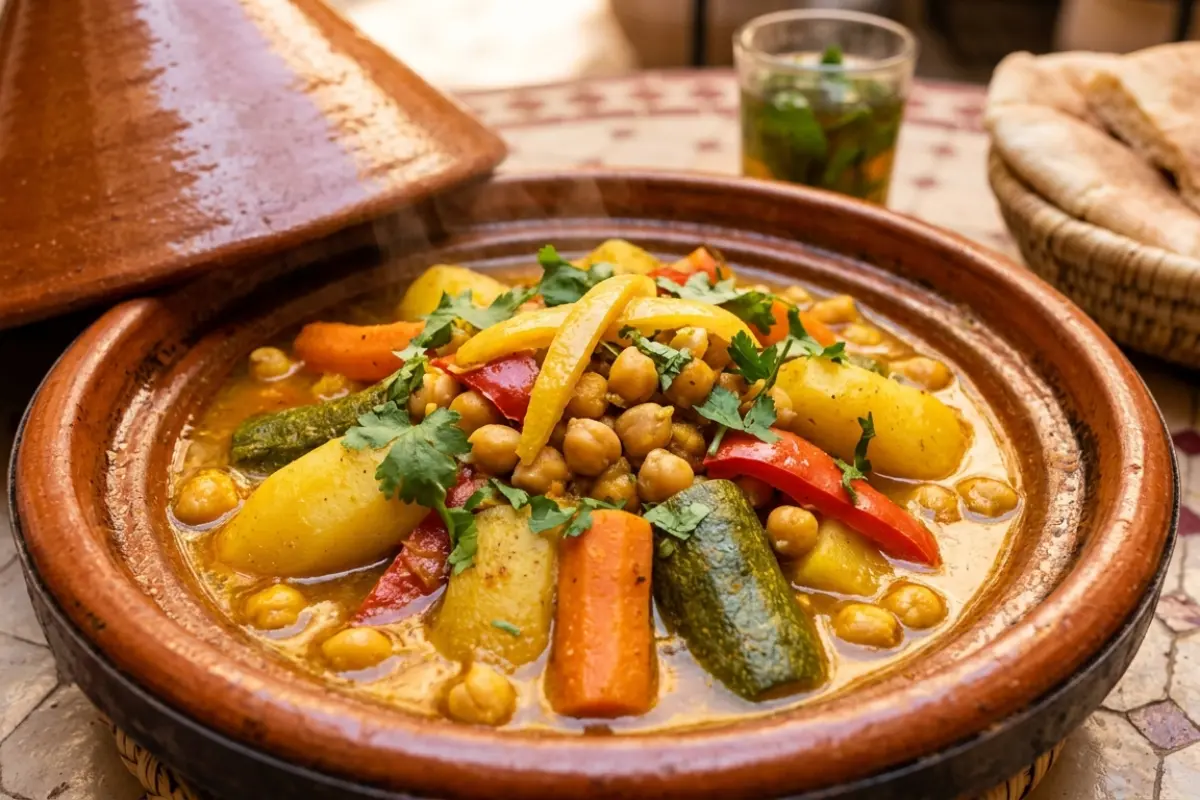
The tagine is arguably Morocco's most iconic culinary vessel and cooking method, a tradition stretching back over a thousand years to the Berber peoples of North Africa who first mastered the art of slow-cooking over low charcoal fires. The conical clay lid of the tagine serves a brilliant engineering purpose — it traps steam, condenses it, and returns moisture back to the ingredients below, creating an intensely flavored, self-basting environment that requires very little liquid. This Vegetable Tagine with Chickpeas and Saffron is a shining example of that ancient wisdom applied to the bounty of Morocco's fertile agricultural regions.
Saffron holds a revered place in Moroccan cuisine that few other spices can rival. Morocco is one of the world's top saffron producers, with the finest threads cultivated in the Taliouine region of the Souss-Massa province, nestled in the High Atlas Mountains. Moroccan saffron is prized for its deep crimson color, intensely floral aroma, and the golden hue it imparts to any dish it touches. In this tagine, saffron works in harmony with cumin, turmeric, and ginger to create a spice profile that is simultaneously complex, warming, and unmistakably Moroccan. Chickpeas, known locally as hummus, provide a buttery, protein-rich base that has sustained Moroccan families for generations.
This particular vegetable tagine is especially popular in the medinas and home kitchens of Marrakech, where vendors in the Djemaa el-Fna square have served steaming tagines to locals and travelers alike for centuries. The dish is traditionally prepared and served in the same clay vessel, placed at the center of the table for communal eating with warm khobz bread used to scoop up the aromatic vegetables and broth. Whether prepared for a casual weeknight dinner or a festive gathering, this tagine embodies the Moroccan philosophy of cooking with patience, generosity, and soul.
About This Recipe
The tagine as both a cooking vessel and a culinary tradition traces its origins to the indigenous Amazigh (Berber) peoples of North Africa, who developed this ingenious clay pot thousands of years ago as a practical solution for cooking over open fires in the Atlas Mountains and Saharan desert regions. The pointed conical lid was designed to capture and recirculate steam, allowing food to cook slowly with minimal water — a critical advantage in regions where water was scarce. When Arab traders arrived in the 7th and 8th centuries, they brought with them a rich spice tradition from the east, and the subsequent blending of Amazigh, Arab, Andalusian, and Sub-Saharan African culinary influences created the complex, layered spice profiles that define Moroccan cooking today. Saffron arrived via the Silk Road trade routes and found such fertile growing conditions in Morocco's Taliouine valley that the country became a significant producer in its own right. The vegetable tagine with chickpeas became particularly prominent during periods of Islamic religious practice, especially Ramadan, when nourishing, plant-based dishes that could be prepared in advance and kept warm were especially valued. Today, this dish represents Morocco's living culinary heritage — a recipe passed down through generations of home cooks and celebrated in riads and restaurants from Marrakech to Fes to Essaouira, recognized internationally as one of the defining dishes of North African gastronomy.
Nutrition / serving
Recipe Tags
Understanding the Ingredients
Saffron
Moroccan saffron from Taliouine is the gold standard. Soak the threads in 3 tablespoons of warm water for at least 15 minutes before adding to the dish. This blooming process releases the maximum color, aroma, and flavor compounds from the delicate threads.
Chickpeas
Canned chickpeas work well for convenience, but dried chickpeas soaked overnight and boiled until just tender yield a superior texture and richer flavor. They absorb the saffron broth beautifully and provide a satisfying heartiness to the tagine.
Preserved Lemon
A quintessential Moroccan pantry staple, preserved lemons are whole lemons cured in salt and their own juice for weeks. They contribute a unique, mellow, intensely savory lemon flavor that is quite different from fresh lemon juice. Only use the rind, discarding the pulp.
Ras el Hanout
Literally meaning 'head of the shop,' this complex spice blend can contain up to 30 different spices including cinnamon, cardamom, coriander, cumin, and dried rose petals. It is the backbone of Moroccan cooking and adds extraordinary depth to this tagine.
Root Vegetables
Carrots, parsnips, and turnips are classic choices for this tagine, as they hold their shape beautifully during long cooking and absorb the spiced broth. Cut them into even chunks to ensure uniform cooking and a visually appealing presentation.
Zucchini
Added later in the cooking process than the root vegetables, zucchini becomes silky and tender without falling apart. It brings a gentle sweetness and soft texture that balances the heartier chickpeas and root vegetables.
Olive Oil
Use a good quality Moroccan extra-virgin olive oil for the most authentic flavor. Morocco is one of the world's oldest olive-growing regions, and local olive oil has a fruity, slightly robust character that complements the saffron and spices beautifully.
Fresh Cilantro and Parsley
These herbs are nearly always paired together in Moroccan cooking and are used both during cooking and as a fresh garnish at the end. They brighten the rich, earthy flavors of the tagine and add a burst of color to the finished dish.
Step-by-Step Cooking Guide
Bloom the Saffron
15 minPlace the saffron threads in a small bowl and pour 3 tablespoons of warm (not boiling) water over them. Gently stir and set aside to steep for at least 15 minutes. The water will turn a deep golden orange and the saffron will release its distinctive floral aroma. This step is critical for maximizing the color and flavor contribution of the saffron throughout the dish.
Tip: Use water that is warm to the touch but not boiling — excessive heat can destroy some of saffron's delicate aromatic compounds. The longer you bloom it, the more color and flavor you will extract.
Sauté the Aromatics
12 minHeat the olive oil in the base of a tagine or a heavy-bottomed Dutch oven over medium heat. Add the diced onion and cook, stirring occasionally, for 6 to 8 minutes until softened and lightly golden. Add the minced garlic and grated fresh ginger, cooking for another 2 minutes until fragrant. Stir in the ras el hanout, cumin, turmeric, and a generous pinch of black pepper, toasting the spices in the oil for 1 minute.
Tip: Do not rush the onion stage — properly softened, golden onions form the sweet and savory base that will carry all the other flavors. If using a traditional clay tagine, keep the heat at medium-low to avoid cracking the vessel.
Add Root Vegetables
8 minAdd the carrots and turnips (or parsnips) to the tagine, stirring to coat them thoroughly in the spiced oil mixture. Cook for 3 minutes, allowing the vegetables to absorb the aromatics. Add the drained chickpeas and stir everything together. Pour in the bloomed saffron along with its soaking liquid and add the vegetable broth. Nestle the preserved lemon rind strips into the broth. Bring to a gentle simmer.
Tip: Arrange the vegetables in a slightly mounded, attractive pattern if using a traditional tagine for serving at the table. Stir gently to preserve the presentation.
Slow Cook the Tagine
30 minReduce the heat to low, place the lid on the tagine, and cook for 25 to 30 minutes. The vegetables should be almost tender when pierced with a knife but not yet fully cooked. During this time, resist the urge to lift the lid frequently — each time you open it you release the precious steam that is doing the cooking work. After 20 minutes, check the liquid level and add a splash of broth if the tagine looks dry.
Tip: A low, steady simmer is the key to a great tagine. If you see vigorous bubbling, reduce the heat further. The goal is gentle, patient cooking that coaxes maximum flavor from every ingredient.
Add Zucchini and Tomatoes
15 minAdd the sliced zucchini and halved cherry tomatoes to the tagine, placing them on top of the other vegetables. Replace the lid and continue cooking for another 12 to 15 minutes until all vegetables are fully tender and the broth has thickened slightly into a rich, golden sauce. Taste the broth and adjust seasoning with salt and additional cumin or ras el hanout as needed.
Tip: Zucchini cooks quickly and can become mushy if overcooked. Adding it in the final stage ensures it remains silky and just tender, contributing texture contrast to the dish.
Finish and Serve
5 minRemove the tagine from heat and let it rest with the lid on for 5 minutes — this final resting period allows the flavors to meld and deepen. Just before serving, scatter a generous handful of fresh chopped cilantro and flat-leaf parsley over the top. Add a drizzle of good quality olive oil and a few extra strands of saffron for an elegant garnish. Serve directly from the tagine at the center of the table with warm Moroccan bread.
Tip: Serving the tagine at the table in its cooking vessel is both practical and traditional. The clay pot retains heat beautifully and keeps the dish warm throughout the meal. Place it on a heatproof trivet to protect your table surface.
Common Mistakes to Avoid
✗ Skipping the saffron blooming step and adding dry threads directly to the pot
Fix: Always bloom saffron in warm water for at least 15 minutes before use. Dry saffron threads release only a fraction of their color and flavor when added directly to a hot dish with other competing liquids.
✗ Cooking on too high a heat, which causes the vegetables to fall apart and the broth to evaporate
Fix: Maintain a very gentle simmer throughout the cooking process. Tagines are designed for low, slow cooking. If using a Dutch oven on a gas stove, use a heat diffuser to distribute the heat evenly and prevent hot spots.
✗ Adding all vegetables at the same time, resulting in some being overcooked while others remain underdone
Fix: Stagger the addition of vegetables based on their density and cooking time. Root vegetables go in first, tender vegetables like zucchini and tomatoes in the final 15 minutes of cooking.
✗ Under-seasoning the dish
Fix: Taste and adjust seasoning at multiple points during cooking. Moroccan tagines are generously spiced — do not be timid with the ras el hanout, saffron, and salt. The preserved lemon also adds salinity, so factor that in before adding additional salt.
Ingredient Substitutions
Instead of: Preserved lemon
Use: A combination of fresh lemon zest and a small pinch of sea salt can approximate the flavor, though the result will be brighter and less complex than aged preserved lemon.
Instead of: Ras el hanout
Use: A blend of equal parts ground cumin, coriander, cinnamon, and ginger with a pinch of allspice makes a reasonable substitute, though it will lack the full complexity of a traditional blend.
Instead of: Saffron
Use: A small pinch of turmeric combined with a few drops of rose water can partially mimic the golden color and floral notes, though no substitute truly replicates authentic saffron.
Instead of: Turnips
Use: Parsnips, sweet potatoes, or butternut squash all work beautifully as substitutes, each bringing a slightly different sweetness and texture to the finished tagine.
Instead of: Vegetable broth
Use: Water with a small amount of tomato paste dissolved in it can substitute in a pinch, though a good quality vegetable broth significantly deepens the overall flavor of the dish.
Serving Suggestions
Serve with warm, freshly baked Moroccan khobz bread or crusty sourdough for scooping up the fragrant vegetables and golden broth directly from the tagine.
Accompany with a side of couscous steamed with a pinch of saffron and a drizzle of olive oil to make the meal more substantial.
Offer a bowl of harissa on the side for guests who enjoy additional heat, allowing each person to customize their own spice level.
A simple Moroccan salad of diced tomatoes, cucumber, and fresh herbs dressed with lemon juice and olive oil makes a refreshing counterpoint to the rich, spiced tagine.
Finish the meal with fresh mint tea poured from a height to create a froth, paired with Moroccan almond pastries such as kaab el ghzal for an authentic dining experience.
Storage & Reheating
Storage
Allow the tagine to cool completely to room temperature before transferring leftovers to an airtight container. Refrigerate for up to 4 days. The flavors actually deepen and improve overnight, making this an excellent make-ahead dish.
Reheating
Reheat gently in a covered saucepan over low heat, adding a splash of vegetable broth or water if the sauce has thickened too much during storage. Alternatively, reheat in the tagine vessel itself in a low oven at 160°C (325°F) for 15 to 20 minutes.
This tagine freezes well for up to 3 months. Freeze in individual portions for convenient weekday meals. Thaw overnight in the refrigerator before reheating. Add fresh herbs only after reheating to preserve their bright color and fresh flavor.
Frequently Asked Questions
Recipe by

Fatima El Amrani
فاطمة العمراني
Master Chef
View all recipes by Fatima →
You May Also Like
Our Ebooks

The Moroccan Vegan
$12.56

Tables of Fez: A Royal Palace Legacy
$22.99

The Soul of Morocco
$20.00
YouTube
Watch step-by-step cooking videos and learn traditional Moroccan techniques.
450+
Subscribers
150+
Videos