
25
Prep (min)
75
Cook (min)
6
Servings
Medium
Level
Introduction
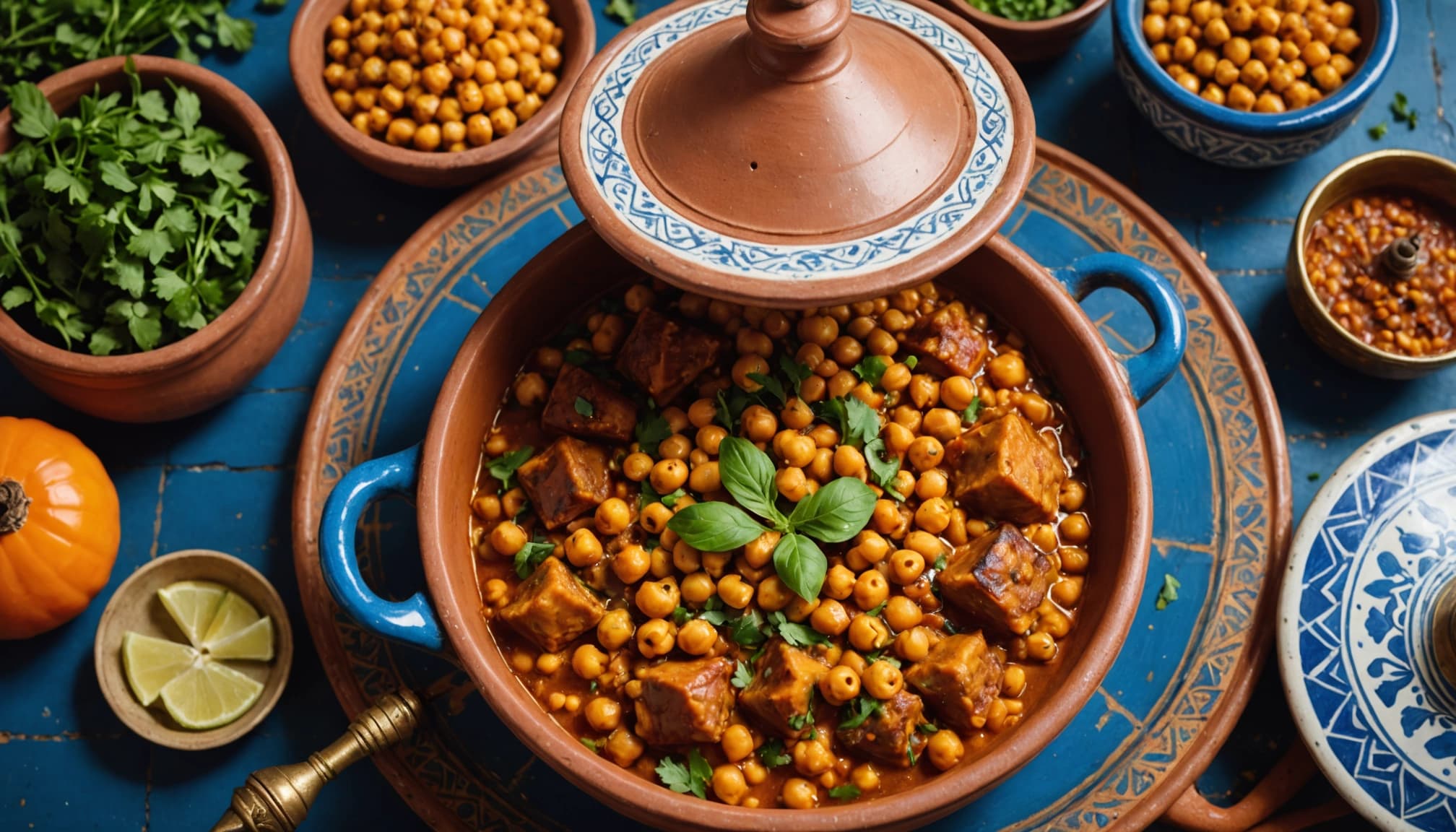
The vegetable tagine with chickpeas and saffron represents the heart of Moroccan vegetarian cuisine, showcasing how simple ingredients can be transformed into something extraordinary through the magic of traditional cooking techniques and aromatic spices. This dish embodies the essence of Moroccan hospitality, where vegetables are treated with the same reverence as meat, creating a symphony of flavors that celebrates the bounty of the Mediterranean climate.
Saffron, known as 'red gold' in Morocco, plays a starring role in this tagine, imparting its distinctive golden hue and subtle floral notes that distinguish this dish from ordinary vegetable stews. The slow-cooking process in a traditional tagine allows the vegetables to absorb the complex blend of spices while maintaining their individual textures and flavors, creating a harmonious balance that has been perfected over centuries of Moroccan culinary tradition.
This recipe is particularly beloved during Ramadan and other festive occasions, as it provides substantial nourishment while remaining light and digestible. The combination of chickpeas and vegetables offers complete protein, making it a nutritionally balanced meal that satisfies both the body and the soul. Each spoonful delivers layers of flavor, from the warm earthiness of cumin and ginger to the bright acidity of preserved lemons and the sweetness of slow-cooked onions.
About This Recipe
The vegetable tagine with saffron represents a sophisticated evolution of Morocco's ancient Berber cooking traditions, where the tagine cooking vessel was first developed over 1,000 years ago in the Atlas Mountains. Originally, tagines were purely functional - the conical lid allowed precious moisture to condense and return to the food, essential in Morocco's arid climate. The addition of saffron to vegetable tagines became popular during the reign of the Almoravid dynasty in the 11th century, when trade routes brought this precious spice from Kashmir through Morocco to Europe. Saffron cultivation later flourished in the Taliouine region of Morocco, making it more accessible to local cooks. This particular combination of vegetables and chickpeas reflects the influence of both Arab and Andalusian cuisines, particularly after the arrival of refugees from Al-Andalus who brought sophisticated vegetarian cooking techniques. The dish gained prominence in Marrakech's royal kitchens during the Saadian dynasty, where palace cooks elevated humble vegetables to royal status through the artful use of spices and slow-cooking techniques.
Nutrition / serving
Recipe Tags
Understanding the Ingredients
Saffron threads
Use genuine saffron threads rather than powder for the best flavor and color. Steep in warm water to release maximum essence.
Preserved lemons
Traditional Moroccan preserved lemons add a unique tangy, salty flavor. Use only the rind, which should be rinsed before chopping.
Ras el hanout
This complex spice blend can contain up to 30 different spices. Use a high-quality blend or make your own for authentic flavor.
Chickpeas
Dried chickpeas soaked overnight provide the best texture, but canned chickpeas can be used for convenience.
Baby turnips
Small, tender turnips work best. If using large turnips, cut into smaller pieces to ensure even cooking.
Step-by-Step Cooking Guide
Prepare the saffron
15 minSteep saffron threads in 1/4 cup warm water for 15 minutes until the liquid turns golden yellow
Tip: Gently crush the saffron threads between your fingers before steeping to release more flavor
Sauté the aromatics
12 minHeat olive oil in tagine base over medium heat. Add sliced onions and cook until softened and lightly caramelized
Tip: Don't rush this step - properly caramelized onions form the flavor foundation of the tagine
Build the spice base
3 minAdd minced garlic, ginger, ras el hanout, cumin, and cinnamon. Cook until fragrant, about 2 minutes
Tip: Keep the heat moderate to prevent the spices from burning and becoming bitter
Add vegetables and liquid
5 minAdd prepared vegetables, chickpeas, diced tomatoes, saffron water, and vegetable stock. Season with salt and pepper
Tip: Arrange vegetables in an attractive pattern as the tagine will be served directly from the cooking vessel
Slow cook the tagine
55 minCover with tagine lid and simmer gently for 45-55 minutes until vegetables are tender but not mushy
Tip: Check periodically and add more stock if needed. The liquid should just barely cover the vegetables
Common Mistakes to Avoid
✗ Using too high heat during cooking
Fix: Keep heat low to medium-low for gentle simmering. High heat will cause vegetables to break down too quickly
✗ Adding all vegetables at once
Fix: Add harder vegetables first, then softer ones to ensure everything cooks evenly
✗ Not soaking saffron properly
Fix: Always steep saffron in warm liquid for at least 15 minutes to extract maximum flavor and color
Ingredient Substitutions
Instead of: Preserved lemons
Use: Fresh lemon zest plus 1/2 teaspoon salt per lemon
Instead of: Ras el hanout
Use: Mix of cinnamon, cumin, coriander, ginger, and paprika
Instead of: Saffron
Use: Turmeric for color only (flavor will be different)
Serving Suggestions
Serve with fluffy couscous or Moroccan bread (khubz)
Accompany with harissa paste on the side for heat lovers
Garnish with fresh cilantro and mint leaves
Offer Moroccan mint tea as a traditional beverage pairing
Storage & Reheating
Storage
Store covered in refrigerator for up to 4 days. The flavors actually improve after resting overnight.
Reheating
Reheat gently in the tagine or covered pot over low heat, adding a splash of water or stock if needed.
This tagine can be frozen for up to 3 months. Thaw completely before reheating.
Frequently Asked Questions
Recipe by

Fatima El Amrani
فاطمة العمراني
Master Chef
View all recipes by Fatima →
You May Also Like
Our Ebooks

The Moroccan Vegan
$12.56

Tables of Fez: A Royal Palace Legacy
$22.99

The Soul of Morocco
$20.00
YouTube
Watch step-by-step cooking videos and learn traditional Moroccan techniques.
450+
Subscribers
150+
Videos