
20
Prep (min)
30
Cook (min)
24
Servings
Medium
Level
Introduction
Walnut Halwa with Orange Blossom Water holds a place of great reverence in the Moroccan culinary tradition, particularly in the imperial city of Fez, where the art of confectionery has been refined over centuries of Andalusian and Amazigh influence. Halwa, derived from the Arabic word meaning 'sweet,' encompasses a vast family of confections found across North Africa and the Middle East, but Morocco's version is distinguished by its unique layering of local flavors — most notably the iconic orange blossom water that perfumes the country's gardens and kitchens alike. In Fez, master confectioners known as 'halwaiyyine' have passed down their precise techniques through apprenticeships in the ancient medina's souks, preserving recipes that date back to the medieval Marinid dynasty.
About This Recipe
Walnut Halwa with Orange Blossom Water is deeply rooted in the culinary heritage of Fez, Morocco's oldest imperial city and the historic center of Moroccan culture, scholarship, and gastronomy. The tradition of halwa-making in Morocco dates back to at least the 13th century during the Marinid dynasty, when the Fez medina was a cosmopolitan hub where Andalusian, Amazigh, Arab, and sub-Saharan African culinary traditions merged into a uniquely Moroccan cuisine. The use of orange blossom water in Moroccan sweets reflects the country's deep connection to its fragrant citrus groves, particularly in the regions around Fez, Marrakech, and the Gharb plain, where bitter orange trees have been cultivated for centuries. Walnuts, grown in the cool mountain regions of the Middle Atlas, were historically considered a prestigious ingredient, associated with prosperity and hospitality. In the souks of the Fez medina, specialist halwa makers have maintained ancient confectionery traditions for generations, using copper pans, wooden spoons worn smooth by decades of use, and intuitive knowledge refined through years of apprenticeship. This particular halwa remains a centerpiece of Moroccan celebration cuisine, prepared for weddings, Eid, Ramadan, and the welcoming of honored guests, where offering sweets with mint tea is an expression of the profound Moroccan value of hospitality.
Nutrition / serving
Recipe Tags
Understanding the Ingredients
Walnuts
Freshly shelled Moroccan walnuts are preferred for their creamy, slightly bitter flavor that balances the sweetness of the halwa. Toasting them before grinding releases their natural oils and intensifies their nutty depth, which is essential to the character of this confection. Walnuts from the Middle Atlas and Souss regions of Morocco are particularly prized for their quality.
Orange Blossom Water
Distilled from the blossoms of bitter orange trees, orange blossom water (ma' al-zahar) is one of the most iconic flavoring agents in Moroccan cuisine. It lends a hauntingly floral, citrusy perfume to sweets, pastries, and even savory dishes. Use a high-quality, food-grade orange blossom water for the most authentic and aromatic result — the difference in quality is immediately noticeable in the final flavor.
Honey
Moroccan mountain honey, especially thyme or wildflower honey from the Middle Atlas, provides natural sweetness with complex floral notes that complement the orange blossom water beautifully. Honey also acts as a natural binder and preservative in the halwa, contributing to its dense, fudge-like texture. Avoid overly processed honeys that lack aromatic complexity.
Sugar
Granulated white sugar is used to create the syrup base of the halwa. Cooking the sugar to the correct temperature — the soft ball stage at around 235–240°F (112–115°C) — is critical to achieving the proper firm yet yielding texture of the finished sweet. Under-cooking results in a sticky mess, while over-cooking yields a brittle, crystalline candy.
Unsalted Butter
Butter enriches the halwa and gives it a luxurious, melt-in-the-mouth quality. In traditional Moroccan recipes, smen (aged clarified butter) is sometimes used for a more pronounced, earthy flavor, but unsalted fresh butter works beautifully for a cleaner, more delicate result. The fat helps prevent crystallization and keeps the texture smooth.
Ground Cinnamon
Cinnamon is one of Morocco's most beloved spices, used liberally in both sweet and savory cooking. In this halwa, a touch of finely ground cinnamon adds warmth and complexity that rounds out the floral orange blossom note and the richness of the walnuts. Moroccan cinnamon, often sourced from Sri Lanka via ancient spice routes, is fragrant and potent.
Sesame Seeds
Toasted sesame seeds are used as a decorative and textural garnish, sprinkled over the top of the set halwa before cutting. They add a gentle nuttiness and a pleasing visual contrast to the dark walnut surface. In some variations, sesame seeds are also folded directly into the mixture for added crunch and nutrition.
Water
Plain water is used to dissolve the sugar and create the initial syrup. The ratio of water to sugar must be precise to ensure the syrup reduces to the correct concentration. Using too much water prolongs cooking time unnecessarily, while too little can cause the sugar to caramelize unevenly.
Step-by-Step Cooking Guide
Toast and Grind the Walnuts
15 minSpread the shelled walnuts in a single layer on a dry baking sheet and toast them in an oven preheated to 350°F (175°C) for 8–10 minutes, or until they are lightly golden and fragrant. Watch them carefully, as walnuts can burn quickly. Remove from the oven and allow them to cool for 5 minutes. Once cooled, transfer to a food processor and pulse until they reach a coarse, crumbly texture — not a paste. Some small chunks are desirable for texture.
Tip: Do not over-process the walnuts into a butter; you want a rustic, grainy grind that gives the halwa its characteristic bite.
Prepare the Sugar Syrup
10 minIn a heavy-bottomed medium saucepan, combine the granulated sugar and water over medium heat. Stir gently until the sugar dissolves completely, then stop stirring and allow the syrup to cook undisturbed. Attach a candy thermometer and cook until the syrup reaches the soft ball stage, 235–240°F (112–115°C). This stage is critical — the syrup should form a soft, pliable ball when a small amount is dropped into cold water.
Tip: Avoid stirring the syrup once it begins boiling, as this can cause crystallization. Brush the sides of the pan with a wet pastry brush if sugar crystals form.
Incorporate the Honey and Butter
6 minOnce the syrup reaches the correct temperature, reduce the heat to low and carefully stir in the honey and unsalted butter. Stir continuously with a wooden spoon until both are fully melted and incorporated into a smooth, unified mixture. The mixture will bubble vigorously — this is normal. Continue to cook and stir on low heat for another 3–4 minutes until the mixture thickens slightly and begins to pull away from the sides of the pan.
Tip: Keep the heat low at this stage to prevent the honey from burning, which would give the halwa a bitter, acrid taste.
Add Walnuts, Spices, and Orange Blossom Water
4 minRemove the pan from the heat and quickly fold in the ground walnuts, ground cinnamon, and orange blossom water. Stir vigorously and thoroughly to ensure every bit of walnut is evenly coated in the sweet, fragrant syrup mixture. The mixture will be thick and stiff — work quickly before it begins to set. Taste and adjust the orange blossom water if a stronger floral note is desired, adding it one teaspoon at a time.
Tip: Add the orange blossom water off the heat so its volatile aromatic compounds are not cooked away, preserving the full floral fragrance.
Press into the Mold and Garnish
5 minImmediately transfer the hot walnut mixture into a greased or parchment-lined square baking pan (approximately 8x8 inches). Using the back of a spoon or an offset spatula dipped in cold water to prevent sticking, press the mixture firmly and evenly into the pan to a uniform thickness of about 3/4 inch. While still warm, sprinkle the toasted sesame seeds evenly over the top and press them gently into the surface so they adhere when the halwa sets.
Tip: Work quickly as the halwa sets fast. If it becomes too stiff to spread, briefly warm the pan over very low heat to make it pliable again.
Cool, Set, and Cut
60 minAllow the halwa to cool at room temperature for at least 1 hour until it is completely firm and set. Do not refrigerate during this initial cooling phase, as condensation can make the surface sticky. Once set, use a sharp knife to cut the halwa into small diamond or square shapes, which is the traditional Moroccan presentation. Wipe the knife between cuts for clean, precise edges.
Tip: The traditional diamond shape (lozenge cut) is achieved by making parallel diagonal cuts across the pan in two directions. This elegant presentation is standard for Moroccan celebrations.
Common Mistakes to Avoid
✗ Cooking the sugar syrup to the wrong temperature
Fix: Always use a candy thermometer and verify the temperature before adding other ingredients. The soft ball stage (235–240°F) is non-negotiable for proper texture. If the syrup is under-cooked, the halwa will be too soft and sticky; if over-cooked, it will be brittle and crumbly.
✗ Over-processing the walnuts into a smooth paste
Fix: Pulse the walnuts in short bursts in the food processor rather than running it continuously. Stop when you have a coarse, grainy crumble. A paste will result in a greasy, overly dense halwa that lacks the pleasant textural contrast the dish is known for.
✗ Adding orange blossom water while the mixture is still on the heat
Fix: Always remove the pan from the heat before adding orange blossom water. Cooking it destroys the delicate aromatic compounds that give this halwa its signature floral fragrance, leaving behind only a faint, flat shadow of the intended flavor.
✗ Not pressing the mixture firmly enough into the pan
Fix: Apply firm, even pressure when spreading the halwa into the mold to eliminate air pockets and ensure a compact, cleanly sliceable result. Loosely packed halwa will crumble when cut and will not hold its shape for serving.
Ingredient Substitutions
Instead of: Walnuts
Use: Almonds or pistachios can be used for a different flavor profile. Almonds should be blanched and peeled before grinding, while pistachios lend a beautiful green color and a milder, sweeter taste.
Instead of: Orange Blossom Water
Use: Rose water is the closest substitute and is equally authentic in Moroccan cuisine. Use the same quantity, as it has a similarly intense floral aroma. For a citrus note without floral water, a small amount of finely grated orange zest can be used.
Instead of: Honey
Use: Light corn syrup or golden syrup can substitute for honey in equal measure, though neither will replicate the complex floral notes of Moroccan honey. For a vegan version, agave nectar works well as a binding sweetener.
Instead of: Unsalted Butter
Use: Coconut oil can replace butter for a dairy-free version, adding a subtle coconut undertone. Alternatively, smen (Moroccan aged clarified butter) can be used for a more intensely traditional flavor.
Serving Suggestions
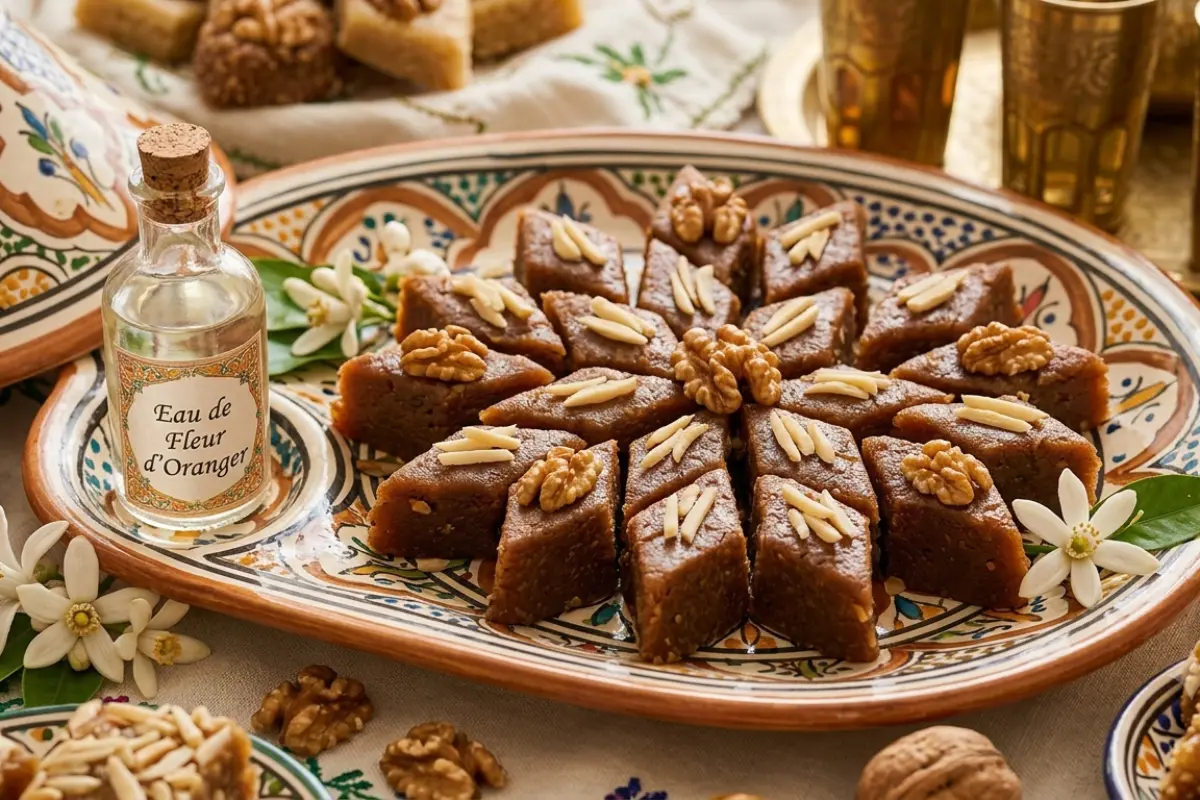
Arrange the diamond-cut pieces on a traditional Moroccan ceramic plate lined with parchment or decorative paper, and serve alongside freshly brewed Moroccan mint tea for a classic pairing that balances the sweetness of the halwa with the refreshing bitterness of the tea.
Serve as part of a Moroccan sweets platter alongside other confections such as sesame chebakia, almond ghriba cookies, and orange-scented sellou for festive occasions like Eid al-Fitr, weddings, or family celebrations.
Dust lightly with powdered sugar just before serving for an elegant presentation, or garnish each piece with a single whole walnut half placed on top for a refined, artisanal look.
Package individual pieces in small cellophane bags tied with ribbon as beautiful homemade gifts for Ramadan, Eid, or holidays — the halwa keeps well and travels beautifully, making it a beloved edible gift in Moroccan culture.
Storage & Reheating
Storage
Store the cut halwa pieces in an airtight container at room temperature for up to 2 weeks. Layer the pieces between sheets of parchment or wax paper to prevent them from sticking together. Keep in a cool, dry place away from direct sunlight and humidity, which can cause the surface to become sticky.
Reheating
Walnut halwa does not require reheating and is best enjoyed at room temperature. If the halwa has been stored in a cool environment and feels very firm, allow it to sit at room temperature for 15–20 minutes before serving to soften slightly and release its full aroma.
For longer storage of up to 1 month, the halwa can be frozen in an airtight container. Thaw at room temperature for 1–2 hours before serving. Do not refrigerate without freezing, as the refrigerator's humidity can make the surface tacky and alter the texture.
Frequently Asked Questions
Recipe by

Abdrahman Idrissi
عبد الرحمن الإدريسي
Pastry & Bread Chef
View all recipes by Abdrahman →
You May Also Like
Our Ebooks

The Moroccan Vegan
$12.56

Tables of Fez: A Royal Palace Legacy
$22.99

The Soul of Morocco
$20.00
YouTube
Watch step-by-step cooking videos and learn traditional Moroccan techniques.
450+
Subscribers
150+
Videos