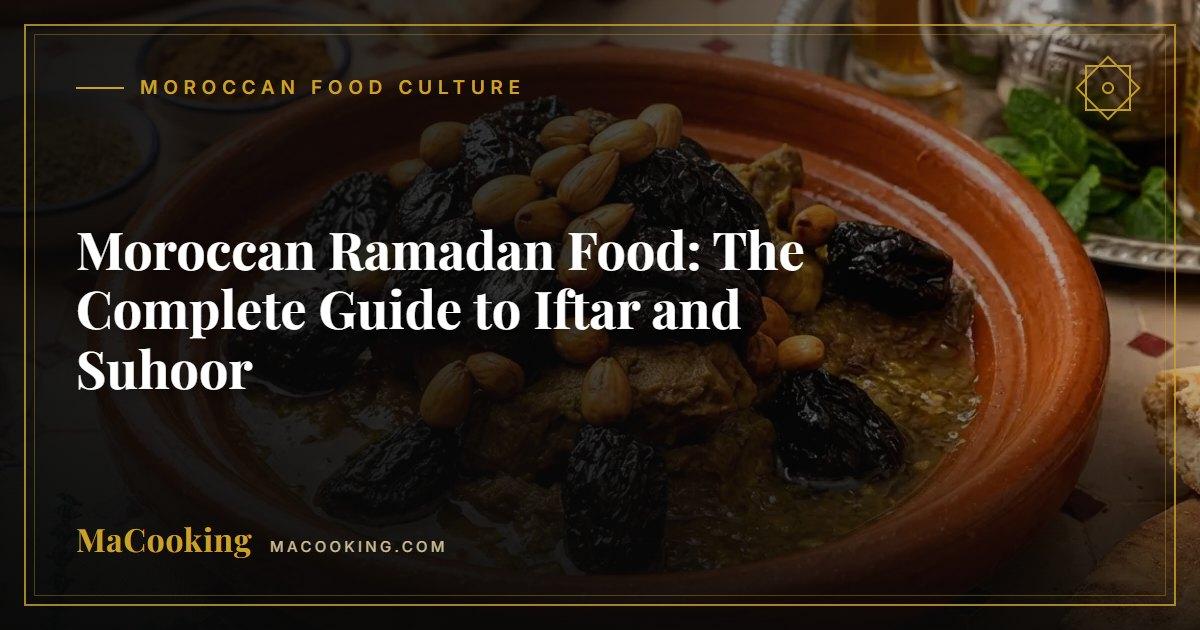
Moroccan Ramadan food revolves around a few much-loved elements: dates and milk to open the fast, a bowl of harira, savoury and sweet fried pastries, eggs, bread, and a lighter pre-dawn suhoor. These moroccan ramadan food recipes balance hydration, protein and slow energy for a full month of fasting.
Key Takeaways
- Iftar usually moves in stages: dates and milk, harira, eggs and pastries, then a later main dish.
- Harira is the centrepiece soup of the month, and a lamb version is easy to cook from scratch at home.
- Sweets such as chebakia and sellou are made in batches and keep well, so you can prepare them before Ramadan begins.
- Suhoor works best with slow-release foods: breads with olive oil, eggs, dates, dairy and porridge.
- Most dishes can be prepped or frozen in advance, which makes the month far more manageable.
What Does a Moroccan Ramadan Table Look Like?
In Morocco the sunset meal is often called ftour, which simply means "breakfast", and the table is set before the call to prayer. The first bite is traditionally a date, often with a glass of milk or water. Only then does the soup arrive, followed by small plates that sit in the middle of the table to be shared.
The result is a table that looks generous but is built on gentle, hydrating foods, not one enormous plate. If you want the cultural background and household rituals around it, our guide to a 7-day Moroccan Ramadan meal plan for iftar and suhoor shows how these elements are arranged across a week.
| Element | Typical items | Role at the table |
|---|---|---|
| First bite | Dates, milk, water | Gently ends the fast and restores fluids |
| Soup | Harira | Warm, filling, protein-rich starter |
| Savoury sides | Hard-boiled eggs, bread, olives, msemen or briouats | Easy extras to share |
| Sweets | Chebakia, dates, honey pastries | Quick energy, eaten with tea or coffee |
| Drinks | Fresh juice, mint tea, coffee | Hydration and the social close of the meal |
| Main dish (later) | Tagine, couscous, grilled meat | A fuller meal after prayers |
What Are the Best Moroccan Ramadan Food Recipes for Iftar?
Think of iftar as a sequence of small courses. You do not need to cook everything every night. Most households rotate a few favourites and keep harira constant.
Harira: the essential soup
Harira is a tomato-based soup with legumes, herbs, spices and a flour or egg thickener. Recipes vary by family and region, but it is the dish that defines the month for many people. You can read more about its place in the season in Harira Soup in Ramadan: Morocco's Nourishing Tradition, or the soup's general background on Wikipedia.
Eggs, bread and small bites
Hard-boiled eggs are served peeled, with small dishes of salt and ground cumin for dipping. Alongside them you will often see olives, flatbread, dates, and fried or baked pastries filled with cheese, meat or vegetables.
The main dish
Many families serve a tagine or similar dish after the first round, or save it for later in the evening. A lamb tagine with apricots and almonds is a good example of the sweet-and-savoury cooking people often make for guests. Friday is traditionally a couscous day in Morocco, and it often carries over into Ramadan.
How Do You Make Moroccan Harira Soup with Lamb?
This moroccan harira soup with lamb recipe makes 6 to 8 bowls. It takes about 2 hours, most of it unattended. For a shorter, more detailed walkthrough, see our traditional harira recipe.
Ingredients
- 400 g (14 oz) lamb shoulder, trimmed and cut into 2 cm cubes
- 2 tbsp olive oil or 1 tbsp butter plus 1 tbsp oil
- 1 large onion, grated
- 2 celery stalks with leaves, finely chopped
- 1 tsp ground ginger, 1 tsp turmeric, 1 tsp black pepper, 1 cinnamon stick
- 1 tsp salt, adjusted to taste
- 500 g ripe tomatoes, grated, or one 400 g can crushed tomatoes
- 1 tbsp tomato paste
- 100 g dried chickpeas, soaked overnight (or one 240 g can, drained)
- 80 g brown or green lentils, rinsed
- 1.8 litres (7.5 cups) water
- 1 cup finely chopped cilantro and parsley, mixed
- 50 g thin vermicelli or broken angel hair pasta
- Tadouira: 2 tbsp flour whisked into 250 ml cold water
- Lemon wedges, to serve
Method
- Brown the lamb. Warm the oil in a large pot. Add the lamb, onion, celery, spices and salt. Cook, stirring, for 5 to 7 minutes until fragrant.
- Add the base. Stir in the tomatoes, tomato paste and half the herbs. Add the soaked chickpeas and the water.
- Simmer. Bring to a boil, skim any foam, then simmer gently, partly covered, for about 1 hour until the chickpeas and lamb are nearly tender. If you are using canned chickpeas, add them with the lentils.
- Add the lentils. Stir in the lentils and cook for 25 to 30 minutes, until soft.
- Add vermicelli. Add the vermicelli and cook for 4 to 5 minutes.
- Thicken. Stir the tadouira again and pour it in slowly while stirring. Simmer for 10 minutes until the soup is silky.
- Finish. Add the remaining herbs, taste, and adjust with salt, pepper or lemon juice. Serve hot with a lemon wedge.
Cook's tips
- Add the tadouira slowly, and keep stirring, to avoid lumps.
- Do not boil the soup hard after thickening, or it can catch on the bottom of the pot.
- Harira thickens as it sits. Loosen leftovers with a splash of water when reheating.
What Sweets Do Moroccans Eat During Ramadan?
Ramadan sweets are made to be shared and often prepared in large batches. The two best known are chebakia and sellou.
- Chebakia: sesame-flavoured dough shaped into a rosette, fried, then dipped in honey and sprinkled with sesame seeds.
- Sellou (also called sfouf): a crumbly mixture of toasted flour, ground almonds, sesame, spices and sweetener, eaten by the spoonful or pressed into shapes.
- Dates: served plain, or stuffed with almonds or almond paste.
Sweets are usually served with mint tea or coffee. If you want to understand how tea is prepared and poured properly, read the free chapter on the Moroccan tea ceremony. For the sweets themselves, the chapter "Chebakia & Sellou — Ramadan Sweets" is inside the full ebook The Royal Moroccan Table — Part 5: Sweet Morocco, alongside "The Moroccan Breakfast Table".
What Do Moroccans Eat for Suhoor and Moroccan Ramadan Breakfast?
The word "breakfast" can be confusing here. In English-language Ramadan writing, "Moroccan Ramadan breakfast" usually means iftar, the meal that breaks the fast. Suhoor is the pre-dawn meal. It tends to be simpler, and the goal is lasting energy and good hydration.
Suhoor combines carbohydrates that digest slowly, protein, and a little fat. Our collection of 15 Moroccan suhoor recipes goes deeper into specific ideas.
| Suhoor idea | Why it works | Simple serving |
|---|---|---|
| Msemen or baghrir | Filling bread that pairs with fat and protein | Olive oil, honey, or fresh cheese |
| Eggs | Protein to help you feel full longer | Boiled, or scrambled with tomato and cumin |
| Oat or semolina porridge | Soft, easy to digest, and slow-release | Milk, dates and a few almonds |
| Sellou | Dense and energy-rich | A small portion with milk or tea |
| Yoghurt and fruit | Light and hydrating | Bananas, oranges or melon |
How Can You Plan Moroccan Ramadan Meals Without Burning Out?
Cooking every night for a month is demanding, especially while fasting. Moroccan households have long solved this by preparing ahead and reusing components.
- Before Ramadan: make and freeze the harira base, shape and freeze msemen, and bake or fry sweets.
- Weekly: chop herbs, soak chickpeas, and prepare a spice mix for tagines.
- Daily: finish soup with fresh herbs and thickener, and cook a simple main.
On very busy days, our quick 30-minute Moroccan iftar recipes are designed for exactly this situation. You can also browse all Moroccan recipes for more options.
Storage and make-ahead guide
| Dish | Make ahead? | Storage |
|---|---|---|
| Harira (before vermicelli and tadouira) | Yes | Up to 3 days in the fridge, or up to 3 months frozen |
| Msemen (shaped, uncooked or cooked) | Yes | Freeze layered with baking paper; cook from frozen |
| Chebakia | Yes | Airtight tin at room temperature for about a week |
| Sellou | Yes | Airtight container; keeps for weeks if kept cool and dry |
| Tagines | Yes | 3 days in the fridge, and reheat gently |
What Can You Substitute in a Western Kitchen?
You can make good Moroccan Ramadan food with ordinary supermarket ingredients. These swaps help when a specialist item is hard to find.
| Traditional ingredient | Easy substitute | Note |
|---|---|---|
| Smen (aged preserved butter) | Butter plus a little olive oil | You lose the distinctive tang, but the dish still works |
| Fresh ripe tomatoes | Canned crushed tomatoes | Often better out of season; add a little tomato paste |
| Fine Moroccan vermicelli | Broken angel hair pasta | Add at the end, and cook briefly |
| Ras el hanout | Cumin, coriander, cinnamon, ginger and a little paprika | Adjust to your own taste |
| Lamb shoulder | Beef chuck or chicken thighs | Chicken cooks faster; reduce the simmer time |
What Common Mistakes Should You Avoid?
- Over-seasoning too early. Harira reduces and thickens, so taste at the end.
- Adding the thickener all at once. Pour slowly and stir to prevent lumps.
- Cooking an enormous meal every night. Stagger your efforts, and rely on make-ahead dishes.
- Skipping hydration at suhoor. Drink water steadily, and include juicy fruits.
- Frying sweets at the wrong temperature. Oil that is too cool makes greasy chebakia, while oil that is too hot browns them before the dough cooks through.
Frequently Asked Questions
What is the traditional Moroccan food to break the fast?
Most Moroccan families break the fast with dates and milk or water, then a bowl of harira soup. Hard-boiled eggs with salt and cumin, chebakia, fresh juice, bread and coffee or mint tea usually follow. A heavier main dish often comes later in the evening.
What do Moroccans eat for suhoor?
Suhoor is usually lighter and slower-digesting than iftar. Common choices include msemen or baghrir with olive oil, honey or cheese, eggs, dates, milk, oat or semolina porridge, and sellou. Many people add yoghurt, fruit and plenty of water.
Why is harira eaten every night in Ramadan?
Harira is warming and filling, and it is gentle after a day without food. It combines tomatoes, legumes, herbs and often meat, so it supplies fluid, protein and carbohydrates in one bowl. It is also a cherished tradition, which is why it appears on most Moroccan tables throughout the month.
Can I make Moroccan Ramadan food ahead of time?
Yes. Harira base (before adding vermicelli and tadouira) freezes well, dough for msemen can be shaped and frozen, and chebakia keeps for days in an airtight tin. Tagines also reheat well. Add herbs, lemon and thickener fresh for the best flavour.
Is harira vegetarian-friendly?
Traditional harira often contains lamb or beef, but it works well without meat. Use a little olive oil, extra chickpeas and lentils, and a good vegetable stock. The tomato, herb and spice base carries the flavour, so the soup still tastes unmistakably Moroccan.
Bringing It All Together
A Moroccan Ramadan table is simple in structure and generous in spirit: dates, harira, a few shared plates, something sweet, and a lighter pre-dawn meal. Start with the lamb harira above, add one or two sweets, and build from there. Every household adapts the details, and your own table will too.