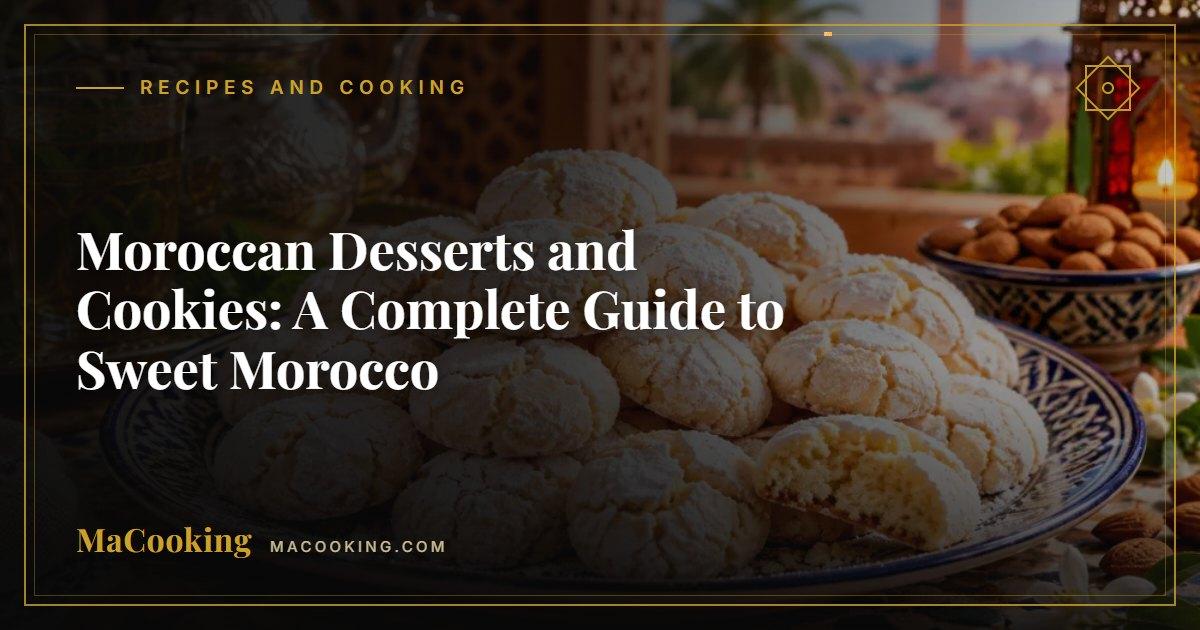
Traditional Moroccan dessert recipes centre on almonds, semolina, dates, honey, sesame and orange blossom water. Everyday meals usually end with fruit, while pastries, cookies and fried sweets are saved for tea time, Ramadan, weddings and Eid. This guide covers the key sweets, the techniques behind them and how to make them with a Western pantry.
Key Takeaways
- Moroccan sweets rely on a small set of ingredients (almonds, semolina, dates, honey, sesame, orange blossom water) combined in many different ways.
- Most cookies are dry, fragrant and made to go with mint tea, so they are not overly sugary on their own.
- Fried and honey-soaked sweets such as chebakia are Ramadan classics, while dry biscuits like fekkas keep well and suit gifting.
- Good substitutes exist for the hard-to-find items: phyllo for warqa, almond flour for ground almonds, softened date paste for fresh date filling.
- Start with ghriba or fekkas if you are new to Moroccan baking, then move on to makrout, chebakia and pastry work.
What Are the Most Popular Moroccan Desserts?
Moroccan sweet-making falls into a few families. There are baked cookies, fried and honey-dipped pastries, filo-style parcels filled with almond paste, and soft spoon desserts or pancakes. Some are made daily, and others are kept for special occasions. A fuller reference on Moroccan food in general can be found in the Wikipedia overview of Moroccan cuisine, but the table below is a practical map of the sweets you will meet most often.
| Sweet | Main ingredients | Method | Typically served |
|---|---|---|---|
| Ghriba | Almonds, semolina, coconut or flour; sugar; eggs | Baked | Tea time, Eid, gifts |
| Makrout | Semolina, date paste, orange blossom water, honey | Fried or baked, then honeyed | Celebrations, Ramadan |
| Chebakia | Flour, sesame, spices, honey | Shaped, fried, soaked in honey | Ramadan |
| Fekkas | Flour, almonds, raisins, anise, sesame | Baked twice, like biscotti | Tea, travel snack |
| Kaab el ghazal (gazelle horns) | Almond paste, thin dough, orange blossom water | Shaped crescents, baked | Weddings, special tea trays |
| M'hancha | Warqa or filo, almond paste, cinnamon | Rolled into a coil, baked | Celebrations |
| Briouats | Warqa, almond filling, honey | Folded, fried or baked, dipped in honey | Ramadan, parties |
| Rice pudding | Milk, rice, orange blossom water | Simmered | Family dessert |
| Baghrir | Semolina, yeast, water | Cooked on one side only | Breakfast, snack, dessert |
This table shows why a guide like this is useful. A dessert called "Moroccan" can be a crumbly biscuit, a sticky fried flower or a paper-thin pastry coil, and each needs a different skill.
What Makes Traditional Moroccan Dessert Recipes Taste So Distinctive?
The signature is aroma. Many sweets are scented with orange blossom water or rose water, and warm spices such as cinnamon, anise and sometimes a little ground gum mastic. Sugar is usually restrained inside the sweet itself, and honey or syrup takes over on the fried pieces.
The core pantry
- Almonds: ground for pastes and fillings, or toasted whole for crunch. Almonds are the backbone of Moroccan pastry. Our guide to Moroccan almond pastries covers the whole family.
- Fine semolina: gives makrout and baghrir their characteristic texture. It is not the same as couscous grains.
- Dates: pressed into paste for fillings. Soft varieties such as Medjool work well when mashed with a little butter or oil.
- Honey: used as a warm dip or soak. Mild orange blossom or wildflower honey is traditional; use any good runny honey.
- Sesame seeds: toasted and added to doughs, or sprinkled on top as a finishing touch.
- Orange blossom water: the single most important flavour for authentic results. Add it by the teaspoon, not the splash, since it is potent.
Why do the flavours work together?
Nuts and sesame give richness, dates and honey give depth, and the floral waters lift everything so the sweets never feel heavy. Because most are eaten with unsweetened or lightly sweetened mint tea, the sweetness is balanced by the drink itself.
Which Traditional Moroccan Cookies Should You Bake First?
Traditional Moroccan cookies range from forgiving to fiddly. This order moves from easiest to most technical.
Ghriba: the beginner-friendly choice
Ghriba is a family of soft biscuits, with versions made from almonds, coconut, walnuts, semolina or plain flour. The best-known examples have a cracked, snowy top and a chewy middle. The almond ghriba recipe is a good place to start because the dough comes together in one bowl and the cookies need no special equipment.
As a general guide, an almond ghriba dough pairs about 200 g (2 cups) of ground almonds with roughly 100 g (½ cup) sugar, one egg, a teaspoon of orange blossom water and a little baking powder. Roll small balls in icing (powdered) sugar and bake at about 175°C (350°F) for 12-15 minutes. Pull them out while they are still pale and soft, because they firm up as they cool.
Fekkas: the keeper
Fekkas is Morocco's answer to biscotti: a log of dough with almonds, raisins and anise or sesame, baked, sliced and returned to the oven to dry out. It is crisp, not very sweet and made for dunking, which makes it ideal for gifts and long-lasting tins. Try the Moroccan fekkas with almonds and raisins. A sharp serrated knife and a short cooling period before slicing prevent crumbling.
Makrout and Moroccan date cookies
Moroccan date cookies are most often makrout: a semolina dough, rolled around a spiced date paste, cut into diamonds and decorated with a pattern. They can be fried and dipped in warm honey, or baked for a lighter result. The dough is usually made with fine semolina, a little fat, salt and orange blossom water, then rested so the grains can hydrate. The filling is typically date paste with cinnamon and a touch of orange blossom water.
Make it with our step-by-step makrout recipe. If you love dates beyond cookies, the article on Moroccan date recipes from stuffed dates to date-infused tagines shows how far they stretch into savoury cooking too.
Kaab el ghazal and other celebration cookies
Gazelle horns are slim crescents of thin dough wrapped around scented almond paste. They require patience: the dough is rolled very thin, and shaping takes practice. Many bakers save them for weddings and festive trays.
What Are the Fried and Honey-Soaked Moroccan Sweets?
Fried sweets are the heart of Ramadan evenings, when many families break the fast with soup, dates and something sweet.
Chebakia
Chebakia are strips of dough, flavoured with toasted sesame, anise, cinnamon and often saffron, folded into a rose-like shape, fried and soaked in hot honey before a final dusting of sesame. They are crisp at the edges and sticky within. Our chebakia recipe with Moroccan sesame cookies goes through the folding technique, which is the hardest part and gets easier after a few tries.
Common mistakes include frying at too low a temperature, which makes the chebakia greasy, and letting the honey cool too much, which prevents it from soaking in. Keep the honey warm, not boiling, and dip the pieces briefly so they stay crisp.
Briouats and sweet parcels
Sweet briouats are small triangles or cigars of warqa filled with almond paste, then fried or baked and dipped in honey. They are a good bridge between cookies and pastry. If you do not have warqa, filo works, though it is a little less delicate.
Sfenj and honeyed breads
Not every sweet is festive. Sfenj, the ring-shaped Moroccan doughnut, is sold fresh in the morning and eaten with sugar or honey. Flaky msemen is also often drizzled with honey, making it a breakfast bread that can double as a simple dessert.
What Are the Best Pastries and Spoon Desserts?
Warqa, a paper-thin pastry stretched over a hot surface, is the foundation of Morocco's most refined sweets. If you have time, the free chapter "The Warqa Legacy: Pastry as Palace Art" from the ebook Tables of Fez is a good read on how this pastry shaped Fassi cooking.
M'hancha
M'hancha, the "snake", is a long roll of crisp pastry filled with almond paste and coiled into a spiral. It makes a showpiece dessert with relatively simple ingredients: almonds, sugar, butter, cinnamon and orange blossom water. Follow the m'hancha almond snake recipe for the rolling and coiling technique.
Pastilla with milk, rice pudding and baghrir
- Milk pastilla: layers of crisp pastry with a scented cream, often topped with almonds and cinnamon.
- Rice pudding with orange blossom water: a gentle milk-and-rice dessert; the floral note makes it distinctly Moroccan.
- Baghrir: the "thousand-hole" pancake, cooked on one side and served with butter and honey.
These are often made at home for family meals and do not require specialised tools.
The simplest dessert of all
Plenty of Moroccan meals finish without any baking: orange slices with cinnamon, melon, grapes, or fresh dates. A pastry tray is more of a guest-and-occasion affair.
How Do You Make Moroccan Sweets at Home?
Learning how to make Moroccan sweets is mostly about handling a few key techniques well. Here is a practical order of work.
- Prepare the almond or date base first. Grind blanched almonds with sugar until fine but not oily. Soften date paste with a teaspoon of butter or oil and a little orange blossom water.
- Rest semolina doughs. Give makrout and similar doughs at least 20-30 minutes so the semolina absorbs moisture and rolls without cracking.
- Keep filo or warqa covered. A damp towel over the sheets prevents them from drying out and tearing.
- Control your oil temperature. For fried sweets, test with a small piece of dough: it should sizzle steadily without browning too fast.
- Syrup and honey last. Warm honey is ideal for fried sweets; cold honey will sit on the surface.
- Cool completely before storing. Trapped steam softens dry cookies.
Western pantry substitutions
| Traditional ingredient | Easy substitute | Notes |
|---|---|---|
| Warqa pastry | Phyllo (filo) or brik sheets | Brush with butter; keep covered while working |
| Freshly ground almonds | Almond flour or meal | Check it is fresh; stale almonds taste flat |
| Fine semolina | Fine durum semolina | Avoid coarse grains or couscous |
| Date paste | Pitted soft dates, mashed | Add a little warm water or butter if stiff |
| Orange blossom water | Orange zest plus vanilla | Flavour is less floral |
| Smen (aged butter) | Butter, lightly clarified | Milder flavour but a good balance |
How should you store them?
Dry cookies like ghriba and fekkas stay best in an airtight tin, with parchment between layers. Honey-soaked sweets prefer a dry container, because humidity makes them sticky. Filled date cookies are best within about a week. Most baked cookies can be frozen before decorating.
Most of these cookies and pastries sit comfortably in our Desserts & Sweets recipes collection if you want to browse beyond this guide.
When Are Moroccan Sweets Served?
Context shapes the menu. Daily meals end with fruit, but sweets have their own moments.
- Ramadan: chebakia, dates, briouats and sellou, a toasted-flour and almond mixture, often appear at the evening meal.
- Eid and weddings: trays with a variety of cookies (ghriba, makrout, gazelle horns, fekkas) are put on display and offered to guests.
- Tea time: small biscuits or a few almond pastries are served with mint tea, often as a gesture of hospitality.
Tea service has its own etiquette and rhythm. To go deeper, read the free chapter "The Moroccan Tea Ceremony — The Complete Guide", available at no cost online, to see how sweets and tea fit together on the table.
Frequently Asked Questions
What is the most popular traditional Moroccan dessert?
There is no single winner, but ghriba cookies, chebakia and makrout are among the best known. Everyday meals usually end with fresh fruit, while pastries appear with mint tea, at celebrations, during Ramadan and at Eid. Which sweet counts as the favourite depends on the region and the family.
What is the difference between ghriba and makrout?
Ghriba is a soft, crackly-topped biscuit, usually made from almonds, semolina, coconut or flour, and baked. Makrout is a semolina dough wrapped around a date filling, cut into diamonds and then fried or baked, and often finished with honey. Ghriba is crumbly and chewy, while makrout is dense and sticky-sweet.
Can I make Moroccan sweets without orange blossom water?
You can, but the flavour will be different. Orange blossom water gives many Moroccan sweets their floral perfume. If you cannot find it, use a little finely grated orange zest and a few drops of vanilla. Add them sparingly, because the result is less floral and more citrusy.
What can I use instead of warqa pastry?
Thin phyllo (filo) dough is the closest widely available substitute for warqa, and brik pastry works for small parcels. Keep the sheets covered with a damp towel while you work, and brush them with melted butter so they crisp as they bake or fry. The texture will be slightly less delicate than true warqa.
How long do Moroccan cookies keep?
Dry almond biscuits such as fekkas and ghriba keep well for one to two weeks in an airtight tin at cool room temperature. Honey-soaked sweets like chebakia keep for a couple of weeks if stored dry, and filled date cookies are best within a week. Freeze baked, undecorated cookies for longer storage.
Conclusion: Where to Begin with Sweet Morocco
Traditional Moroccan dessert recipes reward patience, but they do not demand professional skills. Begin with a batch of ghriba or fekkas, graduate to makrout and chebakia, and attempt m'hancha when you are ready to work with thin pastry. Brew a pot of mint tea, set out a small plate and share it: that is how these sweets are meant to be enjoyed.