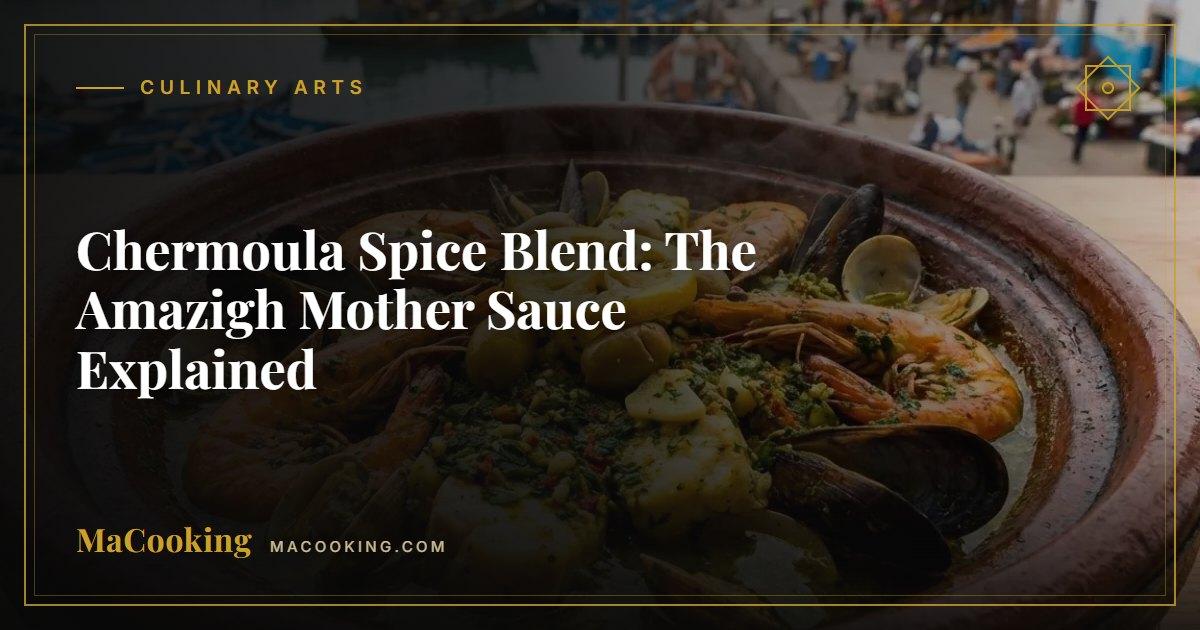
Chermoula is Morocco's all-purpose herb-and-spice marinade, made from cilantro, parsley, garlic, cumin, paprika, lemon and olive oil. It is one of the most versatile Moroccan spices for chicken, fish, lamb and vegetables. Rub it on and leave it for a few hours: it seasons deeply and brightens rich meat.
Key Takeaways
- Chermoula is a fresh, tangy paste rather than a dry powder, but it is built on the same spice logic as Morocco's dry blends: cumin, paprika, pepper and sometimes saffron.
- For chicken, a chermoula marinade of 4 to 12 hours gives the best balance of flavour and texture.
- Ras el hanout and chermoula do different jobs. Use chermoula to brighten and ras el hanout to add warm depth.
- Lamb and beef take well to chermoula when grilled or roasted. Slow-cooked tagines usually lean on ginger, cinnamon, saffron and fruit.
- Households and regions all make chermoula differently, so treat the recipe below as a reliable starting point and adjust it to taste.
What Is Chermoula and Where Does It Come From?
Chermoula (also written charmoula or chermula) is a North African marinade and sauce. In Morocco it is most famously used with fish, but cooks also use it on chicken, lamb, vegetables, and even stirred into lentils or spooned over grilled meat at the table. Wikipedia's overview of chermoula gives a useful snapshot of how the name and the recipe vary across the Maghreb.
It is often described as part of Amazigh (Berber) cooking, since the Amazigh are Morocco's indigenous people and their kitchens shaped much of the country's everyday food. Precise origin stories differ from source to source, so it is safer to say that chermoula is deeply rooted in Moroccan and wider North African home cooking than to name a single birthplace.
What matters in the kitchen is the idea. A handful of fresh herbs, a few pantry spices, garlic, acid and oil are pounded or blitzed into a paste that flavours food before, during or after cooking. That flexibility is why it earns the nickname "mother sauce": one base, many dishes. For a deeper dive into its role, see our feature on Moroccan chermoula, the marinade that changed everything.
Is Chermoula a Spice Blend or a Sauce?
Strictly speaking, it is both and neither. Chermoula is a wet paste, so it is not a dry spice blend like ras el hanout. But the spice component, usually cumin and paprika with a little heat, works exactly like a blend, and many cooks mix those dry spices in advance and stir them into fresh herbs and lemon when needed.
It helps to think of Moroccan seasoning in three layers:
- Dry blends such as ras el hanout, which are stored in a jar and add warmth and fragrance.
- Fresh pastes such as chermoula, which are made in small batches and add brightness, salt and acidity.
- Finishing touches such as preserved lemon, olives, fresh herbs and a drizzle of oil.
If you are new to the wider picture, our complete guide to Moroccan spice blends shows where chermoula sits among them.
What Goes Into a Classic Chermoula?
There is no single authoritative recipe, but most versions share the same core. The table below breaks down what each ingredient does and what you can use if your supermarket doesn't stock it.
| Ingredient | Role in chermoula | Substitution for Western pantries |
|---|---|---|
| Fresh cilantro (coriander leaf) | Grassy, citrusy freshness | More flat-leaf parsley (flavour will be milder) |
| Flat-leaf parsley | Body and green flavour | Curly parsley, used a little more sparingly |
| Garlic | Sharp, savoury punch | None needed; use fresh cloves |
| Ground cumin | Earthy, warm backbone | Toast and grind whole cumin seeds for more aroma |
| Sweet paprika | Colour and gentle sweetness | Mild Spanish paprika (not smoked, unless you want a smoky note) |
| Cayenne or chilli flakes | Optional heat | A little harissa paste |
| Lemon juice or preserved lemon | Acidity and salty-sour depth | Fresh lemon plus an extra pinch of salt if you have no preserved lemon |
| Olive oil | Carries flavour and keeps the paste moist | A mild, fruity extra-virgin olive oil |
| Saffron (optional) | Floral aroma and golden colour | Omit; a small pinch of turmeric adds colour but not the same aroma |
Some cooks add a splash of vinegar, a little ground ginger, or turmeric. Others keep it strictly green and herby. All of these are reasonable variations, so there is no need to treat any one of them as "wrong".
Which Moroccan Spices for Chicken Work Best?
Chicken is mild, so it takes on whatever you give it. The most reliable Moroccan spices for chicken are:
- Cumin for earthiness.
- Sweet paprika for colour and rounded sweetness.
- Ginger and turmeric, the classic base for many chicken tagines.
- Black pepper for a clean bite.
- Saffron for fragrance, especially in slow-cooked dishes.
- Garlic, cilantro, parsley and lemon, the fresh half of chermoula.
Chermoula versus ras el hanout on chicken
A Moroccan chicken marinade built on chermoula tastes bright, herby and tangy, which suits roasting, grilling and pan-frying. Ras el hanout chicken tastes warmer and more perfumed, because the blend can include cinnamon, ginger, pepper, cardamom, rose and many other spices, depending on the maker. It suits braises and slow roasts. As a rule of thumb, use around 2 teaspoons of ras el hanout per 1 kg (2 lb) of chicken, combined with salt, oil and a little lemon. Taste your blend first, as strength varies widely between brands.
You can read more about the blend itself in our profile of Moroccan ras el hanout. For a fully worked, slow-cooked example of the ginger-and-saffron style of chicken, try the chicken tagine with preserved lemons.
How Do You Make a Chermoula Chicken Marinade?
This version makes enough for about 1.5 kg (3 lb) of bone-in chicken thighs and drumsticks, or a spatchcocked whole chicken.
Ingredients
- 1 cup (about 30 g) loosely packed fresh cilantro, stems included
- ½ cup (about 15 g) flat-leaf parsley
- 4 garlic cloves
- 2 teaspoons ground cumin
- 2 teaspoons sweet paprika
- ¼ teaspoon cayenne (optional)
- A generous pinch of saffron threads, crushed and steeped in 1 tablespoon warm water (optional)
- 3 tablespoons fresh lemon juice
- ⅓ cup (80 ml) olive oil
- 1½ teaspoons fine salt
Method
- Make the paste. Blitz the herbs, garlic and salt in a food processor until finely chopped. Add the spices, saffron water, lemon juice and olive oil, and pulse to a loose, spoonable paste. A mortar gives a more rustic texture if you have the patience.
- Score the chicken. Make two or three shallow cuts in the thickest parts of the thighs so the marinade can get in.
- Marinate. Coat the chicken thoroughly, cover, and refrigerate for 4 to 12 hours. Reserve a spoonful of the paste to serve at the end.
- Bring to room temperature for 20 to 30 minutes before cooking.
- Roast. Place skin-side up in a roasting tin and cook at 200°C (400°F) for 40 to 45 minutes, until the skin is deeply golden and the juices run clear. USDA guidance is for poultry to reach an internal temperature of 74°C (165°F).
- Finish. Rest for 10 minutes, then spoon over the reserved chermoula and add a squeeze of lemon.
Serve with flatbread, couscous or roasted potatoes. For a more traditional, sweeter chicken dish, the chicken tagine with raisins and spices shows a different side of Moroccan chicken cooking.
What Moroccan Spices Suit Lamb, Beef and Fish?
Chermoula is a good starting point, but the best spice choices change with the protein and the cooking method. This table summarises common pairings in Moroccan home cooking.
| Protein | Typical spices and flavourings | Best cooking methods |
|---|---|---|
| Chicken | Cumin, paprika, ginger, turmeric, saffron, pepper, garlic, cilantro, lemon or preserved lemon | Roasting, grilling, tagine |
| Lamb | Cumin, coriander, ginger, cinnamon, saffron, pepper, ras el hanout, garlic | Slow braising, roasting, grilling |
| Beef | Ginger, pepper, cumin, paprika, cinnamon, saffron, onion | Tagine, stewing, grilled skewers |
| Fish and seafood | Chermoula (cilantro, parsley, garlic, cumin, paprika, lemon) | Baking, tagine, pan-frying |
| Vegetables | Chermoula, cumin, paprika, preserved lemon | Roasting, braising, salads |
Moroccan spices for lamb
Lamb is richer and more assertive, so it can carry warmer, sweeter spices. Cumin, ginger, cinnamon and saffron are common, and ras el hanout is a popular shortcut. Fresh chermoula also works beautifully on chops or a butterflied leg, because the lemon and herbs cut through the fat. For a sweet-savoury slow-cooked example, see the lamb tagine with apricots and almonds.
Moroccan spices for beef
For beef, think ginger, black pepper, cumin, paprika and a touch of cinnamon, with onions to build sweetness. Beef also pairs well with dried fruit in long-simmered tagines, such as prunes. For quick cooking such as skewers or steaks, a chermoula marinade of a few hours is plenty.
Fish and seafood
This is where chermoula is most at home. A short marinade of 30 minutes to 2 hours is enough for fish, as the acid works quickly. Try it in the seafood tagine with chermoula or the fish tagine with chermoula and olives.
What Are the Common Chermoula Mistakes?
- Over-marinating in lemon. Long exposure to acid can leave chicken or fish with a dry, chalky surface. Keep marinades within the times given above, and use a little less lemon for longer marinades.
- Using old ground spices. Cumin and paprika that have sat in a cupboard for years taste dusty. If a jar has lost its aroma, replace it.
- Blitzing to a smooth purée. A slightly coarse texture clings better and tastes fresher. Pulse rather than run the machine continuously.
- Under-salting. Chermoula should taste vivid on its own, slightly saltier than you would eat it, since it seasons a much larger amount of meat.
- Burning it. Fresh garlic and herbs can scorch under a fierce grill. Wipe off excess paste before high-heat searing, then spoon fresh chermoula over at the end.
How Do You Store Chermoula?
Pack fresh chermoula into a clean jar, press it down, and cover the surface with a thin layer of olive oil. It will keep in the fridge for about 4 to 5 days. For longer storage, freeze it in ice-cube trays and transfer the cubes to a bag; they keep for up to three months, though the herbs will be a little less bright. Never leave raw chicken that has been marinated at room temperature for long, and discard any marinade that has touched raw meat unless you boil it first.
If you are stocking a new kitchen, our Moroccan pantry checklist for home cooks lists what to buy first.
Frequently Asked Questions
What are the best Moroccan spices for chicken?
Cumin, sweet paprika, ginger, turmeric, black pepper and saffron are the backbone, usually with garlic, fresh cilantro, parsley and lemon or preserved lemon. Chermoula combines most of these in one marinade. For a warmer, floral profile, use ras el hanout instead.
How long should chicken marinate in chermoula?
Bone-in chicken pieces are best marinated for 4 to 12 hours in the fridge. Two hours gives a lighter flavour. Because of the lemon juice, avoid going much beyond 24 hours, as the surface of the meat can turn slightly mushy and chalky.
Can I use chermoula on lamb and beef?
Yes. Chermoula works well on lamb, especially grilled or roasted, where the lemon and herbs cut through the richness. With beef it suits grilled steak and kebabs. For long-simmered lamb or beef tagines, cooks often add ginger, cinnamon or saffron and fruit instead.
What is the difference between chermoula and ras el hanout?
Chermoula is a fresh, herby, garlicky and acidic marinade, usually made as a paste. Ras el hanout is a dry, warm, aromatic blend of many ground spices, often including cinnamon, ginger and pepper. Chermoula brightens food, while ras el hanout adds depth and fragrance.
How long does homemade chermoula keep?
In a clean jar in the fridge with a thin layer of olive oil on top, fresh chermoula keeps for about 4 to 5 days. You can freeze it in ice-cube trays for up to three months, though the herbs lose some of their brightness.
Conclusion: One Paste, Endless Dinners
Once you understand chermoula, Moroccan spices for chicken, lamb, beef and fish start to feel less like separate recipes and more like one connected system. Fresh herbs, cumin, paprika, garlic, lemon and oil give you a reliable base, and warmer blends such as ras el hanout give you a second gear for slow, fragrant dishes. Make a small batch this week, marinate some chicken thighs overnight, and adjust the lemon, heat and saffron to suit your own table.