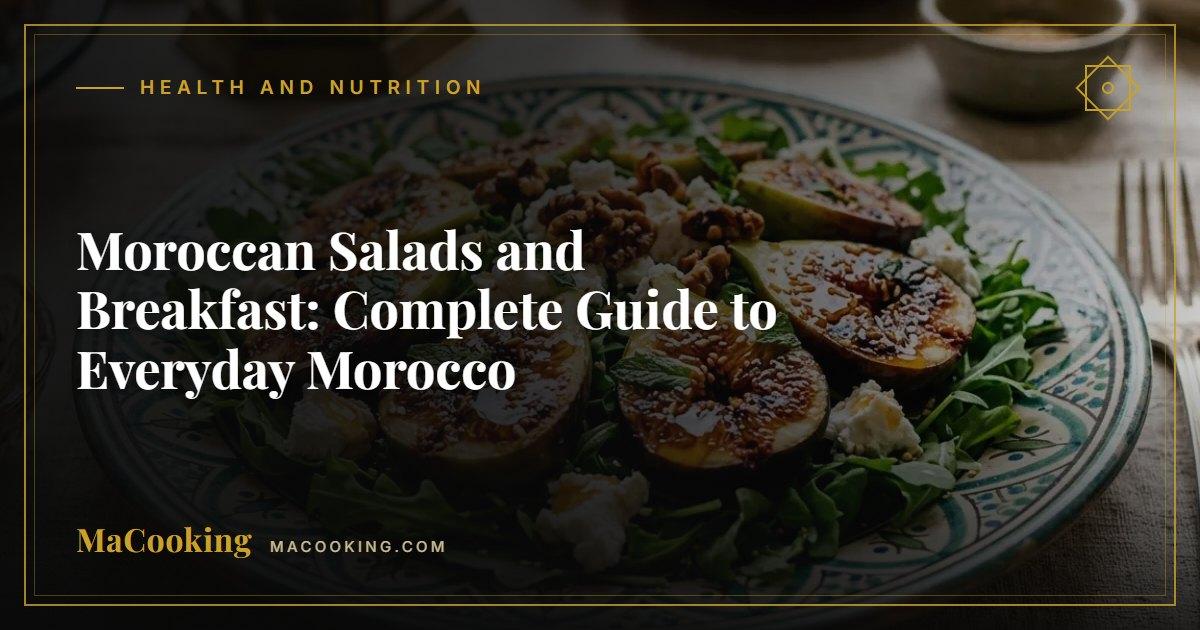
Moroccan salad recipes are mostly cooked or marinated vegetable dishes, such as zaalouk, taktouka, spiced carrots and beets, served as small plates with bread. A Moroccan breakfast centres on msemen, baghrir, khobz, olive oil, eggs, olives and mint tea. Together they show how everyday Morocco eats: simple, seasonal and shared.
Key Takeaways
- Moroccan salads are usually a spread of several small dishes, many of them cooked, served at room temperature with bread.
- Cumin, paprika, garlic, lemon, olive oil, parsley and cilantro are the flavour backbone of most salads.
- Breakfast is built around bread or flatbread, olive oil or honey, eggs, olives and sweet mint tea.
- Most salads and many breakfast items can be prepared ahead, which makes them practical for busy weekdays.
- Cold couscous salad is a modern adaptation, but it works well with traditional Moroccan seasoning.
What Are Moroccan Salads and How Are They Served?
If you picture a Western salad, a bowl of raw leaves, set that image aside. In Morocco, the word salata covers a wide range of dishes: eggplant slowly cooked down with tomato, roasted peppers, boiled carrots in a cumin dressing, diced tomato and cucumber, lentils, beets. Many are cooked, many are served cool or at room temperature, and most are made to be scooped up with bread rather than eaten with a fork.
At a family lunch or when guests arrive, several salads appear together in small dishes in the middle of the table. They come before the tagine or couscous, and they are also what you reach for when the main dish takes a while. This habit of starting a meal with many small plates is sometimes compared to mezze, though the flavours are distinctly Moroccan. For a broader look at the cuisine, Wikipedia's overview of Moroccan cuisine is a useful background read.
You can browse the full collection in our Salads & Appetizers recipes.
How Do You Make Classic Moroccan Salad Recipes at Home?
These four recipes cover the core of a Moroccan salad table. Each makes 4 to 6 small servings alongside a main dish. Together they give you something cooked and soft, something sharp and fresh, something sweet and earthy, and something spiced.
Zaalouk (cooked eggplant and tomato salad)
Zaalouk is often called an eggplant "dip," but it is traditionally served as a salad with bread.
- 2 large eggplants (about 800 g / 1¾ lb)
- 4 ripe tomatoes (about 600 g / 1⅓ lb), grated or finely chopped
- 4 garlic cloves, minced
- 3 tbsp olive oil
- 1 tsp paprika, 1 tsp ground cumin, ½ tsp chili flakes (optional)
- A small handful of chopped cilantro and flat-leaf parsley
- Salt and lemon juice to taste
- Peel the eggplants in stripes, cube them and steam or boil for 15 minutes until very soft. Drain well and press out extra water.
- Warm the olive oil in a wide pan. Add the garlic, paprika and cumin for 30 seconds, then add the tomatoes. Cook 12 to 15 minutes until they reduce to a thick sauce.
- Add the eggplant and mash it into the tomatoes with a spoon. Simmer 15 to 20 minutes, stirring often, until thick and glossy.
- Stir in the herbs, a squeeze of lemon and salt. Serve warm or cold.
Common mistake: not draining the eggplant. Waterlogged eggplant makes a loose, bland salad and takes much longer to thicken.
Moroccan carrot salad
- 500 g (1 lb) carrots, sliced into rounds
- 2 tbsp olive oil
- Juice of 1 lemon (or ½ orange plus a squeeze of lemon)
- 1 tsp ground cumin, ½ tsp paprika
- 1 small garlic clove, grated
- 2 tbsp chopped parsley, salt, a pinch of sugar if needed
Boil the carrots in salted water for 6 to 8 minutes until tender but not mushy. Drain, then toss while still warm with the oil, lemon, spices and garlic. Rest at least 30 minutes so the carrots absorb the dressing, then add the parsley.
Tomato, cucumber and pepper salad (salade marocaine)
Dice 3 tomatoes, 1 cucumber, 1 green pepper and ½ red onion into 1 cm cubes. Dress with 2 tbsp olive oil, 1 tbsp lemon juice or vinegar, a handful of parsley, salt and a pinch of cumin. Dress it just before serving, because the vegetables release water within about 20 minutes.
Beetroot salad with cumin
Boil 4 medium beets for 40 to 50 minutes, or roast them wrapped in foil at 200°C / 400°F for 45 to 60 minutes. Peel and dice. Toss with 2 tbsp olive oil, 1 tbsp red wine vinegar or lemon juice, ½ tsp cumin, salt and chopped parsley. A teaspoon of orange blossom water is a lovely optional addition.
| Salad | Main flavours | Served | Fridge life |
|---|---|---|---|
| Zaalouk | Eggplant, tomato, garlic, cumin, paprika | Warm or cold | 3–4 days |
| Taktouka | Roasted peppers, tomato, garlic | Warm or cold | 3–4 days |
| Carrot salad | Carrot, lemon, cumin, parsley | Cool | 3–4 days |
| Beetroot salad | Beet, vinegar or lemon, cumin | Cool | 3–4 days |
| Tomato-cucumber salad | Fresh vegetables, olive oil, parsley | Fresh | Same day |
For dessert-style sweetness at the end of a salad spread, try our Grilled Figs and Honey Salad, which pairs fruit with honey in a way that echoes Moroccan flavours. And if you want the next step in the cuisine, the books feature The Royal Moroccan Table — Part 4: The Royal Banquet, which includes a chapter called "The Moroccan Mezze — Salads & Starters" inside the full ebook.
How Do You Make a Moroccan Couscous Salad?
Let's be clear about what this is. Traditional Moroccan couscous is steamed, usually two or three times, and served hot with vegetables and meat, often on Fridays. A cold moroccan couscous salad is a modern, home-kitchen adaptation. It borrows Moroccan flavours and suits lunchboxes, picnics and summer tables. It is not a heritage dish, but it is delicious and quick.
Serves 4 as a main, 6 as a side.
- 200 g (about 1¼ cups) fine or medium couscous
- 240 ml (1 cup) boiling water or vegetable stock
- 1 tbsp olive oil, plus 3 tbsp for the dressing
- ½ preserved lemon, rind only, finely chopped (rinse first)
- 1 cucumber and 2 tomatoes, diced
- ½ red onion, finely chopped
- 150 g (1 cup) cooked chickpeas
- ½ cup chopped parsley and ¼ cup chopped mint
- 2 tbsp lemon juice, ½ tsp cumin, salt and pepper
- Optional: toasted almonds or a handful of raisins
- Put the couscous in a bowl with ½ tsp salt and 1 tbsp olive oil. Pour in the boiling water, cover and leave 5 minutes.
- Fluff with a fork, breaking up lumps, and let it cool to room temperature.
- Whisk the remaining oil, lemon juice, cumin and chopped preserved lemon.
- Fold the vegetables, chickpeas and herbs into the couscous, add the dressing, and taste for salt.
No preserved lemon? Use the zest of one lemon plus an extra squeeze of juice, and add a little more salt. The flavour is brighter and less fermented but still works.
If you want to go from the cold salad to the real thing, our Couscous recipes collection covers the traditional steamed versions.
What Do Moroccans Eat for Breakfast?
If you've ever wondered what do Moroccans eat for breakfast, the short answer is bread, something to dip it in, and tea. The details vary by household, region and season, but the pattern is consistent: a warm bread or flatbread, olive oil or butter, honey or jam, perhaps eggs or olives, and sweet mint tea or coffee with milk.
Weekday breakfasts tend to be quick: khobz with olive oil, jam or cheese. Weekends and special mornings are different. That's when the griddle comes out for msemen and baghrir, and when families may buy fresh sfenj, a ring-shaped fried doughnut, from a street vendor. In cooler months, a warm bowl of bessara (fava bean soup) with olive oil and cumin is a popular morning choice in many households.
| Breakfast item | What it is | Usually eaten with |
|---|---|---|
| Khobz | Round everyday bread | Olive oil, butter, jam, cheese, eggs |
| Msemen | Layered, pan-fried square flatbread | Honey, butter, jam |
| Baghrir | Spongy semolina pancake with tiny holes | Warm butter and honey |
| Harcha | Pan-cooked semolina bread | Cheese, jam, honey |
| Sfenj | Fried ring doughnut | Sugar, tea |
| Bessara | Fava bean soup | Olive oil, cumin, bread |
| Amlou | Almond, argan oil and honey spread | Bread or msemen |
| Eggs | Fried, scrambled or cooked with spices | Bread, olives |
For a deeper dive into the morning table, read our guide to Moroccan breakfast traditions.
What Are Easy Moroccan Breakfast Ideas You Can Make at Home?
You don't need a Moroccan kitchen to make a Moroccan-style breakfast. Here are practical Moroccan breakfast ideas for different kinds of mornings.
The 10-minute weekday breakfast
- Warm bread or pita with olive oil, a pinch of cumin and salt.
- Soft cheese (labneh or fresh goat cheese works well as a substitute for jben) with olives.
- Sweet mint tea: steep gunpowder green tea with a big handful of fresh mint and 1 to 2 tsp of sugar per glass.
The slow weekend breakfast
- Fresh msemen from the pan with honey and butter. Our step-by-step guide to making Moroccan msemen covers folding and resting.
- Eggs fried in olive oil with cumin and a few slices of tomato.
- A plate of olives, sliced oranges and a small jar of amlou if you have it.
Make-ahead options
- Freeze msemen between sheets of parchment and cook straight from frozen in a hot, dry pan.
- Bake a batch of everyday loaves from our recipe for homemade Moroccan khobz, then slice and freeze.
- Keep a jar of amlou in the fridge. Blend 150 g toasted almonds with 3 to 4 tbsp argan oil (or a mild nut oil if you can't find it) and 2 tbsp honey until smooth.
Breakfast in Morocco is rarely complicated. The skill is in the bread and in having good olive oil, honey and tea on the table.
Many breakfast dishes also appear before dawn during Ramadan. If you're curious how the morning meal changes then, see our overview of Moroccan suhoor dishes during Ramadan.
Are Moroccan Salads and Breakfasts Healthy?
Many of them are built on vegetables, olive oil, legumes and herbs, which makes the salad table a natural fit for balanced eating. Cooked salads like zaalouk, taktouka and spiced carrots are filling because of the fibre and the olive oil, and they work well as meal starters or light lunches with a boiled egg or chickpeas.
Breakfast is a mixed picture. Bread-based mornings can be satisfying, especially with eggs, olives, cheese or nuts, but fried doughnuts and sugary spreads are more of a treat. A few simple adjustments help:
- Choose khobz or whole-grain bread, and pair it with eggs or cheese for protein.
- Go easier on honey and jam, and let olive oil and olives do some of the work.
- Measure the oil for salads rather than pouring freely, since olive oil is calorie-dense.
- Save sfenj and buttery msemen for weekends.
If you're building meals around these dishes, our healthy Moroccan recipes and meal plan ideas show how to combine them through the week. This guide is general food information, not personal medical or dietary advice.
What Substitutions Work in a Western Kitchen?
Most ingredients are easy to find. For the rest, these swaps keep the character of the dishes.
| Moroccan ingredient | Substitute | Notes |
|---|---|---|
| Preserved lemon | Lemon zest + extra salt | Brighter, less fermented flavour |
| Jben (fresh cheese) | Fresh goat cheese, ricotta or labneh | Drain well if watery |
| Argan oil (in amlou) | Toasted almond or walnut oil | Taste is different, texture is similar |
| Fine semolina (baghrir, harcha) | Fine semolina or cream of wheat | Avoid coarse grain for baghrir |
| Smen (aged butter) | Good butter, a pinch of salt | Loses the funky depth, still tasty |
| Fresh cilantro | More parsley plus a squeeze of lemon | Works if you dislike cilantro |
Whole cumin seeds toasted and ground fresh make a noticeable difference in salads. Toast for 1 to 2 minutes in a dry pan until fragrant, then grind.
How Do You Put a Moroccan Salad Table Together?
For four people, aim for three or four salads, bread and a main dish. A balanced spread might be zaalouk (soft), carrot salad (bright), tomato-cucumber (fresh) and beetroot (earthy). Make the cooked salads the day before, since flavours deepen overnight, and prepare the fresh one just before serving.
Serve everything in small shallow dishes, with plenty of khobz or warm flatbread. Finish with mint tea and fruit. If you're new to this style of cooking, our guide to Moroccan cooking for beginners is a helpful companion.
Frequently Asked Questions
What do Moroccans eat for breakfast?
A typical Moroccan breakfast includes bread or flatbread such as khobz, msemen, baghrir or harcha, served with olive oil, butter, honey, jam, cheese or amlou. Eggs, olives and fresh orange juice are common, and sweet mint tea or coffee with milk is almost always on the table.
What are the most popular Moroccan salads?
The best known are zaalouk (cooked eggplant and tomato), taktouka (peppers and tomatoes), spiced carrot salad, beetroot salad with cumin, and the chopped tomato and cucumber salad. They are usually served together as small plates at the start of a meal, with bread for scooping.
Is Moroccan couscous salad traditional?
Cold couscous salad is mostly a modern, home-style adaptation rather than a classic dish. Traditional couscous is steamed and served hot, often on Fridays. The cold version borrows Moroccan flavours such as cumin, preserved lemon, mint and parsley, and works well for lunchboxes and picnics.
How long do Moroccan cooked salads keep in the fridge?
Cooked salads such as zaalouk, taktouka and spiced carrots keep for about three to four days in a covered container in the fridge. Fresh chopped salads with cucumber and tomato are best eaten the same day because they release water once dressed.
Can I make Moroccan breakfast recipes ahead of time?
Yes. Msemen can be shaped and frozen between sheets of parchment, then cooked from frozen. Khobz freezes well, and amlou keeps for weeks in a jar. Baghrir and harcha are best fresh, though leftovers reheat in a dry pan or toaster.
Conclusion
Moroccan salads and breakfasts share the same spirit: simple ingredients, generous olive oil, warm bread and food meant to be shared. Start with zaalouk and a carrot salad, add a pan of msemen on the weekend, and you'll have the rhythm of everyday Moroccan eating in your own kitchen. From there, the Salads & Appetizers collection is the natural next stop.